Shoulder Rotations
Shoulder rotations are actually rotations of the upper arm at the shoulder joint.
Basic Arm Rotations
With arms by your sides focus on rotating your upper arm outwards so that the biceps move outwards. Then relax. Repeat a few times then do the opposite, rotate the arms inwards so that the front of the arms roll inwards.
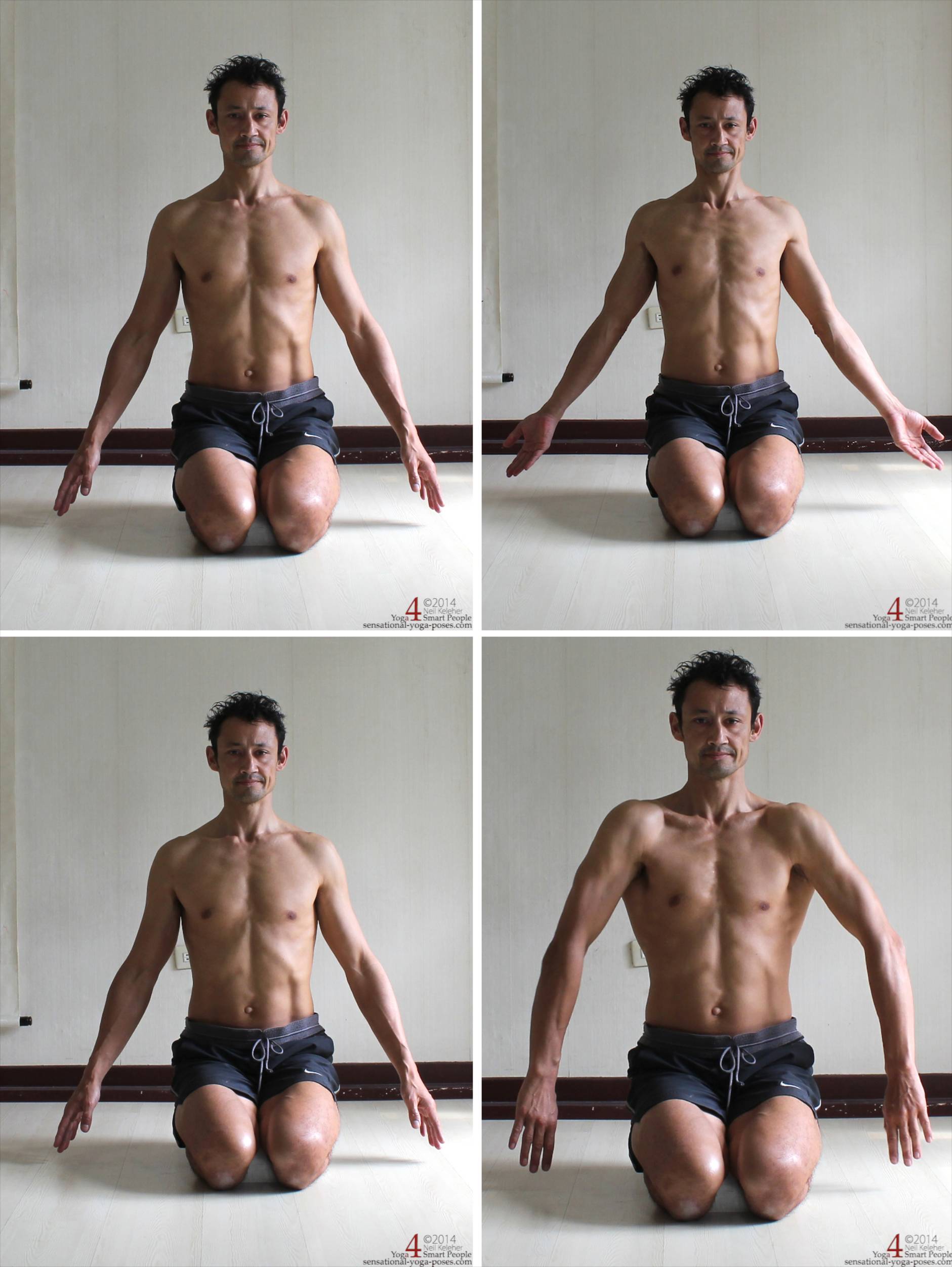
When practicing external rotation focus on feeling the back side (rear surface) of your shoulder blade. You may feel some tension as your infraspinatus muscle activates and then relaxes.
You may also notice that as you externally rotate the front of the shoulder feels “open.”
For internal rotation the rear of the shoulder may feel “open.”
The main internal rotator is the subscapularis which attaches to the front surface of the shoulder blade.
You can also focus on feeling the point of each elbow.
- If the arms are down then as you externally rotate the upper arms the elbows will end up pointing rearwards or even inwards, towards the body.
- As you internally rotate them upper arms, the elbows will point out to the sides.
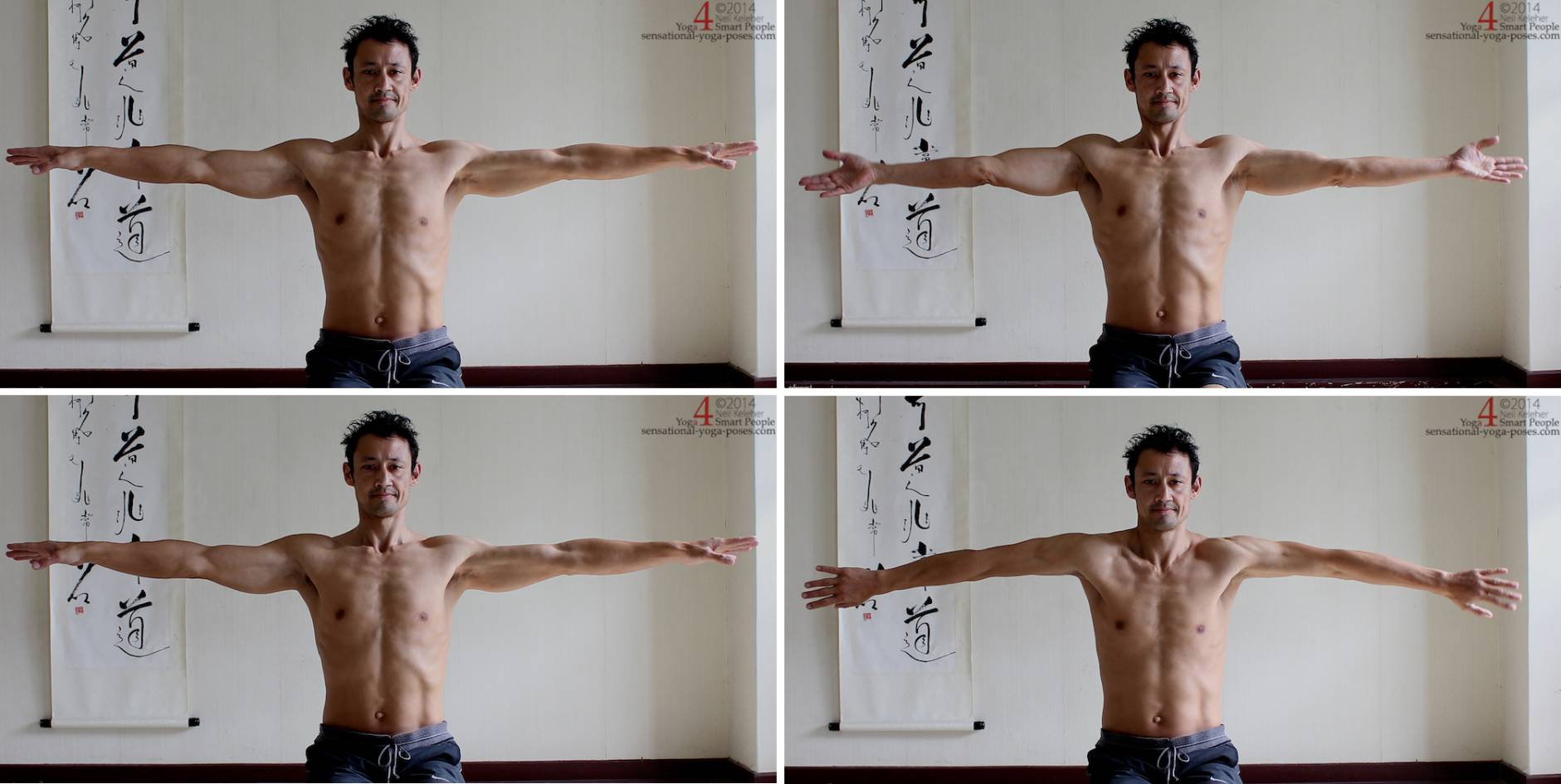
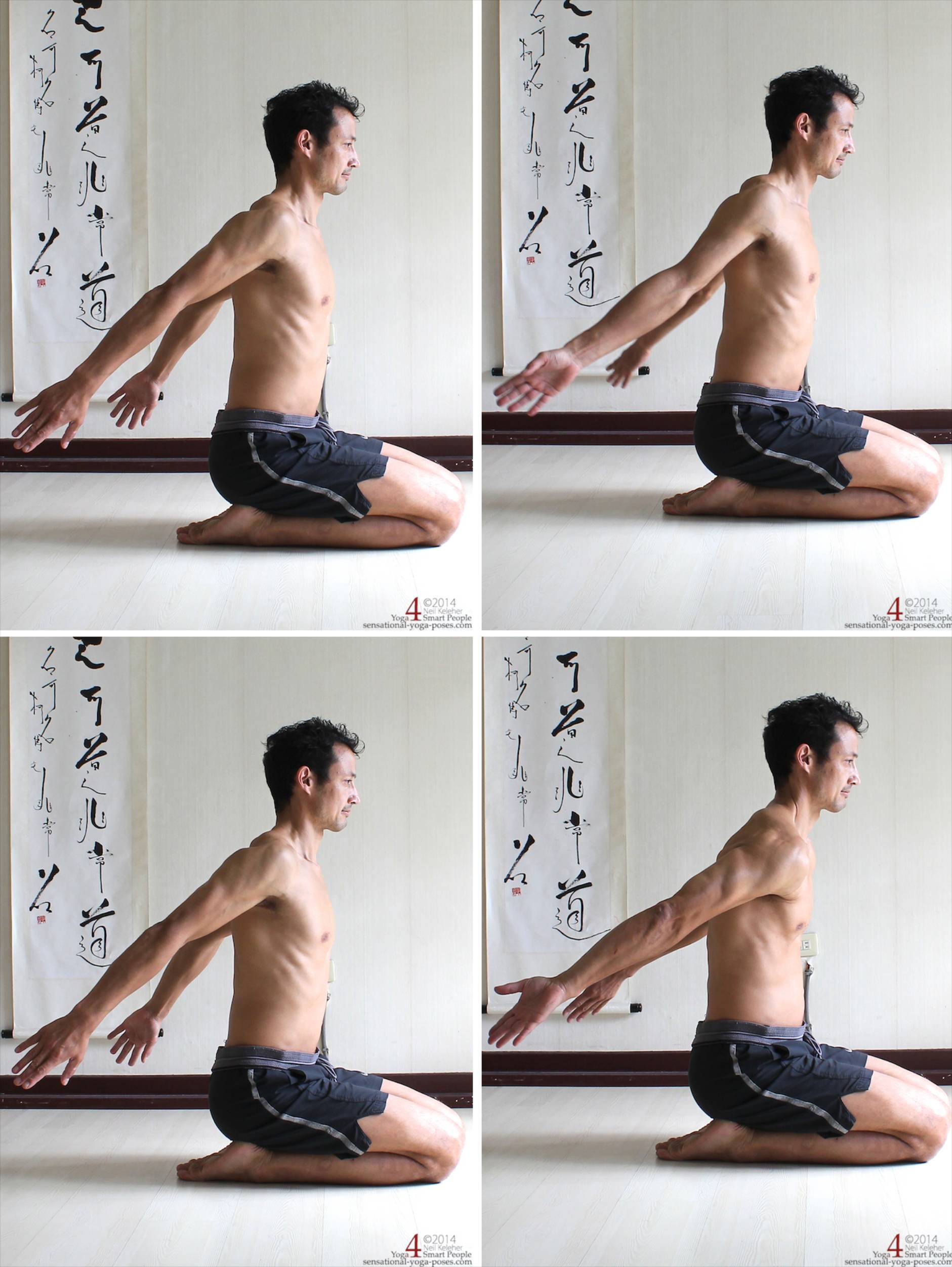
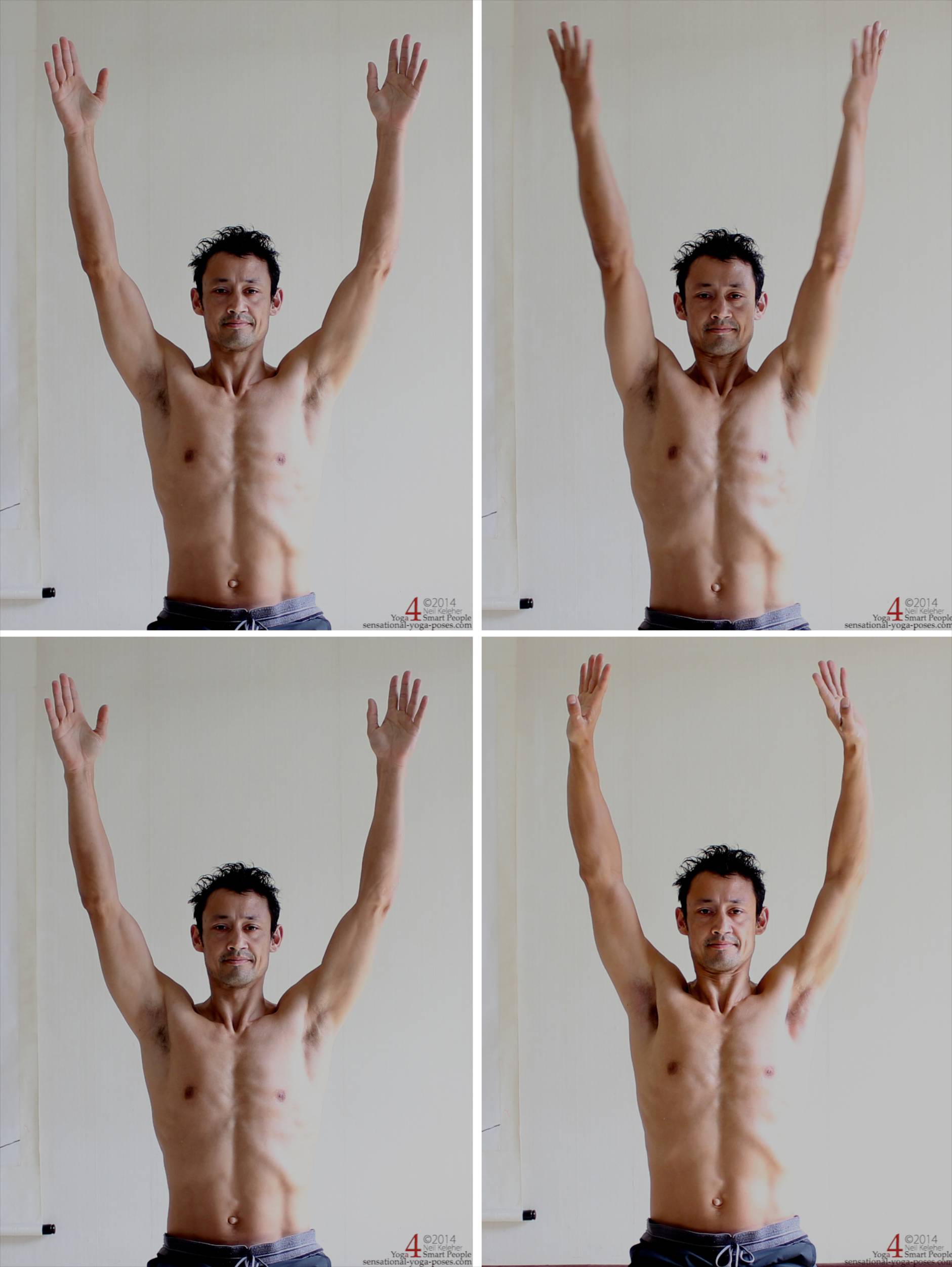
Rotations can be practiced with arms down by the sides, out to the sides, rearwards, upwards and forwards.
With arms up external rotation will still cause the biceps to move outwards and the triceps (on the backs of the arms) to move inwards.
Using Rotation to “stabilize” the shoulder blade
Rotation can be used to stabilize the shoulder joint making the upper arm and shoulder blade one single more massive unit. In this case the muscles that attach between the shoulder blade and ribcage can use the shoulder blades as the foundation and move the ribcage relative to the shoulder blades.
Generally when using external rotation to stabilize the shoulders I focus on externally rotating the arms while at the same time using that action to pull outwards on the bottom tip of the shoulder blade. The effect can feel similiar to when using the serratus anterior to spread the shoulder blades.
I currently use this action as part of the preliminary actions in push up and lifting up into chaturanga dandasana.
Arm Rotation Meditation
An arm rotation exercise that can feel nice as a cool down and meditation is to sit with your arms by your sides elbows bent and forearms horizontal.
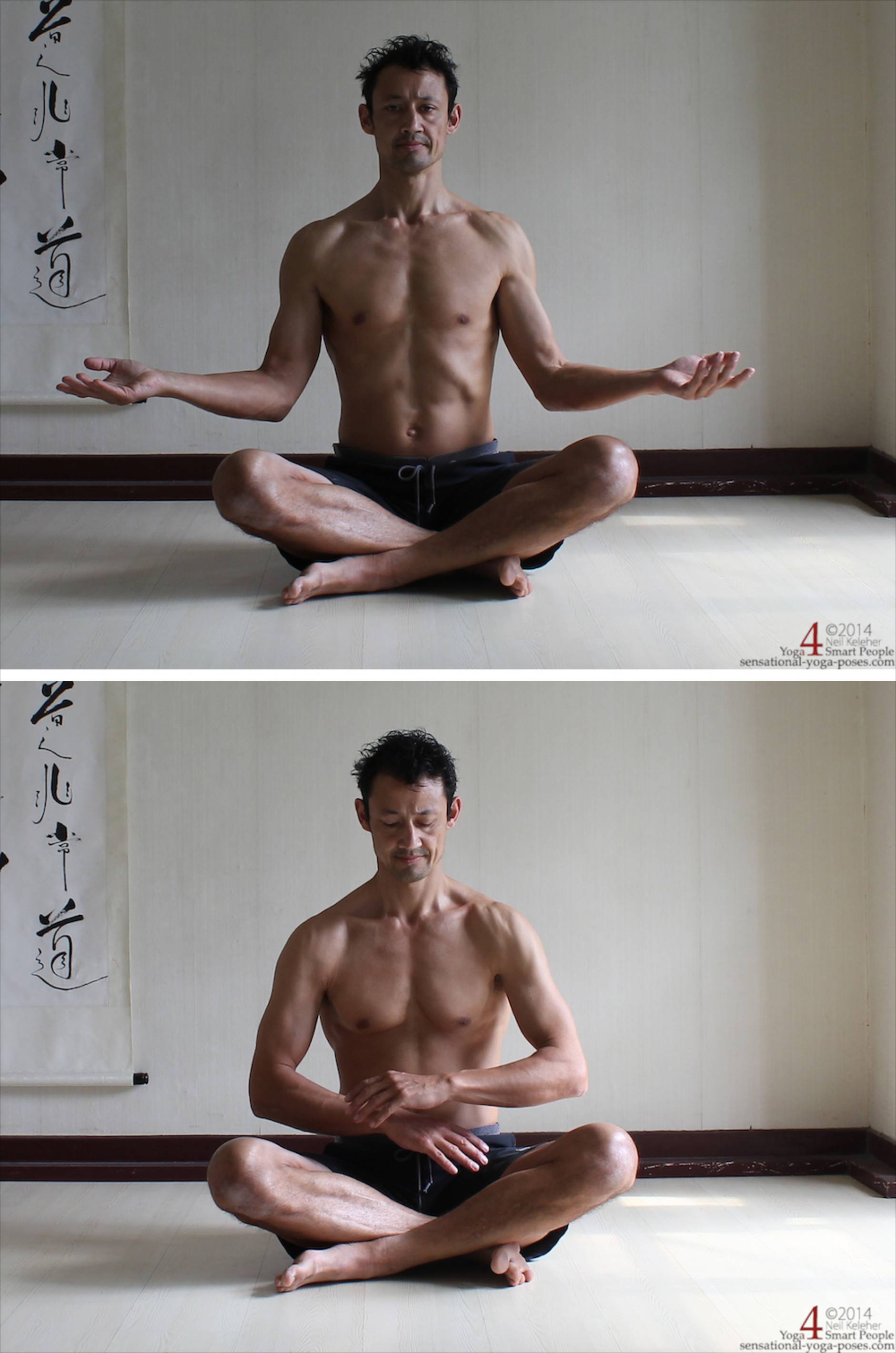
1. Externally rotated.
2. Internally rotated.
While externally rotating the arms, lift your chest and lengthen your neck. When internally rotation, let the head move forwards and down and let your chest sink down also.
In addition, rotate the forearms. When rotating the upper arms externally turn the palms upwards. When rotating internally turn the palms downwards.
Make the actions slow and smooth.
Dance of Shiva Arm Rotations
Some positions that I use as a Dance of Shiva warmup can also be used to practice both upper arm rotation and forearm rotation.
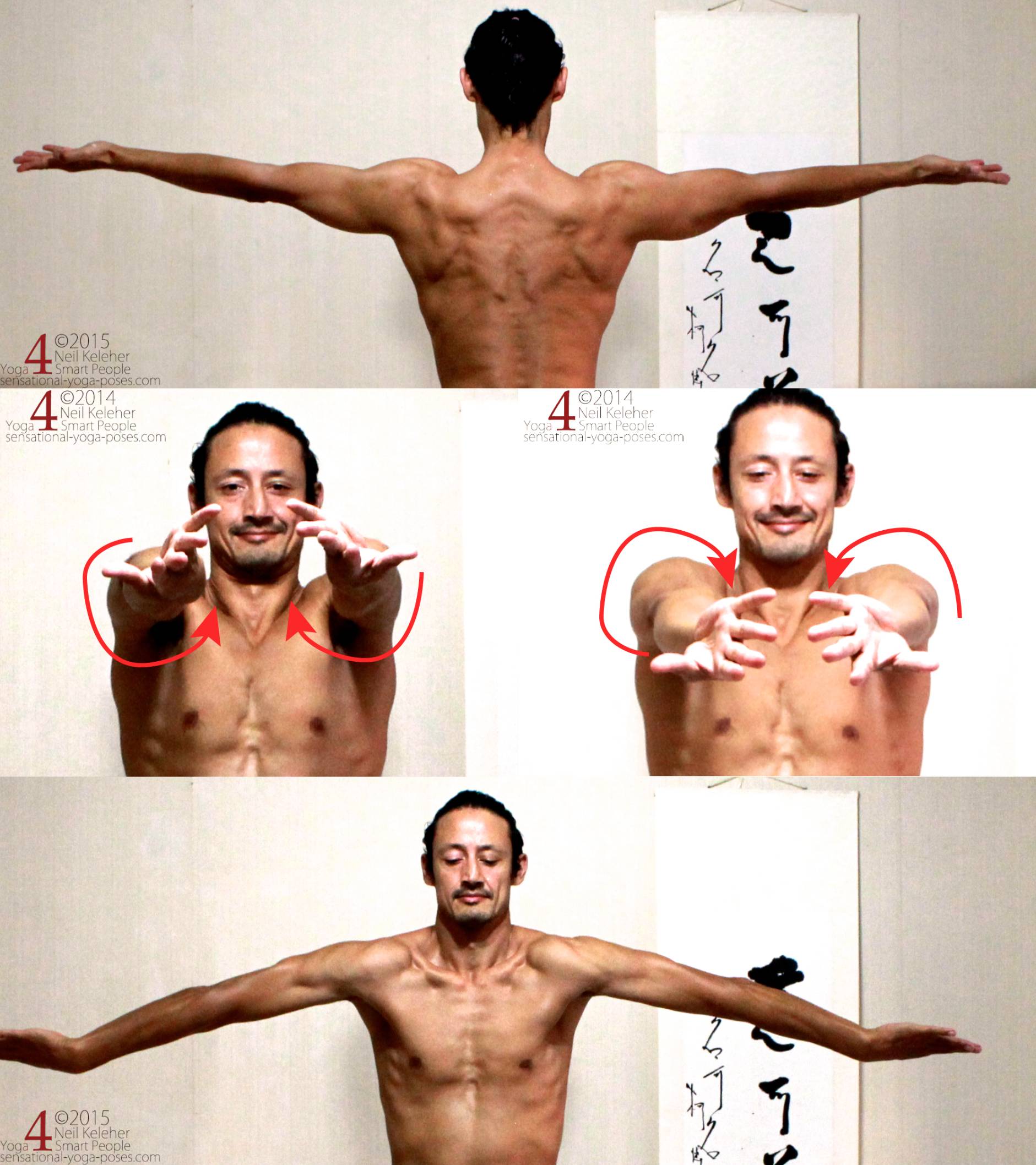
Arms to front, externally rotated then internally rotated,
Arms to side, Internally rotated.
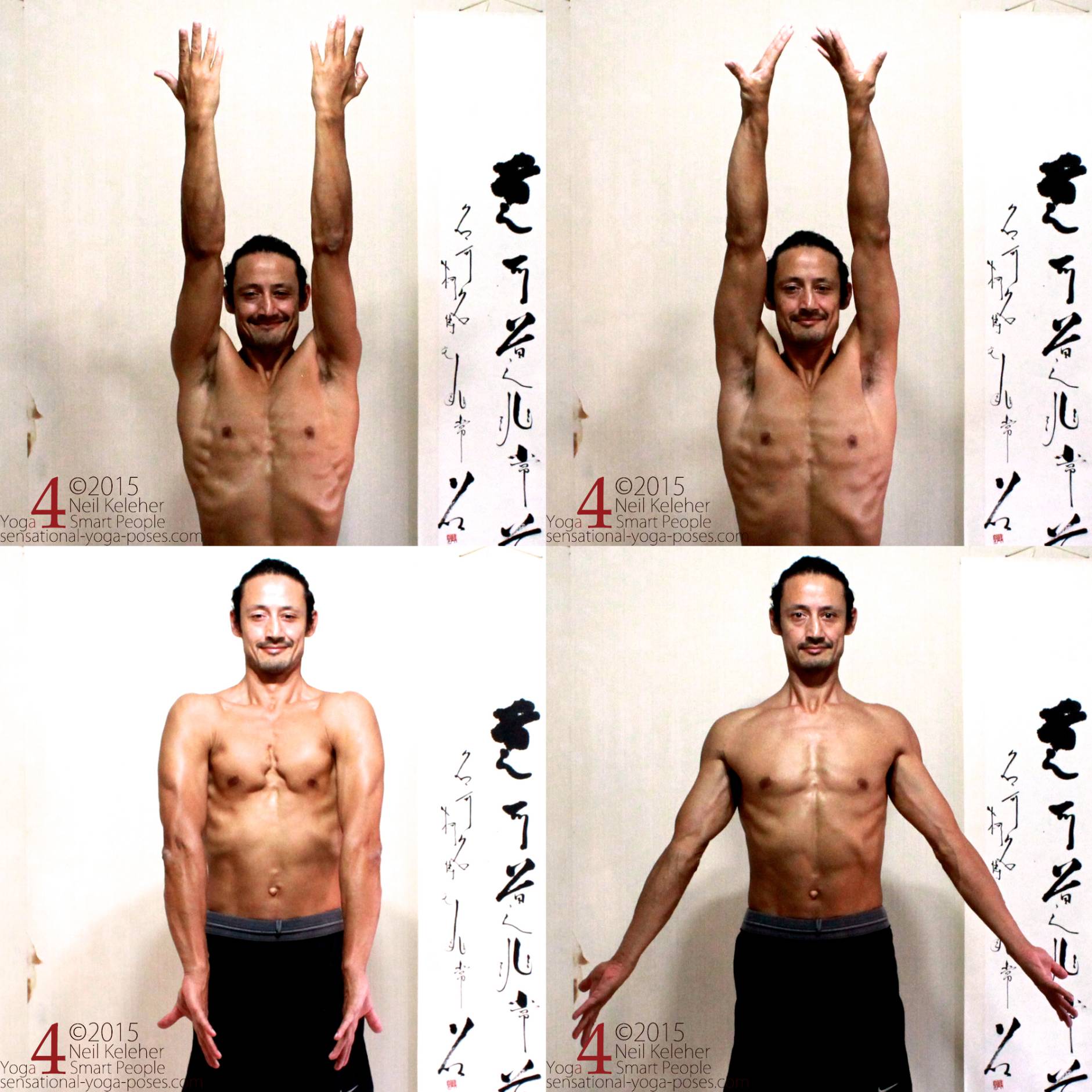
Arms down with internal rotation, then external rotation.
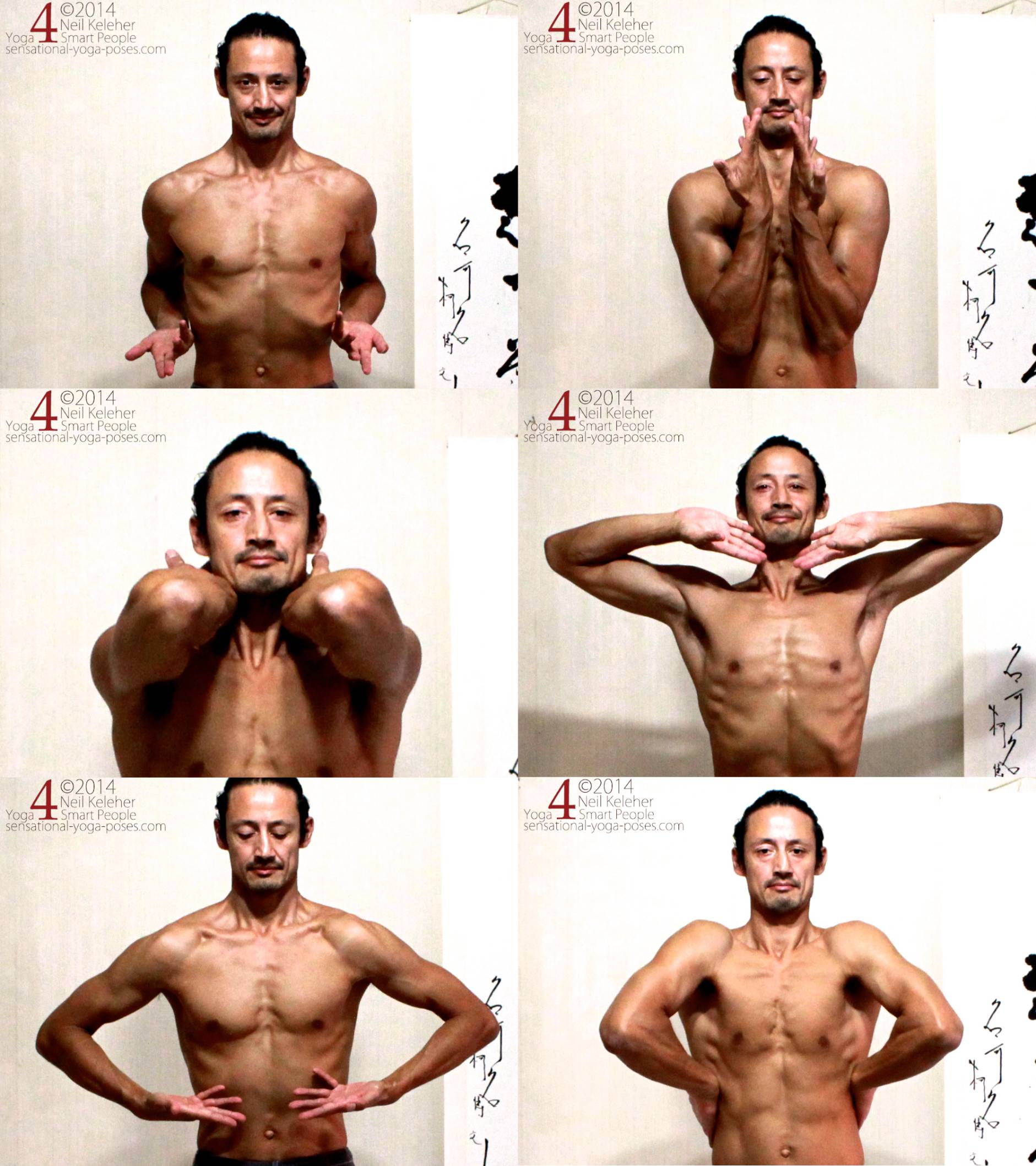
elbows forwards, elbows to sides with palms facing up in front of chin,
elbows to side with palms in front of belly, elbows forwards with backs of hands against sides of waist.
For all of the exercises shown:
- move slowly into the pictured position,
- hold for a few breaths while trying to deepen the rotation of forearms and/or upper arms.
- Keep your neck long and front and/or back ribs open.
Then slowly release and relax. Then move into the next position.
Each of the above warm-ups is designed to assist a practitioner in making the arm positions (and movements) of the dance of shiva slightly easier.
You can read more about the Dance of Shiva here.