Basic Scapular Control
Basic movements of the shoulder blades include: lifting/elevation, protraction/spreading, retracting. There is also depression, rotation so that the eye of the shoulder socket looks upwards (supraversion) and the opposite rotation where the eye of the shoulder socket looks downwards (infraversion.) There are also combinations of these movements.
The movements below are introductory movements to get you used to feeling the shoulder blades and several important land marks including the peak or roof of the shoulder (the accromion process), the inner edge of the shoulder blades (or medial border), the bottom tip of the shoulder blades (inferior angle)
Elevation 1
Do the following while sitting or standing with the torso upright.
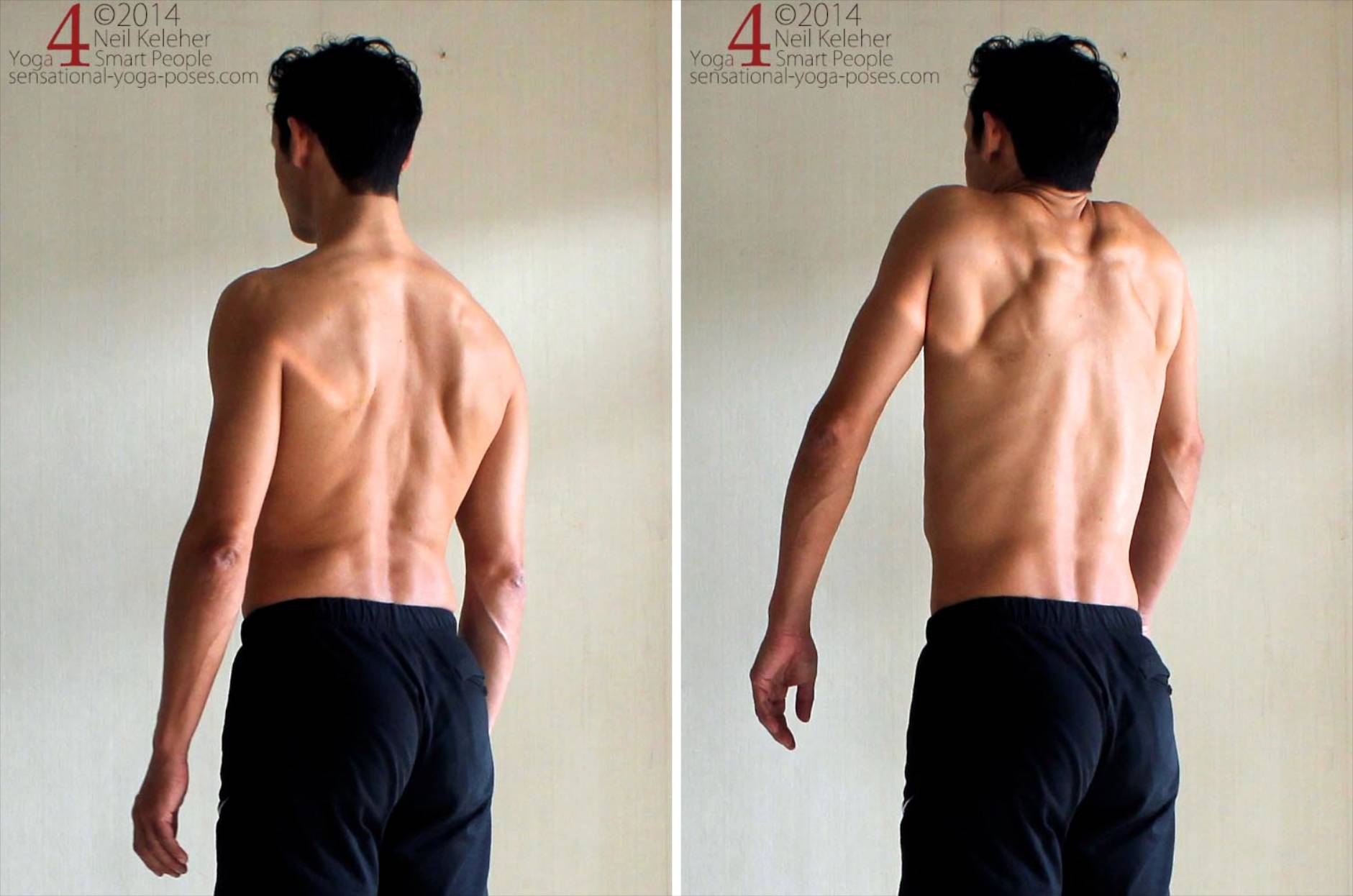
Starting with shoulders relaxed, move shoulders upwards (elevation). Then let the shoulders sink back down to relax.
Relax and repeat.
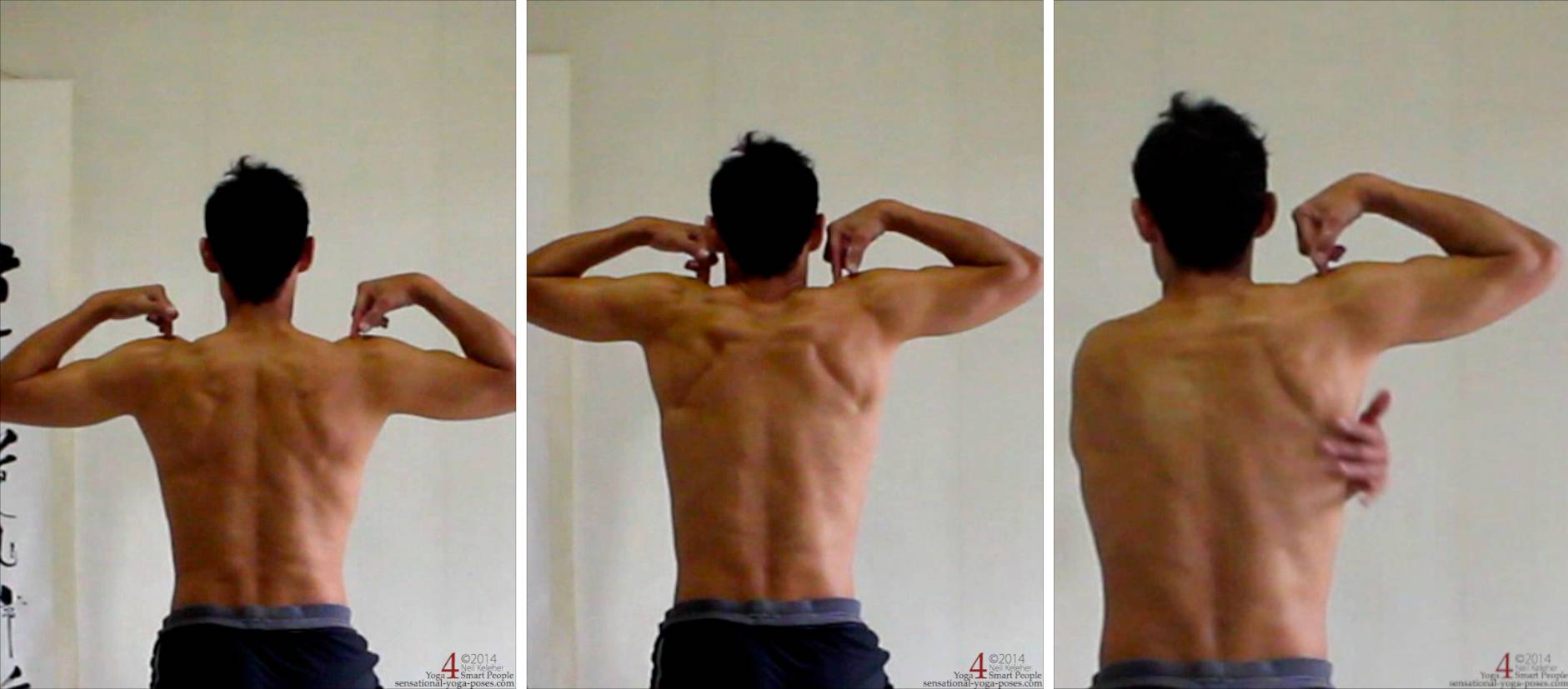
Elevating one shoulder at a time, use the free hand to feel the bottom tip of the working shoulder. Feel the bottom tip moving outwards (and upwards) as you lift the shoulder.
Keeping your chest lifted and open, lift your shoulders then let them relax back down. When lifting focus on the “peaks” of the shoulders, the bony peaks at the top of each shoulder. Try to draw these points on each shoulder upwards and inwards when lifting the shoulders so that you activate the middle fibers of the trapezius.
You can also focus on lifting or pulling upwards on the outer end of each collar bone. Doing so will help to maximize the likelihood activating the upper fibers of the trapezius muscles.
You may notice that as you lift the shoulders the bottom points of the shoulder blades move outwards so that the “eye” of the shoulder socket looks upwards (supra-version).
Protraction
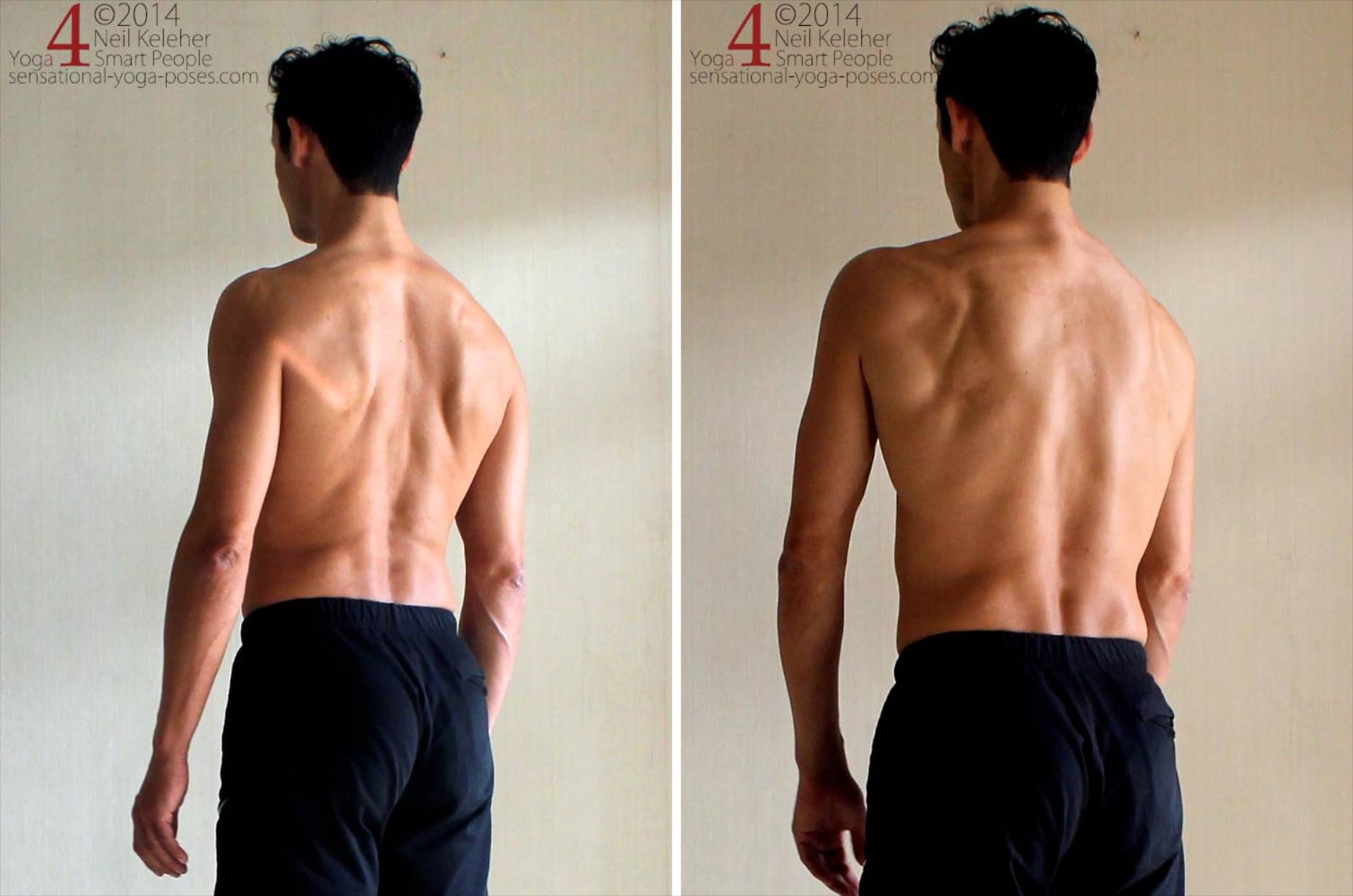
Relax and repeat.
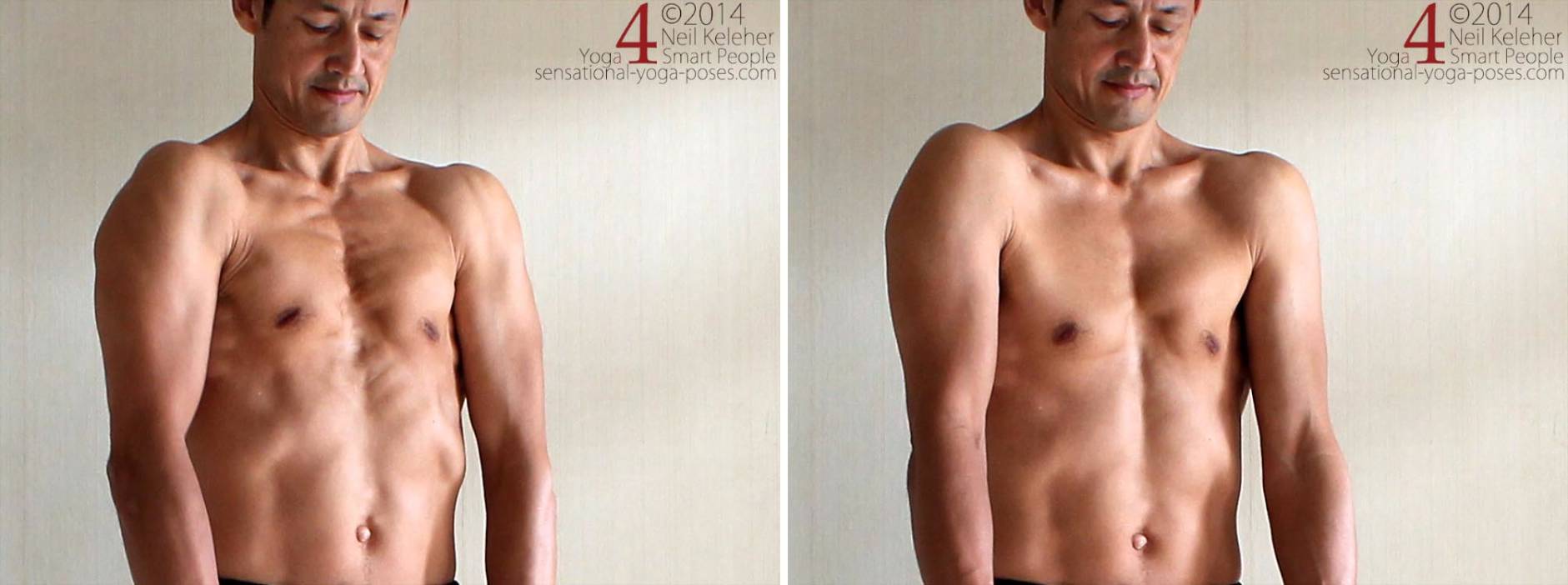
Try to avoid this and instead keep your chest relaxed as in the second picture.
Sitting or standing with torso upright and chest lifted and expanded, move the shoulders forwards. Then relax them.
After repeating a few times focus on feeling your shoulder blades moving outwards (away from each other) as you move your shoulders forwards. Once you have a feel for your shoulder blades then focus on feeling the inner edges of your shoulder blades.
Focus on spreading the inner edges of your shoulder blades so that your shoulders move forwards.
If you focus on the inner edges of your shoulder blades you are more likely to be activating the serratus anterior muscle.
Also, when doing this exercise keep your pectoralis major muscles relaxed. To make this easier, try contracting your pecs to pull your shoulders forwards. Repeat a few times noticing the difference in feeling between relaxed and active. Then, while focusing on the inner edges of your shoulder blades, keep your pecs relaxed as you spread your shoulder blades.
Retraction for Rhomboids
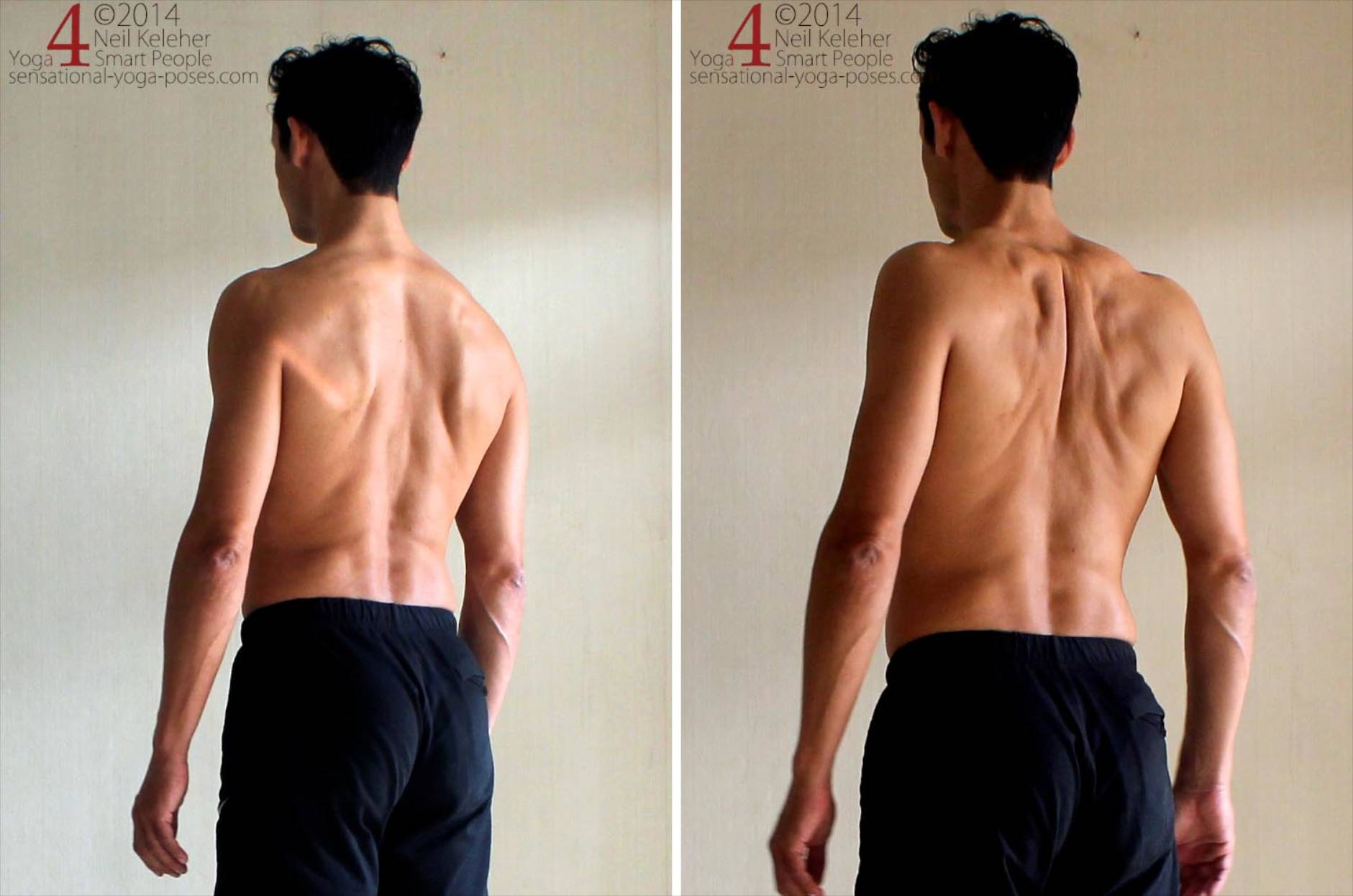
Keeping chest lifted and expand, move your shoulders backwards and slightly upwards. You may feel a squeezing sensation between your shoulder blades. This is the rhomboids (and/or lower trapezius) activating . Relax and repeat.
Once you have a feel for the action focus on the inner edges of your shoulder blades while doing the movement. Try to pull the inner edges towards each other.
Avoiding Shoulder Impingement
The technical name for the upper points of the shoulders is “accromion process”. It could be thought of as the “roof” of the shoulder. I also refer to it “the peak” of the shoulder.
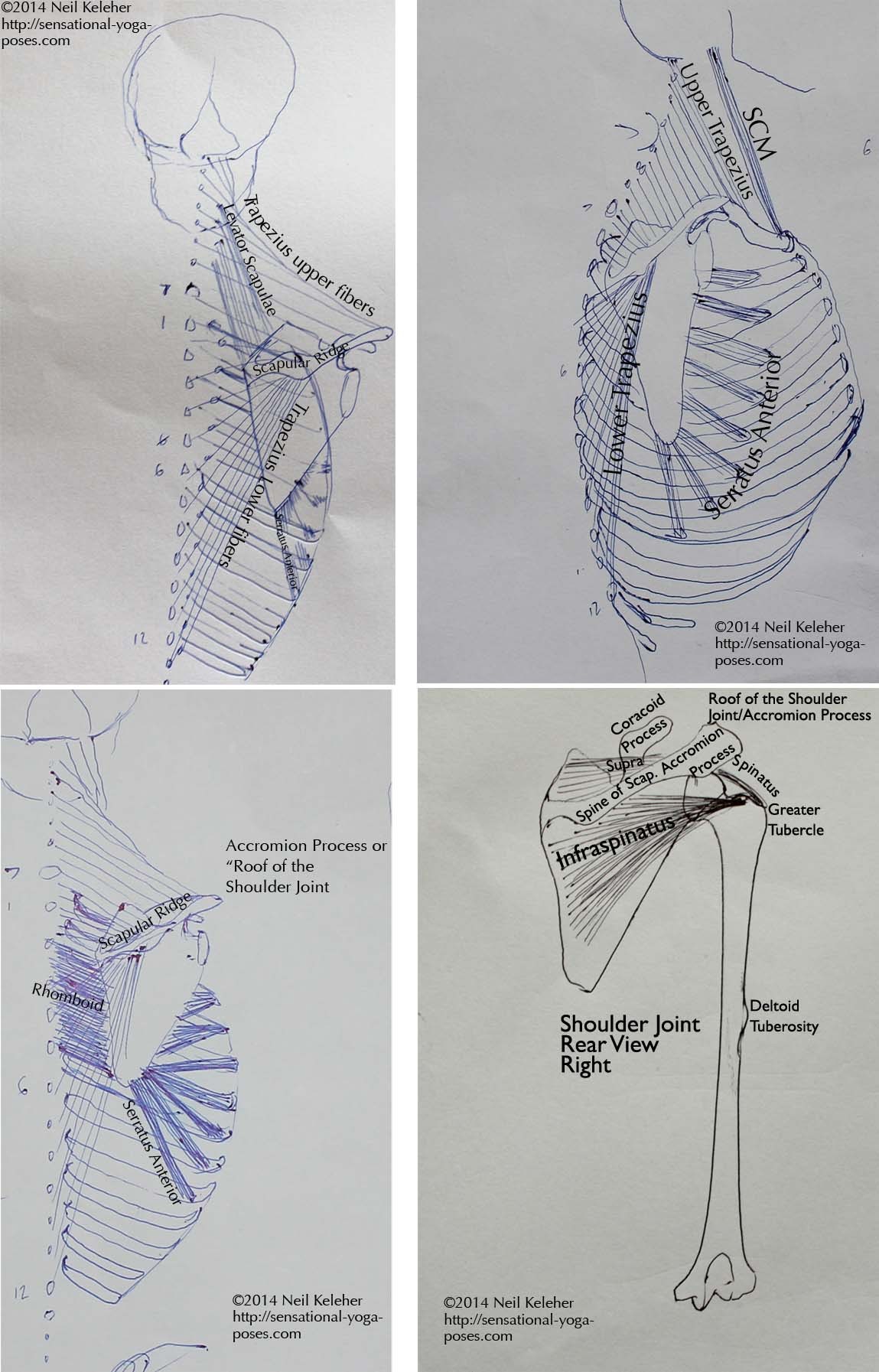
The middle fibers of the trapezius attach to this point. (The upper fibers attach to the outermost third of the collar bones). To activate these fibers, focus on drawing the points of the shoulders upwards and inwards, towards the ears.
It is possible to lift the shoulder blades without them rotating. Then the inner and outer edges of the shoulder blades move upwards together. (The levator scapulae attaches to the inner edge of the top of the scapulae and is the muscle that can be used to pull upwards on this part of the shoulder blade.)
When the focus is just pulling upwards on the peak of the shoulder blade, then ideally the outer edge of the shoulder blade moves up more than the inner edge. This then causes the roof of the shoulder blade to move inwards, towards the centerline of the body while the bottom of the shoulder blade (and the bottom of the shoulder socket) moves outwards.
The bottom tips of the shoulder blades should move outwards automatically but if not it may also help to deliberately focus on moving the bottom tips outwards.
This action, where the peak of the shoulder moves inwards, is so that when the arms reach overhead the humerus doesn’t impinge on the peak of the shoulder.
So that this is easier to do when lifting the shoulders with the arms down, allow the arms to move out to the sides when lifting the shoulders.
Arms Forwards Protraction and Retraction
Many beginners students find it challenging to protract and retract with the arms forwards. And so that is another action that can be practiced.
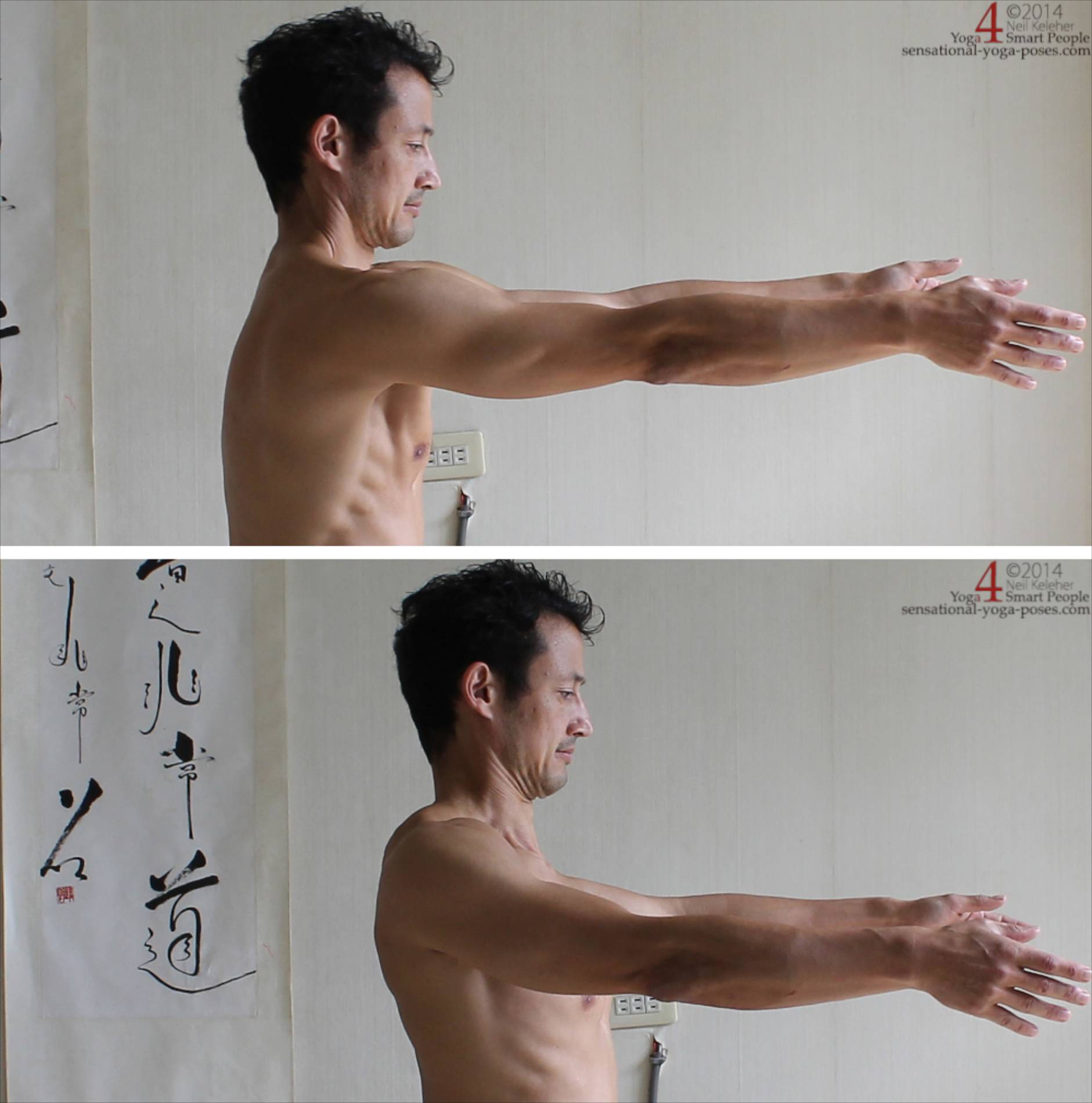
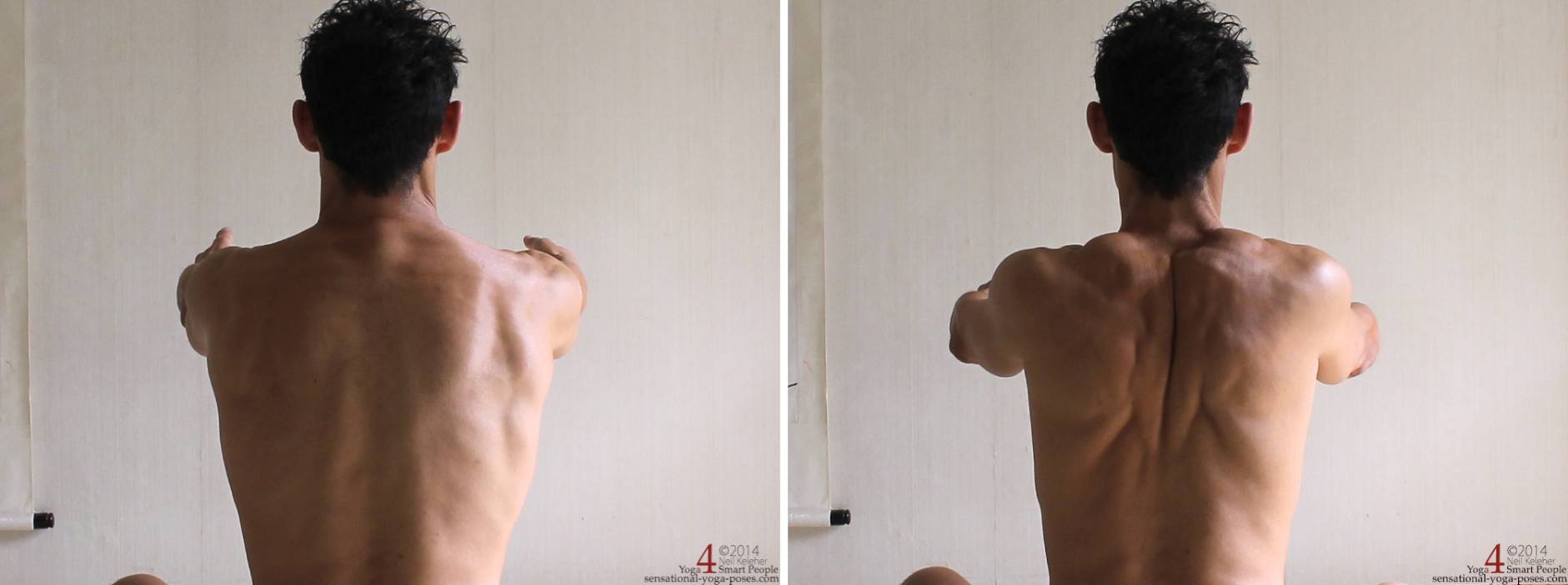
With the arms reaching forwards,
- Spread the inner edges of the shoulder blades.
- Then return to the starting position.
- Then retract the shoulder blades
- Repeat
Arms Lifted Protaction and Retraction
Next practice protraction and retraction with arms lifted.
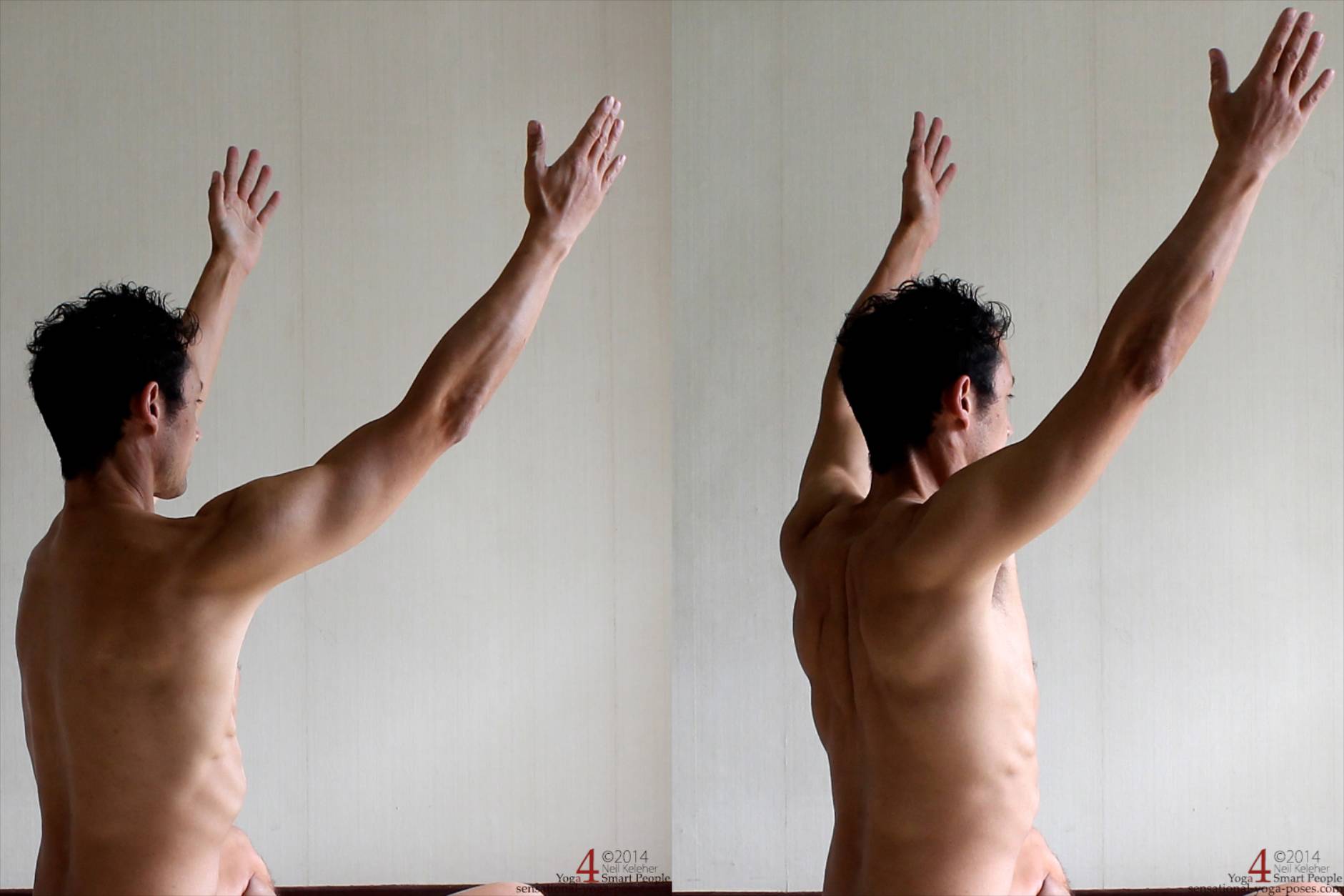
- Move slowly and smoothly.
- focus on the inner edges of your shoulders blades.
Work at doing all actions slowly and smoothly, both the activation phase (i.e. retracting or protracting) and the relaxation phase.