Shoulder Basics
The neck and ribcage could be considered the base or foundation for the shoulders. Being aware of and controlling the neck, ribcage and spine can be the first step towards developing better shoulder control and flexibility.
Neck Stretch and Strengthen
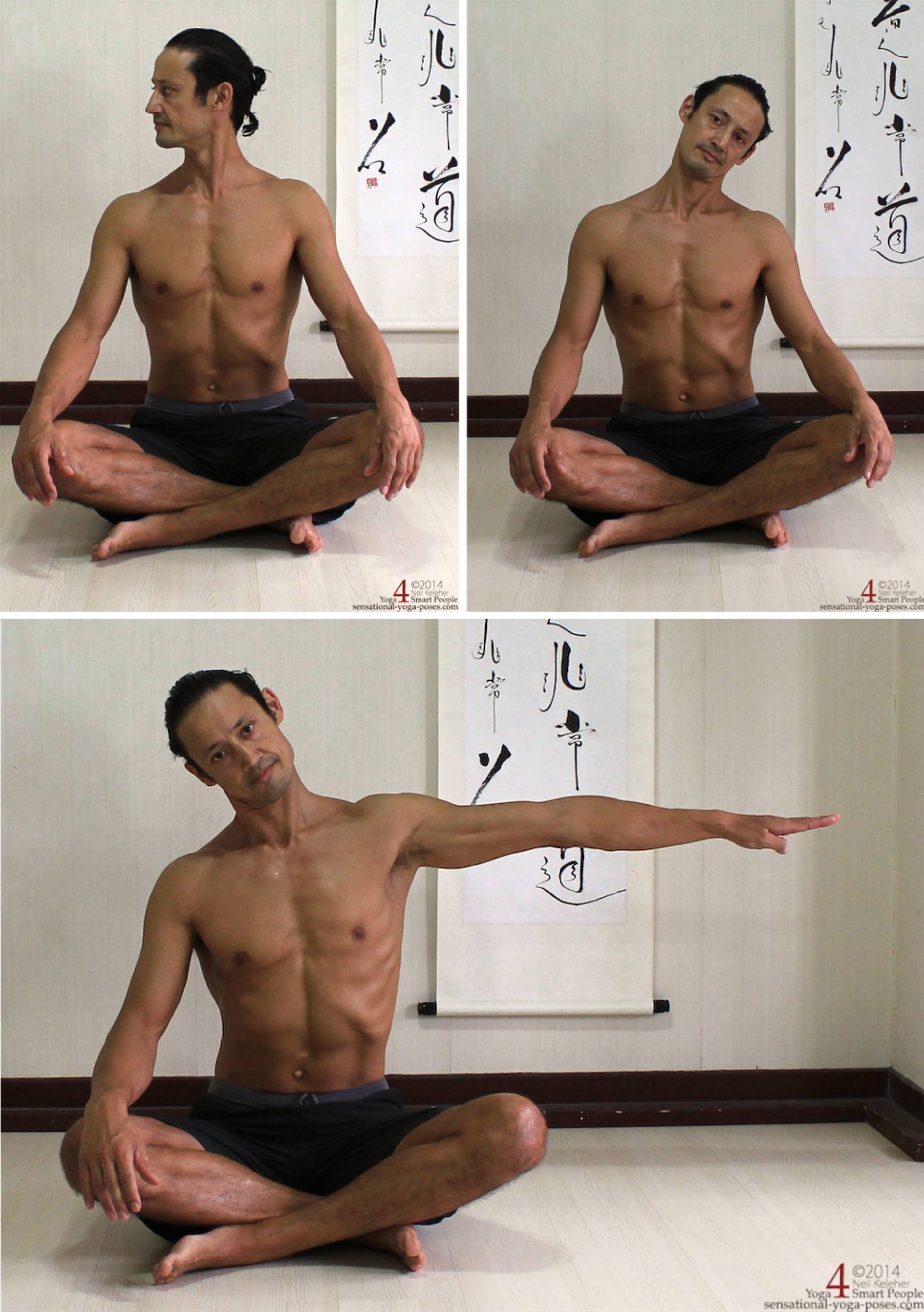
1. Twisting the neck.
2. Side bending the neck with arms down.
3. Side bending the neck with arm on “long side of neck” lifted to the side.
While stretching the neck, work at keeping your ribcage and shoulders stable. Also keep the ribs lifted and open so that the ribcage feels like it is expanded (and not just “lifted”). When twisting the neck work at keeping your ribcage square to the front.
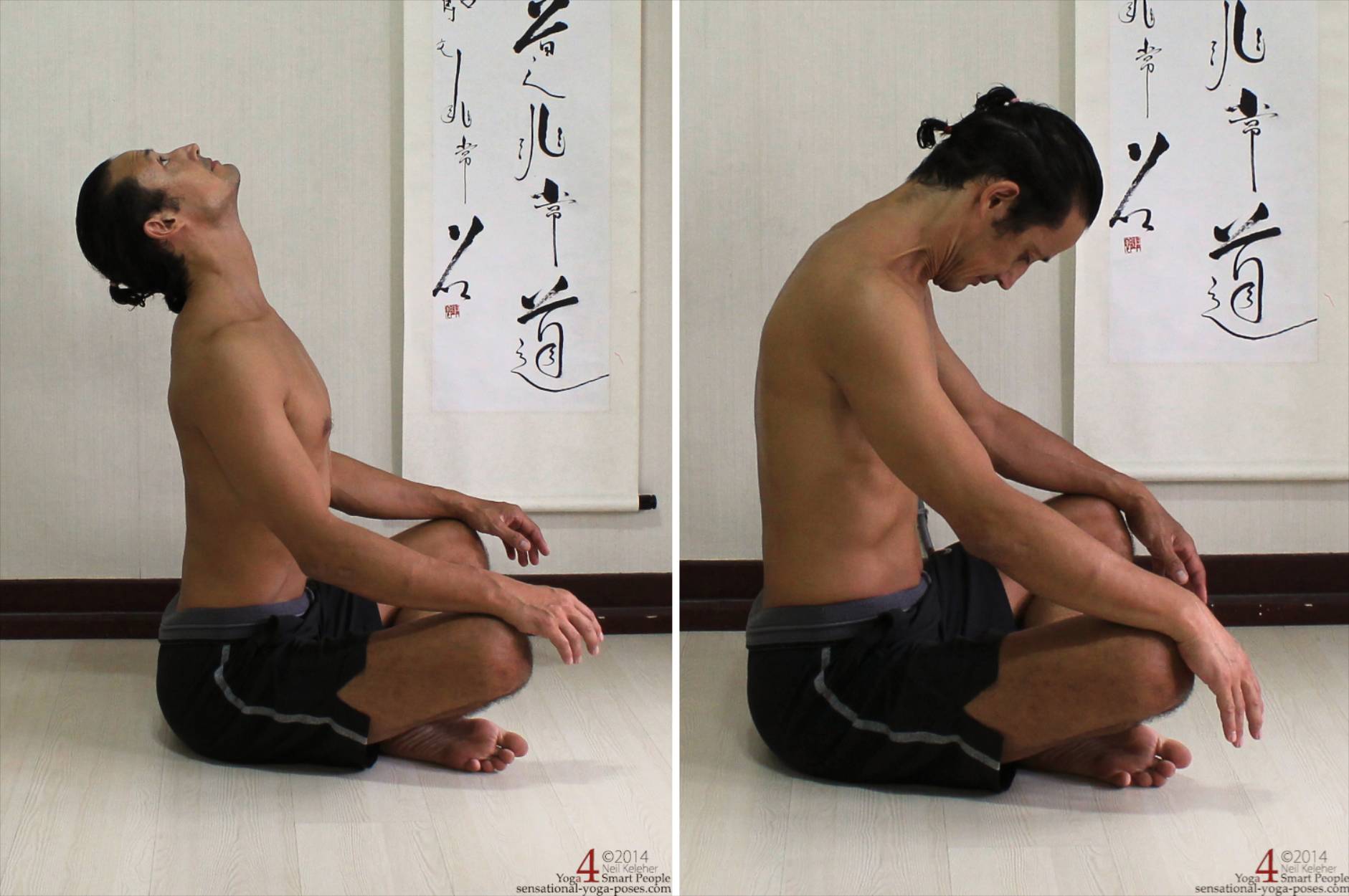
Three basic neck movements are:
- twisting
- side bending
- front and back bending
Stretching the neck in any of these movements can be made more effective by activating the neck muscles while stretching it. In bends to the side, front or back you can contract the muscles on the short side1 of the stretch, or you can contract the muscles on the long side of the stretch. Or you can contract both sets of muscles. I’d suggest trying all three methods and notice for yourself which method works best.
In all cases work to maintain the stretch or deepen it. In addition, work at adding tension and decreasing is smoothly and gradually.
Note that for twists its a bit harder to say which side is short and which side is long. So either activate the muscles on the side you are twisting towards, or on the side you are twisting away from, or both sides.
- In the neck twist imagine each vertebrae twisting relative to the one below it.
- When side bending the neck, if bending to the right imagine the left side of each vertebrae moving away from the left side of the vertebrae below. (For the side-bend, experiment with reaching the arm out to the side on the side you are leaning away from.)
- For the front bend and back bend, imagine the backs or fronts of the vertebrae moving away from each other respectively.
Bending the Ribcage Forwards and Backwards
This exercise can be done either sitting or standing.
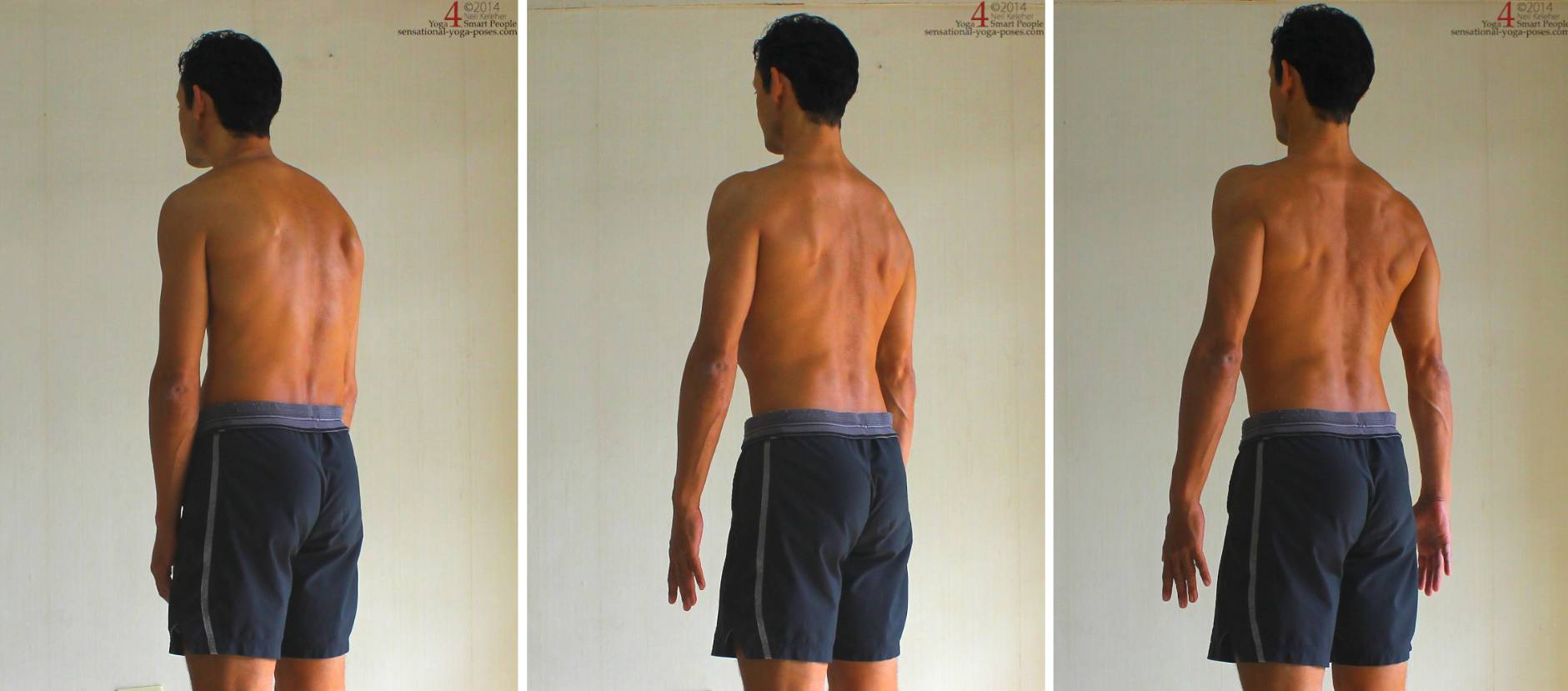
1. Relaxed
2. Lift and expand front ribs
3. Pull head back and up (and pull chin down).
Basic Set Up Sit or stand with the torso upright. (If you have difficulty, start sitting, and then try the exercise while standing.)
- As you lift your ribs away from your pelvis your waist will lengthen.
- As you let the ribs sink down towards the pelvis the waist relaxes.
Notice how these movements affect the spaces between your ribs.
- See if you can feel the spaces between your ribs and between ribcage and pelvis expanding as your lift the ribs.
- Notice the reduction in tension as you relax.
You could focus on pulling the back of your ears up and back during the lengthening phase.
To build on this exercise, see if you can feel your side ribs expanding and lifting. Then see if you can feel the backs of your ribs lifting.