Introduction

Result objects represent the outcome of an operation, removing the need to check for null. Operations that succeed produce results encapsulating a success value; operations that fail produce results with a failure value. Success and failure can be represented by whatever types make the most sense for each operation.
Results in a Nutshell
In Java, methods that can fail typically do so by throwing exceptions. Then, exception-throwing methods are called from inside a try block to handle errors in a separate catch block.
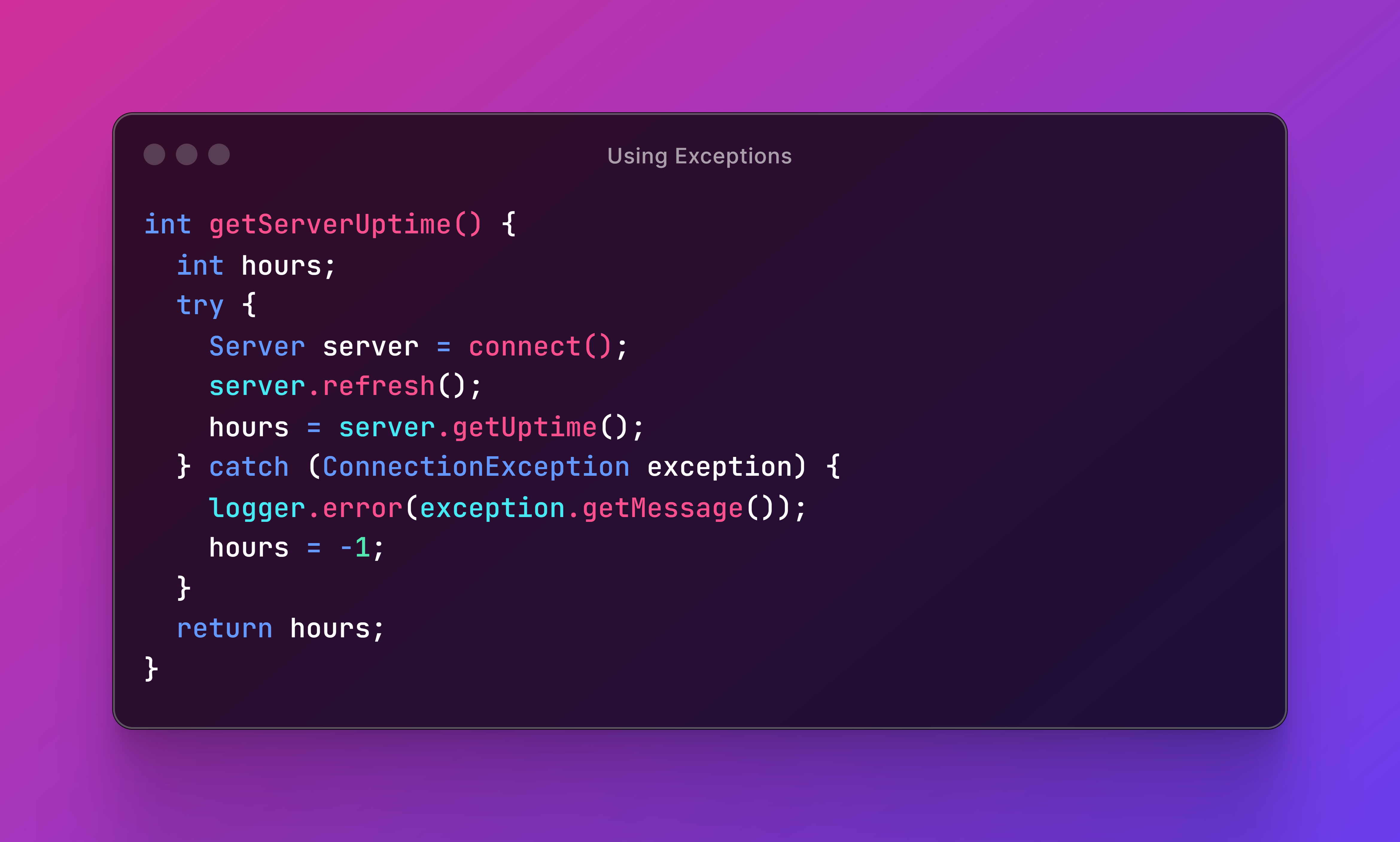
This approach is lengthy, and that’s not the only problem — it’s also very slow.
 |
Conventional wisdom says exceptional logic shouldn’t be used for normal program flow. Results make us deal with expected error situations explicitly to enforce good practices and make our programs run faster. |
Let’s now look at how the above code could be refactored if connect() returned a Result object instead of throwing an exception.
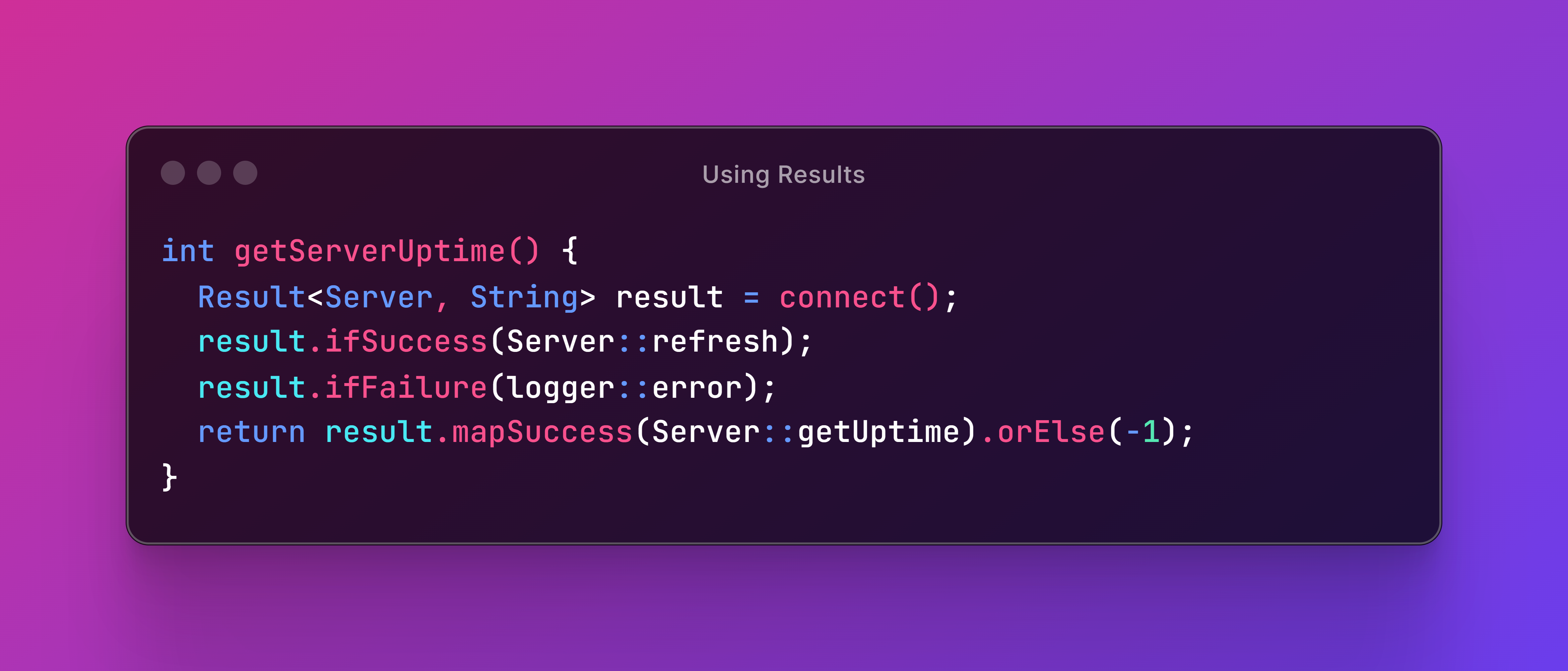
In the example above, we used only 4 lines of code to replace the 10 that worked for the first one. But we can effortlessly make it shorter by chaining methods. In fact, since we were returning -1 just to signal that the underlying operation failed, we are better off returning a Result object upstream. This will allow us to compose operations on top of getServerUptime() just like we did with connect().
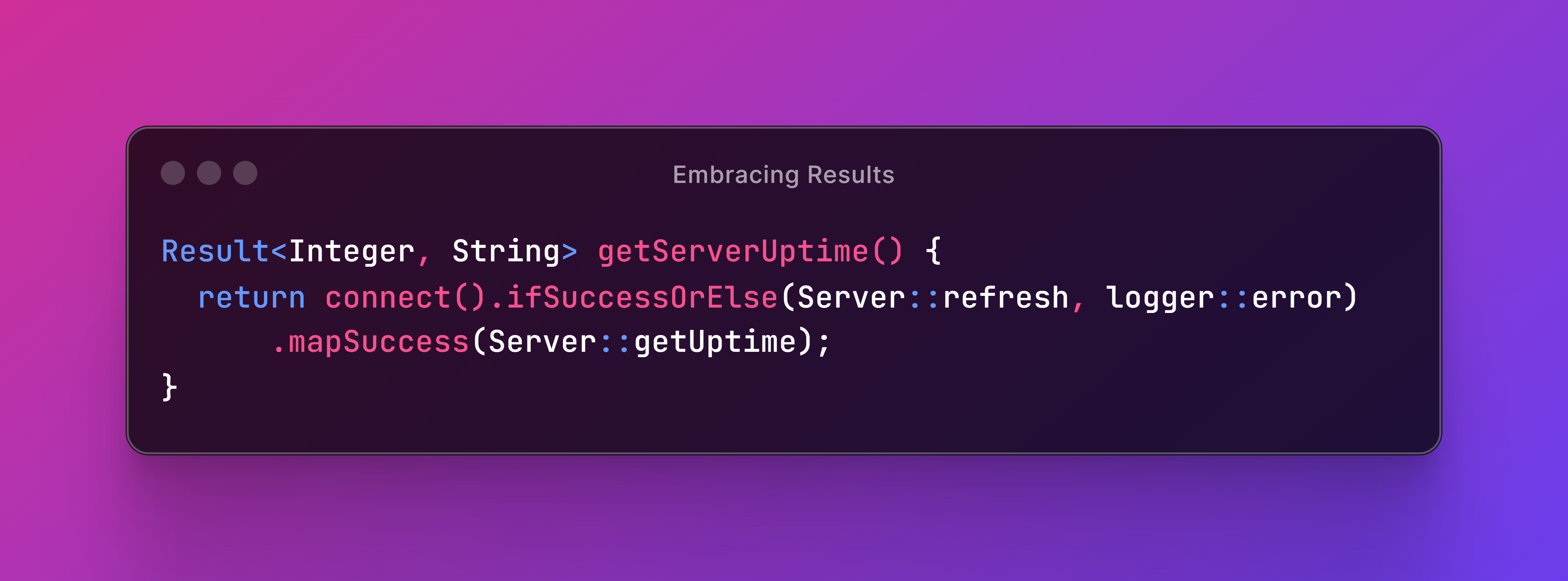
Result objects are immutable, providing thread safety without the need for synchronization. This makes them ideal for multi-threaded applications, ensuring predictability and eliminating side effects.