Conclusion: The Path Forward
Across this guide, we explored why Governance Debt exists, what the landscape looks like, how higher education is different from other sectors, which frameworks fit your team, and which regulatory loads you need to consider. From there, we turned to the work itself.
Looking back, here’s what we covered:
- The framework blueprints (Chapters 5 and 6)
- How to support the research enterprise (Chapter 8)
- How to simplify meeting overlapping regulations (Chapter 9)
- How to conduct the Inspection (Chapter 10)
- How to build the improvement roadmap (Chapter 11)
That’s a lot of ground. And now you have a complete view of how to start refreshing your IT policy library.
But let’s be honest about what “doing it yourself” means in higher education. It means relying on staff who already have full-time jobs, competing priorities, and a project roadmap that slides quarter after quarter because there’s always a more urgent fire to fight. Whether you run a project internally or bring in outside help, the work doesn’t have to happen all at once. It does have to start.
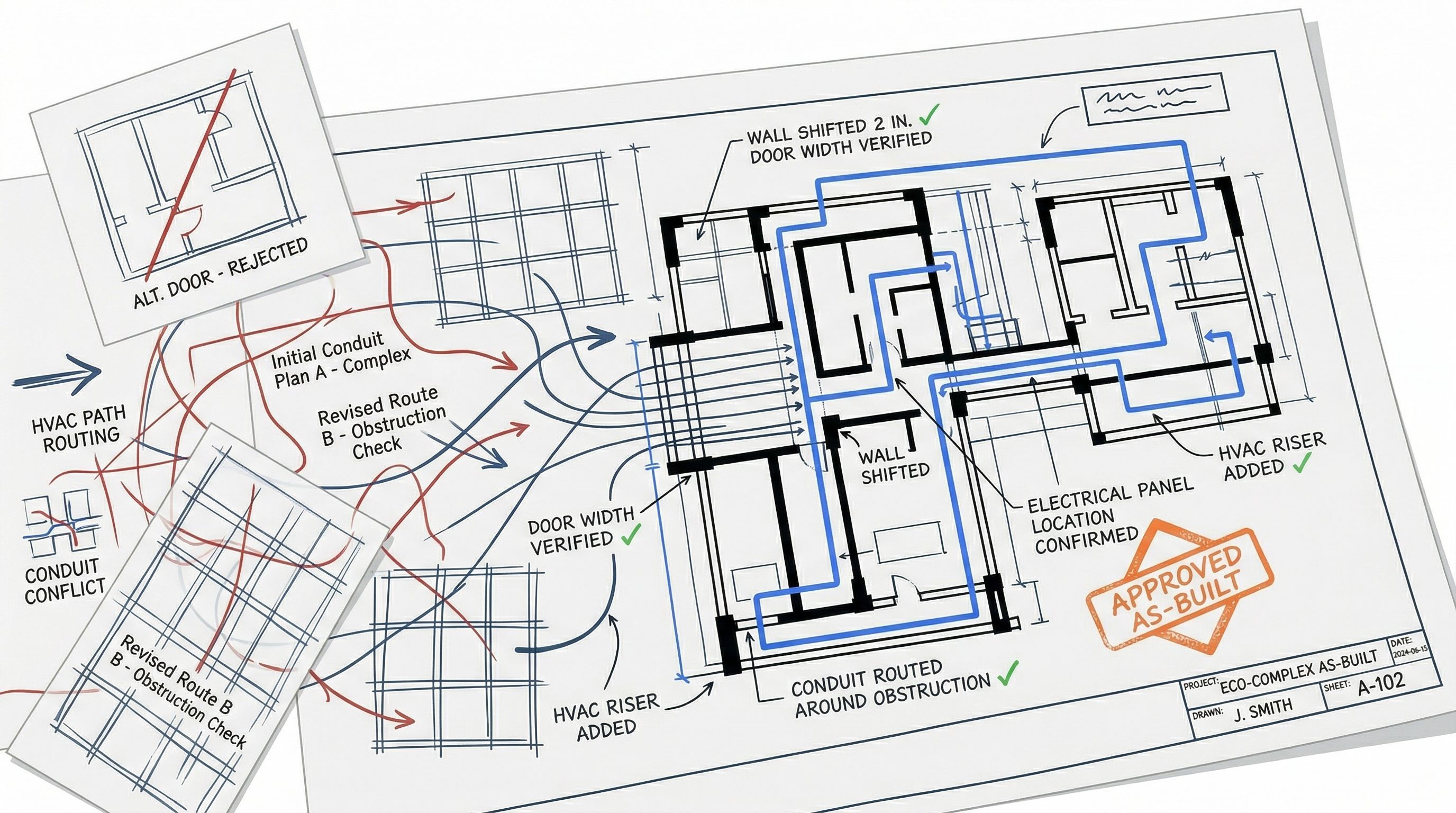
Remember the opening of this guide and the gap between design drawings and as-built reality. That gap isn’t a failure. It reflects the actual work needed to maintain IT policies at your institution. Programs evolve under pressure, with limited staff, shifting leadership, and regulations that change faster than documentation can keep up. Building a mature policy program requires closing the gap between your design and your as-built reality.
The work ahead is straightforward even if it isn’t easy. You’ll need to update your policies so they reflect how work actually happens, not how someone imagined it would happen a decade ago. And you’ll need to do this on an annual cadence rather than as a one-time upgrade project. This helps you adapt as regulations change, threats grow, and higher education best practices evolve each year.
The institutions that do this well treat governance as maintenance. Each year’s roadmap gets built from the previous year’s Inspection, and deferred items are evaluated fresh each cycle. This helps you balance effort against risk without letting the backlog paralyze you.
Your Governance Debt doesn’t disappear overnight, but it stops compounding. Start a recurring improvement cycle. Your first roadmap won’t be perfect. That’s fine. Each year, your Inspection and planning process will improve and your Governance Debt will shrink.
Where to go from here
Policy work can be tackled internally or with outside support. The CampusCISO offerings below map to a range of institutional needs.
Start with this framework. The CampusCISO IT Policy Framework, updated annually, is freely available at campusciso.com/it-policy-guide. The Community Edition is the foundation that all other CampusCISO IT Policy offerings build on. Institutions can use it on its own as a reference for self-directed work.
Build it with the guide. Building IT Policy Programs for Higher Education interprets the framework. It includes a light assessment workflow and a structured approach to building a development roadmap. An institution with the staff capacity and the patience will find everything it needs in the book to build a defensible IT policy improvement cycle.
Get a baseline diagnostic. The IT Policy Diagnostic delivers a 0-100 score and a prioritized gap list within two business days. It’s the fastest way to answer “Where do we actually stand?” with evidence to bring to leadership. Useful for new CISOs in their first 90 days, programs preparing for audit, and any institution that wants a defensible baseline without committing to a larger engagement.
Get a development roadmap. The IT Policy Roadmap provides a detailed review of every policy in an institution’s portfolio, peer benchmarking, and a sequenced development plan weighted by factors like impact and cost. Ideal for institutions that want to identify defensible improvement priorities.
Make it ongoing. CampusCISO membership turns governance from a one-time project into a continuous improvement cycle with ongoing access to expert advisory support.
For the full service catalog, visit campusciso.com.
Document Information
- Publication: Building IT Policy Programs for Higher Education
- Originally Published: May 2026
- Author: Chris Schreiber, Founder, CampusCISO
- Recommended Citation: Schreiber, C. (2026). Building IT Policy Programs for Higher Education. CampusCISO.
- Availability: Available at campusciso.com/it-policy-guide