Week 1
A Historical perspective
There are numerous musical genres, and each of them has its own particular “style”: the sound, the looks of the performers, the behaviour of the audiences, and so on.
What led to the development of such strong cultural conventions? How do these conventions influence the way we experience music?
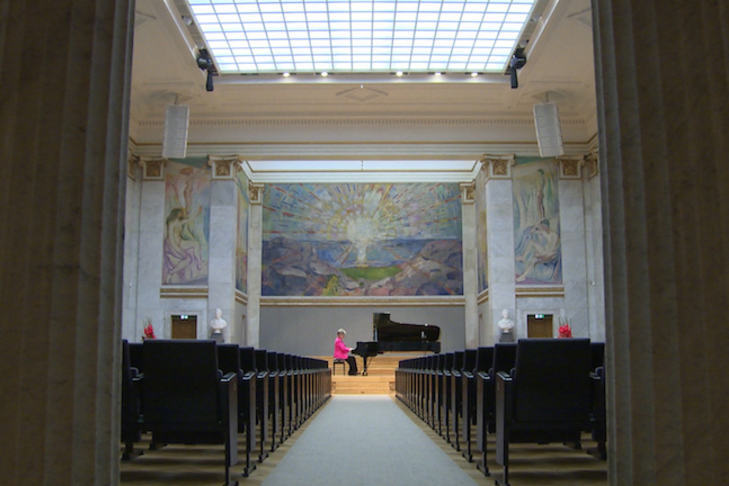
In this course we will study music as a phenomenon, rather than as a specific musical artefact. But that also requires an understanding of the different cultures we are situated in and coming from. The educators have been active musicians within various music genres, but they all have their academic training from institutions where the tradition of Western art music (“classical music”) has been dominant. This musical culture is often seen as the ideal in the musical “hierarchy”, and the most serious and prestigious way of experiencing music. The typical way of experiencing Western art music is to be:
- seated
- in silence
- and not moving
This is probably the only possible way for many music lovers to have a rich and rewarding experience with music, but for others it may have limitations for how a bodily involvement may enhance the experience. Since this way of experiencing music often is used as a model for how music should be experienced also in other settings, this may be problematic. In Music Moves our aim is to explain why we believe it is due time that the body is taken seriously in music education and research. Furthermore, we even believe that if we truly want to understand the power of music, the body needs to be included in the discussion.
We will start by looking at how the focus on, and interest in, music and body movement have changed over the years.
The history of listening experience - Part 1
Contemporary classical music listening is mostly sedentary and silent, with no spontaneous outburst or cheering from the audience. Has it always been like this? In this video Hans T. Zeiner-Henriksen presents a historical overview of the development of the classical music concert tradition.
The Listening Experience up until the 20th Century
In this article we will explore some of the topics from the previous video in more detail.
The connection between music and body movement seems immediately obvious already in light of how musical sound is made. Body movements produce sounds on instruments, and very few musicians are able to play properly without a repertoire of other types of movements: the jazz pianist might keep time through foot tapping, while the classical clarinettist might embody the melodic phrases through phrasing “dips” in the head and shoulders.
Similar types of connections between sound and movement are also apparent in the perception of music. In dance music, for example, the body responds to specific features in the music - of choreographed classical ballet, stylized folk dance, and improvised club dance. But perceiver’s movements are not only restricted to dancers. As Simon Frith writes,
A good rock concert . . . is measured by the audience’s physical response, by how quickly people get out of their seats (1996:124).
In most popular music, jazz, and almost any folk music, connections between music and movement can be found in examples of foot tapping, head nodding, body swaying, clapping, singing along, dancing, or in various ways mimicking sound-producing actions (playing “air guitar”). However, there are large cultural differences in how such bodily involvement is regarded.
In the scholarly tradition focusing on Western “classical” music it has often been a focus on so-called “serious listening”. While the conductor may gesticulate exaggeratedly and the musicians certainly move while producing sound, the concert hall audiences are generally supposed to sit still and quiet. Patrick Shove and Bruno Repp describe the listening environment of the concert hall as:
A social proscription against overt movement by listeners has long been in effect (1995:64).
We may then ask, for how long?
The ideal of silent, attentive listening in concert halls is a social phenomenon that advanced only during the 19th century. Richard Sennet writes:
To sneer at people who showed their emotions at a play or concert became de rigueur by the mid-19th century. Restraint of emotion in the theater became a way for middle-class audiences to mark the line between themselves and the working class. A “respectable” audience by the 1850s was an audience that could control its feelings through silence; the old spontaneity was called “primitive.” The Beau Brummell ideal of restraint in bodily appearance was being matched by a new ideal of respectable noiselessness in public (1974:206).
While Sennet occupies himself with the sociological causes for this shift, James Johnson views it in relation to the music that was introduced at the time, such as the works of Beethoven requiring more concentrated listening (Johnson 1995). Johnson, as well as Lydia Goehr (1992:191ff) disdains the 18th-century audience for being primarily occupied with social activities when attending concerts. William Weber in turn takes both to task for endorsing a specifically post-Romantic view of listening that is replete with distrust of
any fusion between music and mundane social activities which are felt to violate the integrity of musical experience (Weber 1997:681).
The idea of the musical work as a perfect, complete unity propagated in the same period. This fostered conventions such as:
- always play complete symphonies, never parts
- never applaud between parts/movements
- never applaud until the last note is played
Susan McClary questions such conventions in music; the procedures that have “ossified into a formula that needs no further explanation” (2000:2-3). Strangely enough, even when music from before this 19th century turn of focus are performed, it is controlled by the same conventions. But is this appropriate?
After the premi-re of his Symphony No. 31 (the “Paris” symphony) in 1778, Wolfgang Amadeus Mozart wrote the following in a letter to his father:
Just in the middle of the first Allegro there was a passage which I felt sure must please. The audience were quite carried away - and there was a tremendous burst of applause. But as I knew, when I wrote it, what effect it would surely produce (quoted in Anderson 1966:558).
The passage Mozart refers to has two quite intense ascending pitch movements, each followed by a slower descending movement, and they probably inspired the applause, figuratively (and perhaps literally) “lifting” the audience. Mozart would almost certainly not have achieved the same overt response from his audience a century later. The noisier and rather unrestrained listening environment of the 18th century was maybe more receptive to music that invited corporeal involvement, for sure, influencing the composers at the time. And the absence of an immediate and satisfying response to the corporeal effects of music may have pushed subsequent generations of composers in other directions.
The shift to an ideal of silent, attentive listening during the 19th century is probably part of a complex train of events regarding new musical priorities. Jeremy Gilbert and Ewan Pearson point to Western philosophy’s dismissal of corporeality in musical experiences.
Music is understood by this tradition as being problematic in its capacity to affect us in ways which seem to bypass the acceptable channels of language, reason and contemplation. In particular, it is music’s apparent physicality, its status as a source of physical pleasure, which is problematic. By the same token, this tradition tends to demand of music that it - as far as possible - be meaningful, that even where it does not have words, it should offer itself up as an object of intellectual contemplation such as is likely to generate much meaningful discourse. Even those forms of modernist music which have aspired to pure abstraction (in particular the tradition of serial music), have been written with an emphasis on complexity and a deliberate intellectualism which foregrounds the music’s status as objects of rational contemplation rather than as a source of physical pleasure (1999:42-43).
Though the Western philosophical tradition obviously comprises a wide range of understandings and beliefs, Gilbert and Pearson raise a compelling point. Its emphasis on rational thought has probably encouraged composers, musicians, critics, and scholars to focus on intellectual approaches to music rather than corporeal ones.
The ultimate ascension of the intellectual approach to music listening - for example, the descriptions of listening types by Theodore Adorno (1968:15ff) - and its emphasis on the structure, development, and linearity of musical works are at least partially to blame for the Western scholarly disinterest in connections between music listening and body movements even in the twentieth century. Andrew Dell’Antonio observes that:
structural listening highlights an intellectual response to music to the almost total exclusion of human physical presence - whether that of the performer or that of the listener (2004:8).
But as we argue in this course, even if we try to avoid the body in music, it is still there, and it still influences our experience of music.
References
- Adorno, Theodor W. 1968. Einleitung in die Musiksoziologie: Zw-lf theoretische Vorlesungen. Hamburg: Rowohlt.
- Anderson, Emily. 1966. The Letters of Mozart and his Family. Chronologically Arranged, Translated and Edited with an Introduction, Notes and Indexes. Vol. II. New York: St Martin’s Press.
- Dell’Antonio, Andrew, ed. 2004. Beyond Structural Listening?: Postmodern Modes of Hearing. Berkeley: University of California Press.
- Frith, Simon. 1996. Performing Rites: Evaluating Popular Music. Oxford: Oxford University Press.
- Gilbert, Jeremy, and Ewan Pearson. 1999. Discographies: Dance Music Culture, and the Politics of Sound. London: Routledge.
- Goehr, Lydia. 1992. The Imaginary Museum of Musical Works: An Essay in the Philosophy of Music. Oxford: Clarendon Press.
- Johnson, James H. 1995. Listening in Paris: A Cultural History. Berkeley: University of California Press.
- McClary, Susan. 2000. Conventional Wisdom. The Content of Musical Form. Berkeley: University of California Press.
- Sennett, Richard. 1974. The Fall of Public Man. New York: W. W. Norton & Company.
- Shove, Patrick, and Bruno H. Repp. 1995. Musical Motion and Performance: Theoretical and Empirical Perspectives. In The Practice of Performance: Studies in Musical Interpretation, edited by J. Rink. Cambridge: Cambridge University Press: 55-83.
- Weber, William. 1997. Did People Listen in the 18th Century? In Early Music XXV (4): 678-691.
The history of listening experience - Part 2
In this video, Hans T. Zeiner-Henriksen continues the historical overview of music and movement, starting at the jazz age and moving through the swing, rock, and disco periods before getting to today’s music scene.
The Listening Experience in the 20th Century
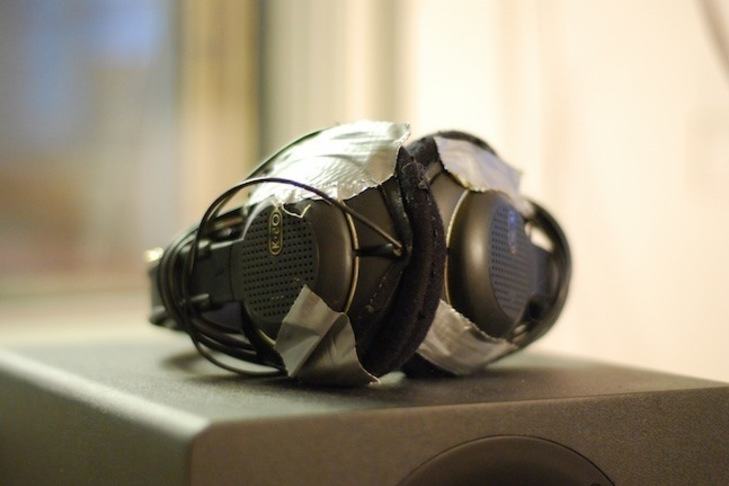
Music scenes developed quickly in the 20th century, and many large changes came about. The most radical change was probably that music now could be experienced without any performers present. The 20th century was the first century of recorded music.
Swing jazz in the 1920s and 30s aimed for making people move. The music was rhythmic, repetitive and danceable. Over time, however, different sub-categories of jazz evolved into less danceable music, such as bebop, cool jazz, and free jazz. The tempo became too fast � or too slow, the structure was less transparent - with many improvised parts, and a respectful jazz audience did no longer entertain in dancing, but had their attention fixed on the musicians. Gradually, conventions for a jazz concert became as fixed as for the classical concert halls, with a seated audience that should applaud after solos and nod their head or tap their feet modestly to the beat. But, in line with the classical conventions, attentive listening was the only way of showing respect for the musicians.
The rock’n’roll that spread like wildfire in the 1950s evolved from the African American rhythm’n’blues. The African American music culture has always had a close link between music and movement, in the church, in concerts, in social gatherings, and many African American music genres are especially rhythmic oriented (funk, hip hop) with an obvious focus on dance. Olly Wilson points to repetition, a percussive orientation and the link between music, movement and dance as some of the elements that points to a heritage from the African continent (Wilson 1983).
In the 1950s the American society was still highly segregated and a white artist was needed to break this new music genre to a larger white audience. Elvis Presley was the perfect man; he could sing, he was good looking and he could move. Today his movements to music does not seem very provoking, but in the 1950s his moving hips were immediately associated with sex and a promiscuous lifestyle. The music was danceable and invited the audience out of their chairs to participate in the music with moving, dancing and singing along, but TV hosts and concert arrangers tried in any way possible to avoid the exposing of his dance moves to escape reactions from the parent generation. The connection between music and movement was seen associated with a wild and uncivilized life.
Most of the 1950s rock’n’roll artists disappeared for various reasons from the public scene around 1959, and the following years were dominated by a popular music more influenced by the crooner-tradition. The most popular dance fad was the Twist � a dance, in contrast to the 1950s rock’n’roll dance, you could perform without a partner. But the popularity of rock music had not ended � it came back with a much stronger force a few years later.
Two bands especially illustrate the development of rock in the 1960s; the Beach Boys and the Beatles. They both have an early period (1962/63-65) where the connection to the rock’n’roll genre is obvious. After 1966 their music became more complex; with the use of classical and other unconventional instruments, more personal and inventive lyrics, experimental studio techniques, more complex harmonies, etc. Both Pet Sounds (Beach Boys) and Sgt. Pepper’s Lonely Hearts Club Band (Beatles) were released in 1966 and seen to a certain extent as concept albums; with an overarching intellectual idea. This development was extremely important in heightening the status of pop/rock, but it simultaneously turned popular music towards the rational, adopting the idea of “pure listening” as the most “serious” engagement with music.
At around the same time James Brown developed his music in the opposite direction. Funk music grew out of the African American soul genre, with an explicit focus on the rhythmic aspects of the music. The groove became the most significant element and the audience did not sit still, even if the concerts were held in places with seats.
Disco came out of New York in the 1970s and by the end of the decade it was everywhere. The movie �Saturday Night Fever� (1977) was central in spreading the disco craze, but its version of the New York club scene was a slightly altered one; African Americans were replaced by Americans of Italian descent (John Travolta), African American artists were replaced by a British-Australian group (Bee Gees), gays were replaced by straights, and free improvised dance was replaced by instructed dance moves.
Especially many white rock fans were particularly annoyed by the popularity of disco in the 1970s. Radio DJ Steve Dahl fronted an anti-disco campaign he called “Disco sucks”:
Disco music is a disease. I call it disco dystrophy . . . The people victimized by this killer disease walk around like zombies. We must do everything possible to stop the spread of this plague (Steve Dahl quoted in Brewster & Broughton 2006:290).
Dahl is also associated with the infamous Disco Demolition Night at baseball’s Comiskey Park in Chicago on July 12 1979, where reduced admission was offered in exchange for disco records that were in turn blown up inside a container partway through the game. The game had to be stopped caused by the riot that followed. Brewster and Broughton observe that this protest was in fact not unique:
Dislike for disco was everywhere. The rock generation saw it as the antithesis of all that was holy: no visible musicians, no “real” stars, no “live” performance. It was music based wholly on consumption, music with no aesthetic purpose, indeed with no purpose at all other than making your body twitch involuntarily. Dehumanizing, expressionless, content-less - the judgements were damning (ibid:291).
Following the incident in Chicago, disco clearly fell from grace, at least in the United States. The major record companies had forced dance music into a typical star performer-oriented package, and the public in turn experienced lip-synching, derivative arrangements, and other studio “fakery” as evidence of disco’s (rather than the disco business’s) illegitimacy. The major labels saw disco as a passing phenomenon that had to be “exploited as quickly and thoroughly as possible” (ibid:201). This fate would then become self-fulfilling.
After the brutal end of disco, MTV started in United States in 1981 with an explicit focus on white rock music. In their first year they hardly showed videos with African American artists. Columbia records protested against this racist format by making extremely well-produced music videos for Michael Jackson’s Thriller album, and refused MTV access to any of their artists if they did not show his videos (Starr & Waterman 2014:452). Not unlike Elvis Presley three decades earlier, Michael Jackson was tremendously clever in dancing and moving rhythmically to the music, and the music videos were a perfect tool to show this ability.
Hip hop evolved from an African American street dance culture in New York in the 1970s. Its first commercial recording was in 1979 and during the following decades its popularity has spread both in the United States and worldwide. The focus on dance (breakdance/street dance) has been somewhat downgraded, but its emphasis on rhythm and groove has been explicit. Hip hop has become extremely popular and has also influenced what is considered mainstream popular music today.
Contemporary popular music is also influenced by the club music that initially came from United States to England around 1987-88. Disco music reinvented itself, became house music (from the club the Warehouse in Chicago) and was exported to England. House parties and raves were (mostly illegal) gatherings of large crowds for dancing (and ecstacy) during weekend nights. Its popularity spread during the 1990s to become a major commercial scene at the turn of the millennium.
If we try to see these developments in perspective, there are many trends that imply a connection between music and dance and popularity. When the audiences move along to the rhythm and the groove, it seems to have an impact that connects them to the music. Likewise, there are stronger negative reactions towards dance music compared to other music. The bodily aspects of music can create passionate likings, but also strong aversions, and the orientation towards the pleasure of music seems provoking for many.
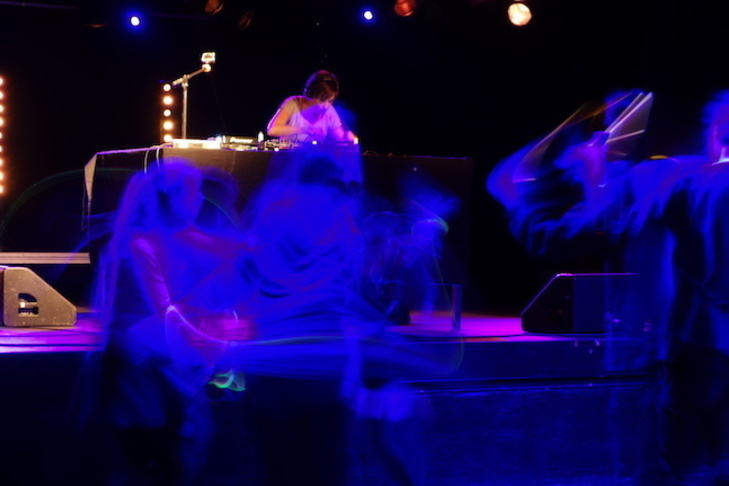
A lot of contemporary popular music has an explicit focus on rhythm and groove, encouraging participation via overt body movements and dancing. This dominates Western music cultures today, and may open discussions on how bodily engagement can enhance the experience - not in moving the focus away from the music, but in focusing on musical elements that are significant for how music moves.
- Brewster, Bill, and Frank Broughton. 2006. Last Night a DJ Saved My Life: The History of the Disc Jockey. London: Headline Books Publishing.
- Starr, Larry & Christopher Waterman. 2014. American Popular Music: From Minstrelsy to MP3. Fourth Edition. New York: Oxford University Press.
- Wilson, Olly. 1983. Black Music as an Art Form. Black Music Research Journal 3: 1-22.
Why is Terminology Important
The structure of Music Moves is based on three “tracks”. We have just been through the first part of the theory track, and will here start the terminology track.
One could ask why it is important to be picky about terminology. Why cannot we just describe things the way we want? The problem, of course, is that if we want to discuss our research findings with others, we need to be precise in our descriptions. That is why we will spend some time on going through some key concepts together.
For example, what is the difference between “musical” and “music-related”. Or, what is the difference between “movement”, “action” and “gesture”? And, is there a difference between “motion” and “movement”? The next video will give you at least a few answers. And remember, you can always have a peek in the Music Moves Dictionary (see Appendix).
1.12 Music-related body movement
In this video Alexander Refsum Jensenius goes through some of the key terminology in Music Moves.
Being precise about terminology is important to avoid confusion. That is why we are going through some terminology each week. To begin with we will discuss the concept of music-related motion. What is the difference between music-related and musical? And is there a difference between motion and movement?
1.14 How Can We Study Music-related Body Movement
The third “track” of Music Moves is that of methodology. In this track we will explore different methods that researchers use to study music-related movement.
It is important to remember that there is never only one, correct method for carrying out research. Often, the best is to use a combination of different methods. We may often also separate between qualitative and quantitative methods.
Qualitative methods are often exploratory in nature, aiming to reveal and explain phenomena. This is often done through reasoning and writing text.
Quantitative methods, on the other hand, are often based on using measurements through some kind of technology. Then one uses numerical methods, such as statistics and machine learning, to calculate results.
The weekly videos in the methodology “track” will start by introducing some qualitative methods, and then mainly focus on describing various types of technologies used in modern research on music and movement. We will visit the labs at University of Oslo to get first-hand experience with the methods in a music research context.
1.16 Methods for studying music-related body movement
What types of methods do researchers use for studying music-related body motion?
In this first methodology “track”, Alexander Refsum Jensenius presents the differences between descriptive and functional analysis, and qualitative and quantitative methods.
1.18 Wrap-up
Week 1 wrap-up
Congratulations! You have now reached the end of week 1. We hope that you have enjoyed the course so far, and we are really looking forward to continue this moving musical journey together with you in the next five weeks.
This week we started out the theory track by looking at how various musical genres have developed different movement-types over the years. It may for example have been new to you that Mozart actually wanted his audience to move and clap during performance?
In the terminology track we discussed the differences between music-related and musical movements, and also the (sometimes) confusing fact that there are two words in English that describe what we are studying: motion and movement.
In the first part of the methods track you learned about the differences between descriptive and functional analysis, and qualitative and quantitative methods.