Introduction
Music Moves. The question that sparked off this project was the simple question why does music make us move?
Why Music Moves?
There has been a lot of research in the field of music-related body movement over the last decades, and the University of Oslo has been at the forefront in the field. The educators in Music Moves have been running a research-based course called “Music and Motion” at the University of Oslo for several years, and were eager to share their ideas more broadly. When the University of Oslo looked for courses to be transformed to online courses, Alexander, Hans and Kristian were easy to ask, and so Music Moves was born!
Overview
Well, we are going to talk about specific concepts. The entrainment process, for example. What makes me nod my head. Terminology such as the difference between motion and action, and gesture. And we are going to talk about the history. Why we have arrived at the situation we have today, for example. Technologies for studying music related body motion. So as you see, you’re going to learn a lot about different types of theoretical approaches to this, methods to use, and, of course, also some of the research that we are producing when we study music related body motion at the University of Oslo. Welcome to Music Moves.
About the authors
The educators, Alexander, Hans and Kristian are all associate professors at the Department of Musicology at the University of Oslo, Norway. For this run of Music Moves they are also joined by the recent PhD fellow Mari. They all share the passion for music and movement, even though they come to the topic from different perspectives.
Alexander Refsum Jensenius started his university studies as a classical piano-playing mathematics student, but ended up with a music degree focusing on electronic music. He values creativity and artistic output as highly as scientific results, and therefore likes to call himself both a “music researcher” and “research musician”. He has been studying and researching in Oslo, Berkeley, Gothenburg and Montreal, often focusing on weird and experimental musics. After focusing on large-scale body motion for several years, he has now turned his interest to “micromotion”. These are tiny actions happening in the body, often at a millimetre scale. Alexander wants to understand how music influences such micromotion, but also how he can use micromotion in music performance. He has two daughters that move to music.
Hans T. Zeiner-Henriksen has been teaching various courses in music production, music history (pop/rock), popular music studies and music psychology/cognition since 1994. He completed his PhD in 2010 called “The PoumTchak Pattern: Correspondences between Rhythm, Sound and Movement in Electronic Dance Music”. His research is concerned with the connections between music and movement, particularly in the club music of the 1990s (Daft Punk, Basement Jaxx). He was also part of the research project “Music, Motion and Emotion: Theoretical and Psychological Implications of Musical Embodiment,” in which he mainly studied how corporeality takes part in intense emotional experiences in music. He has three daughters that move to music.
Kristian Nymoen studied both musicology (Master’s) and informatics (PhD) in Oslo. His interdisciplinary background is highly reflected in his research, which covers development and usage of technologies for studying music-related body motion. He develops analysis methods for music cognition, new interfaces for musical expression, machine learning techniques, and more. He is also an active guitarist and live electronics musician. He has one daughter that moves to music.
In addition to Alexander, Hans, and Kristian, you will also visit other experts from the University of Oslo in their offices. Hallgjerd Aksnes is an expert on emotion and metaphor theory in music. Rolf Inge Godøy is an expert on embodied music cognition. Anne Danielsen is an expert on groove and rhythm, particularly in popular music.
- Video: Meet the educators
Course Outline
Music Moves will give you a broad introduction to the field of music and movement, and the chance to learn from experts in the field.
You will learn about the main theories explaining why movement is so important in music. This includes an overview of the historical development of music-related body movement. It also includes discussions of the cultural influence and importance for how and why we move as we do to music. This is again coupled to some of the most important psychological phenomena that govern our performance and perception of music.
In addition to the theoretical overviews, you will also learn about the different research methods and technologies that researchers use to study music-related movements. This includes everything from qualitative studies of metaphors, to machine-learning-based analysis of motion capture data.
Course Structure
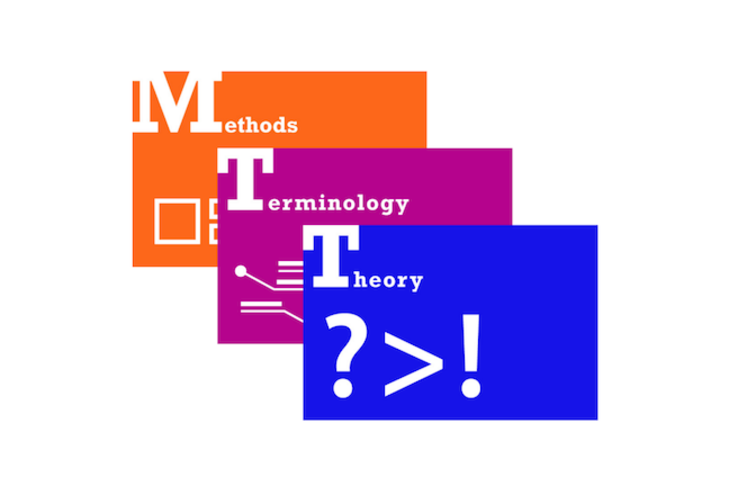
The course stretches over six weeks, with a gradual increase in topics and complexity. Each week will be organized in three different “tracks”: Theory, Terminology and Methods. This is to ensure that you learn progressively throughout the weeks. You will recognize the three tracks through three unique colours in the platform:
Course Content
The six weeks are divided into the following main topics and corresponding subtopics:
Introduction & History
- Historical Overview
- Music-Related Body Movement
- Introduction to Research Methods
Perception & Performers
- Perception & Cognition
- Sound-Producing Actions
- Sound and Movement Analysis
Multimodality & Mocap
- Multimodality
- Sound-Modifying Actions
- Motion Capture
Pulse & Perceivers
- Pulse and Entrainment
- Perceivers
- Mobile Motion Capture
Groove & Gestures
- Groove
- Gestures and Coarticualation
- Video Analysis
Emotion & Motion
- Bodily Metaphors
- Bio Sensors
Tasks and Assignments
During the weeks you will read articles and watch videos covering the different topics. There will also be quizzes and tests to check what you have learned. Through open questions we encourage you to discuss and exchange ideas. We also encourage you to use this tool to get guidance and support from your fellow learners.
We believe it is impossible to study this topic only through reading and writing. There are therefore also several assignments where you will be asked to listen and move yourself, and then share the experience with your fellow learners.
Dictionary
During the coming six weeks you will encounter a lot of new terms that might be difficult to grasp. We therefore put together a dictionary for you to use along with the course material (see Appendix). There may be even more terms that you do not understand, so please do not be afraid to ask in the comment field.
Credits
A lot of people have been involved in the making of Music Moves. A list of everyone involved is available in the download section below. A big thanks to everyone!