36 Kanboard
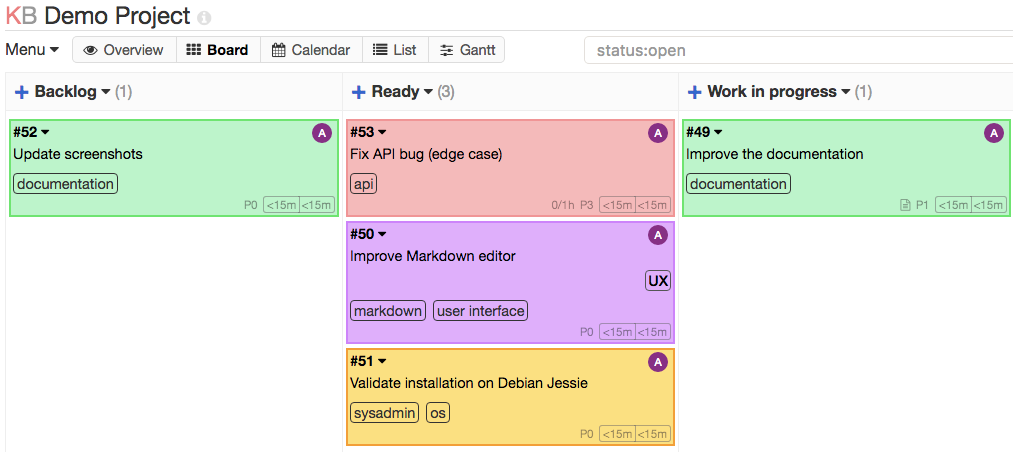
Kanboard is a Kanban tool, developed by Frdric Guillot. (Who also happens to be the developer of my favorite RSS reader, Miniflux)
sponsored projectsFeatures include:
- Visualize your work
- Limit your work in progress to be more efficient
- Customize your boards according to your business activities
- Multiple projects with the ability to drag and drop tasks
- Reports and analytics
- Fast and simple to use
- Access from anywhere with a modern browser
- Plugins and integrations with external services
- Free, open source and self-hosted
- Super simple installation
36.1 Ingredients
- Docker swarm cluster with persistent shared storage
- Traefik configured per design
- DNS entry pointing your NextCloud url (kanboard.example.com) to your keepalived IP
36.2 Preparation
Setup data locations
Create the location for the bind-mount of the application data, so that it’s persistent:
mkdir -p /var/data/kanboard
Setup Environment
If you intend to use an OAuth proxy to further secure public access to your instance, create a kanboard.env file to hold your environment variables, and populate with your OAuth provider’s details (the cookie secret you can just make up):
If you decide to protect kanboard with an oauth_proxy, complete these
OAUTH2_PROXY_CLIENT_ID=
OAUTH2_PROXY_CLIENT_SECRET=
OAUTH2_PROXY_COOKIE_SECRET=
Setup Docker Swarm
Create a docker swarm config file in docker-compose syntax (v3), something like this:
with my patreon patronspremixgit pulldocker stack deployversion: '3'
services:
kanboard:
image: kanboard/kanboard
volumes:
- /var/data/kanboard/data:/var/www/app/data
- /var/data/kanboard/plugins:/var/www/app/plugins
networks:
- internal
deploy:
labels:
- traefik.frontend.rule=Host:kanboard.example.com
- traefik.docker.network=traefik_public
- traefik.port=80
proxy:
image: a5huynh/oauth2_proxy
env_file : /var/data/config/kanboard/kanboard.env
networks:
- internal
- traefik_public
deploy:
labels:
- traefik.frontend.rule=Host:kanboard.example.com
- traefik.docker.network=traefik_public
- traefik.port=4180
volumes:
- /var/data/config/kanboard/authenticated-emails.txt:/authenticated-e\
mails.txt
command: |
-cookie-secure=false
-upstream=http://app
-redirect-url=https://kanboard.example.com
-http-address=http://0.0.0.0:4180
-email-domain=example.com
-provider=github
-authenticated-emails-file=/authenticated-emails.txt
networks:
traefik_public:
external: true
internal:
driver: overlay
ipam:
config:
- subnet: 172.16.8.0/24
36.3 Serving
Launch Kanboard stack
Launch the Kanboard stack by running docker stack deploy kanboard -c <path -to-docker-compose.yml>
Log into your new instance at https://YOUR-FQDN. Default credentials are admin/admin, after which you can change (under ‘profile’) and add more users.
36.4 Chef’s Notes
- The default theme can be significantly improved by applying the ThemePlus plugin.
- Kanboard becomes more useful when you integrate in/outbound email with MailGun, SendGrid, or Postmark.
hero: Miniflux - A recipe for a lightweight minimalist RSS reader