31 Elkar Backup
Don’t be like Cameron. Backup your stuff.
<iframe width=”560” height=”315” src=”https://www.youtube.com/embed/1UtFeMoqVHQ” frameborder=”0” allow=”accelerometer; autoplay; encrypted-media; gyroscope; picture-in-picture” allowfullscreen></iframe>
The Common Observatory
ElkarBackup is a free open-source backup solution based on RSync/RSnapshot. It’s basically a web wrapper around rsync/rsnapshot, which means that your backups are just files on a filesystem, utilising hardlinks for tracking incremental changes. I find this result more reassuring than a blob of compressed, (encrypted?) data that more sophisticated backup solutions would produce for you.
31.1 Details
31.2 Ingredients
- Docker swarm cluster with persistent shared storage
- Traefik configured per design
- DNS entry for the hostname you intend to use, pointed to your keepalived IP
31.3 Preparation
Setup data locations
We’ll need several directories to bind-mount into our container, so create them in /var/data/elkarbackup:
mkdir -p /var/data/elkarbackup/{backups,uploads,sshkeys,database-dump}
mkdir -p /var/data/runtime/elkarbackup/db
mkdir -p /var/data/config/elkarbackup
Prepare environment
Create /var/data/config/elkarbackup/elkarbackup.env, and populate with the following variables
SYMFONY__DATABASE__PASSWORD=password
EB_CRON=enabled
TZ='Etc/UTC'

#SMTP - Populate these if you want email notifications
#SYMFONY__MAILER__HOST=
#SYMFONY__MAILER__USER=
#SYMFONY__MAILER__PASSWORD=
#SYMFONY__MAILER__FROM=

# For mysql
MYSQL_ROOT_PASSWORD=password

#oauth2_proxy
OAUTH2_PROXY_CLIENT_ID=
OAUTH2_PROXY_CLIENT_SECRET=
OAUTH2_PROXY_COOKIE_SECRET=
Create /var/data/config/elkarbackup/elkarbackup-db-backup.env, and populate with the following, to setup the nightly database dump.
For database backup (keep 7 days daily backups)
MYSQL_PWD=<same as SYMFONY__DATABASE__PASSWORD above>
MYSQL_USER=root
BACKUP_NUM_KEEP=7
BACKUP_FREQUENCY=1d
Setup Docker Swarm
Create a docker swarm config file in docker-compose syntax (v3), something like this:
with my patreon patronspremixgit pulldocker stack deployversion: "3"
services:
db:
image: mariadb:10.4
env_file: /var/data/config/elkarbackup/elkarbackup.env
networks:
- internal
volumes:
- /etc/localtime:/etc/localtime:ro
- /var/data/runtime/elkarbackup/db:/var/lib/mysql
db-backup:
image: mariadb:10.4
env_file: /var/data/config/elkarbackup/elkarbackup-db-backup.env
volumes:
- /var/data/elkarbackup/database-dump:/dump
- /etc/localtime:/etc/localtime:ro
entrypoint: |
bash -c 'bash -s <<EOF
trap "break;exit" SIGHUP SIGINT SIGTERM
sleep 2m
while /bin/true; do
mysqldump -h db --all-databases | gzip -c > /dump/dump_\`date +%d-%m-\
%Y"_"%H_%M_%S\`.sql.gz
(ls -t /dump/dump*.sql.gz|head -n $$BACKUP_NUM_KEEP;ls /dump/dump*.sq\
l.gz)|sort|uniq -u|xargs rm -- {}
sleep $$BACKUP_FREQUENCY
done
EOF'
networks:
- internal
app:
image: elkarbackup/elkarbackup
env_file: /var/data/config/elkarbackup/elkarbackup.env
networks:
- internal
volumes:
- /etc/localtime:/etc/localtime:ro
- /var/data/:/var/data
- /var/data/elkarbackup/backups:/app/backups
- /var/data/elkarbackup/uploads:/app/uploads
- /var/data/elkarbackup/sshkeys:/app/.ssh
proxy:
image: funkypenguin/oauth2_proxy
env_file: /var/data/config/elkarbackup/elkarbackup.env
networks:
- traefik_public
- internal
deploy:
labels:
- traefik.frontend.rule=Host:elkarbackup.example.com
- traefik.port=4180
volumes:
- /var/data/config/traefik/authenticated-emails.txt:/authenticated-ema\
ils.txt
command: |
-cookie-secure=false
-upstream=http://app:80
-redirect-url=https://elkarbackup.example.com
-http-address=http://0.0.0.0:4180
-email-domain=example.com
-provider=github
-authenticated-emails-file=/authenticated-emails.txt
networks:
traefik_public:
external: true
internal:
driver: overlay
ipam:
config:
- subnet: 172.16.36.0/24
31.4 Serving
Launch ElkarBackup stack
Launch the ElkarBackup stack by running docker stack deploy elkarbackup -c <path -to-docker-compose.yml>
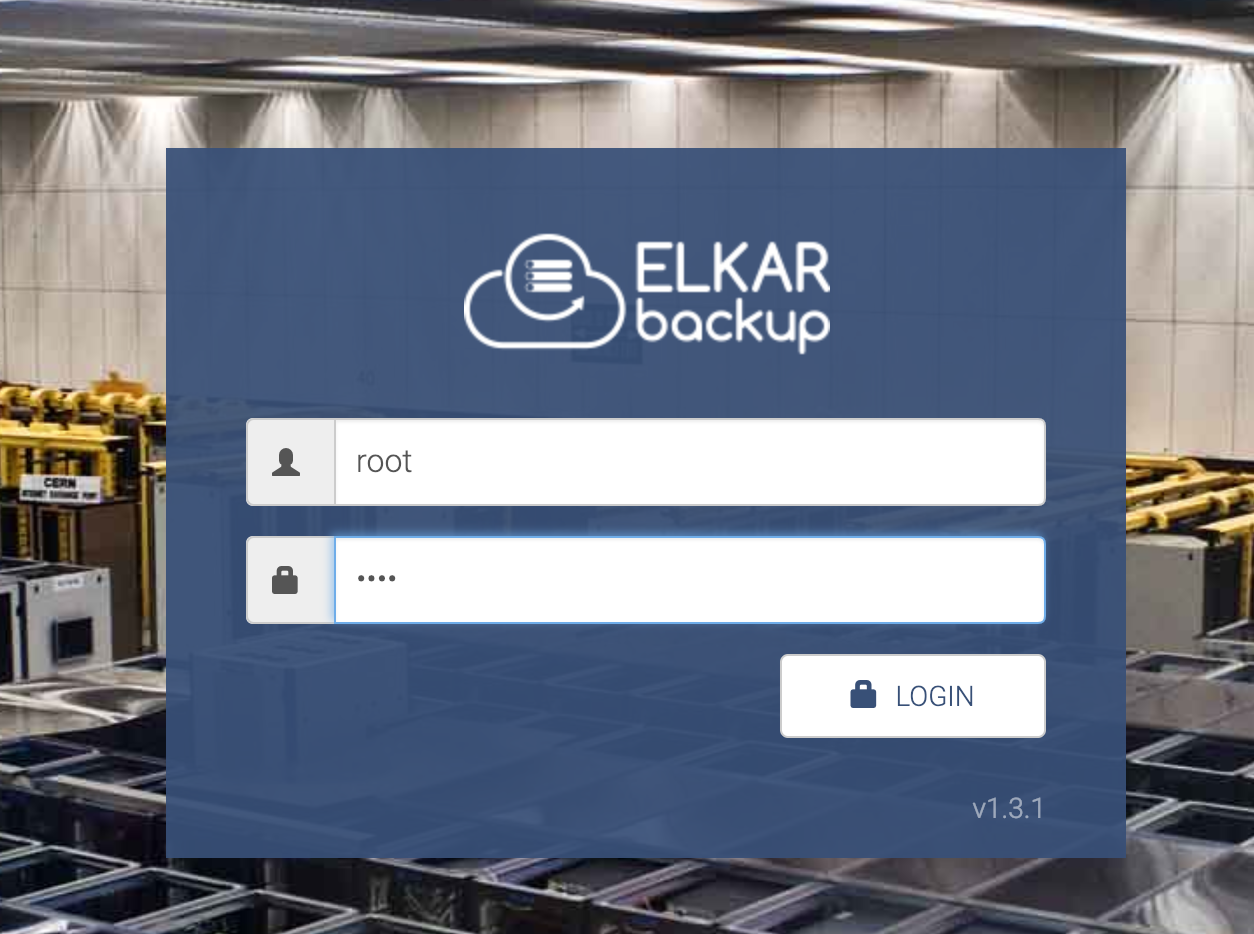
Log into your new instance at https://YOUR-FQDN, with user “root” and the password default password “root”:
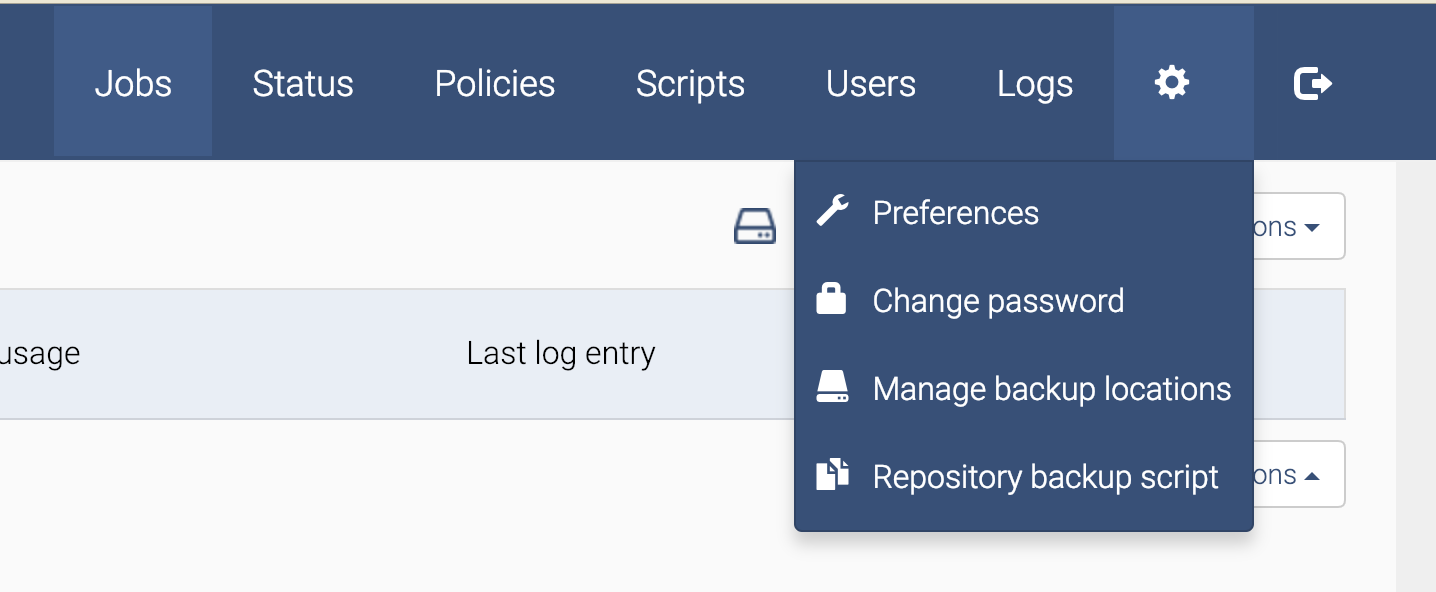
First thing you do, change your password, using the gear icon, and “Change Password” link:
Have a read of the Elkarbackup Docs - they introduce the concept of clients (hosts containing data to be backed up), jobs (what data gets backed up), policies (when is data backed up and how long is it kept).
At the very least, you want to setup a client called “localhost” with an empty path (i.e., the job path will be accessed locally, without SSH), and then add a job to this client to backup /var/data, excluding /var/data/runtime and /var/data/elkarbackup/backup (unless you like “backup-ception”)
Copying your backup data offsite
From the WebUI, you can download a script intended to be executed on a remote host, to backup your backup data to an offsite location. This is a Good Idea(tm), but needs some massaging for a Docker swarm deployment.
Here’s a variation to the standard script, which I’ve employed:
#!/bin/bash

REPOSITORY=/var/data/elkarbackup/backups
SERVER=<target host member of docker swarm>
SERVER_USER=elkarbackup
UPLOADS=/var/data/elkarbackup/uploads
TARGET=/srv/backup/elkarbackup

echo "Starting backup..."
echo "Date: " `date "+%Y-%m-%d (%H:%M)"`

ssh "$SERVER_USER@$SERVER" "cd '$REPOSITORY'; find . -maxdepth 2 -mindepth 2"\
 | sed s/^..// | while read jobId
do
    echo Backing up job $jobId
    mkdir -p $TARGET/$jobId 2>/dev/null
    rsync -aH --delete "$SERVER_USER@$SERVER:$REPOSITORY/$jobId/" $TARGET/$jo\
bId
done

echo Backing up uploads
rsync -aH --delete "$SERVER_USER@$SERVER":"$UPLOADS/" $TARGET/uploads

USED=`df -h . | awk 'NR==2 { print $3 }'`
USE=`df -h . | awk 'NR==2 { print $5 }'`
AVAILABLE=`df -h . | awk 'NR==2 { print $4 }'`

echo "Backup finished succesfully!"
echo "Date: " `date "+%Y-%m-%d (%H:%M)"`
echo ""
echo "**** INFO ****"
echo "Used disk space: $USED ($USE)"
echo "Available disk space: $AVAILABLE"
echo ""
/var/data/elkarbackup/database-dump/Restoring data
Repeat after me : “It’s not a backup unless you’ve tested a restore”
wasTo restore files form a job, click on the “Restore” button in the WebUI, while on the Jobs tab:
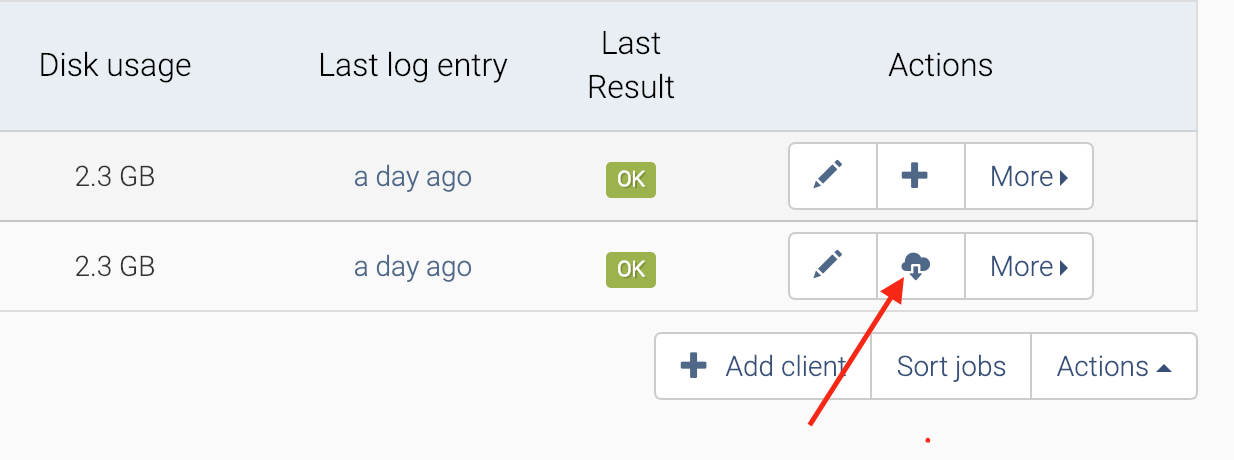
This takes you to a list of backup names and file paths. You can choose to download the entire contents of the backup from your browser as a .tar.gz, or to restore the backup to the client. If you click on the name of the backup, you can also drill down into the file structure, choosing to restore a single file or directory.
The Common Observatory
31.5 Chef’s Notes
- If you wanted to expose the ElkarBackup UI directly, you could remove the oauth2_proxy from the design, and move the traefik_public-related labels directly to the app service. You’d also need to add the traefik_public network to the app service.
- The original inclusion of ElkarBackup was due to the efforts of @gpulido in our Discord server. Thanks Gabriel!