Stay Focused and Get the Right Things Done – Boost Your Productivity
In today’s fast-paced work environment, staying focused on the right tasks is key to productivity and success. It’s easy to get distracted by non-essential tasks, but learning to focus and prioritize your most important work will significantly boost your efficiency and performance.
“You can do anything, but not everything.”
— David Allen
Let’s explore methods and techniques for prioritization and handling your workload.
In our work environment, mastering self-management is essential for boosting productivity. The wealth of professional literature on organizing yourself and managing your workload can be overwhelming. However, two standout books in this domain are:
The common theme in these books can be distilled into the following mantra: Transparency, Prioritization, Focus, Execute.
- Transparency: Gain transparency on your workload at all times.
- Prioritization: Know your priorities and stick to them.
- Focus: Stay disciplined and find a distraction-free environment.
- Execute: Get things done!
This chapter outlines the key principles of self-management and introduces corresponding techniques and tools.
Create a Holistic Overview of Your Tasks
Mess creates stress. The key to mastering your workload is maintaining a holistic overview: a single source of truth. This overview serves as the foundation to organize and prioritize your tasks effectively.
When defining a task, consider the following key questions:
- What needs to be done, by when, and by whom?
- What is the current status?
- What is the priority?
You can document and visualize your task list in various formats, such as a simple list or table.
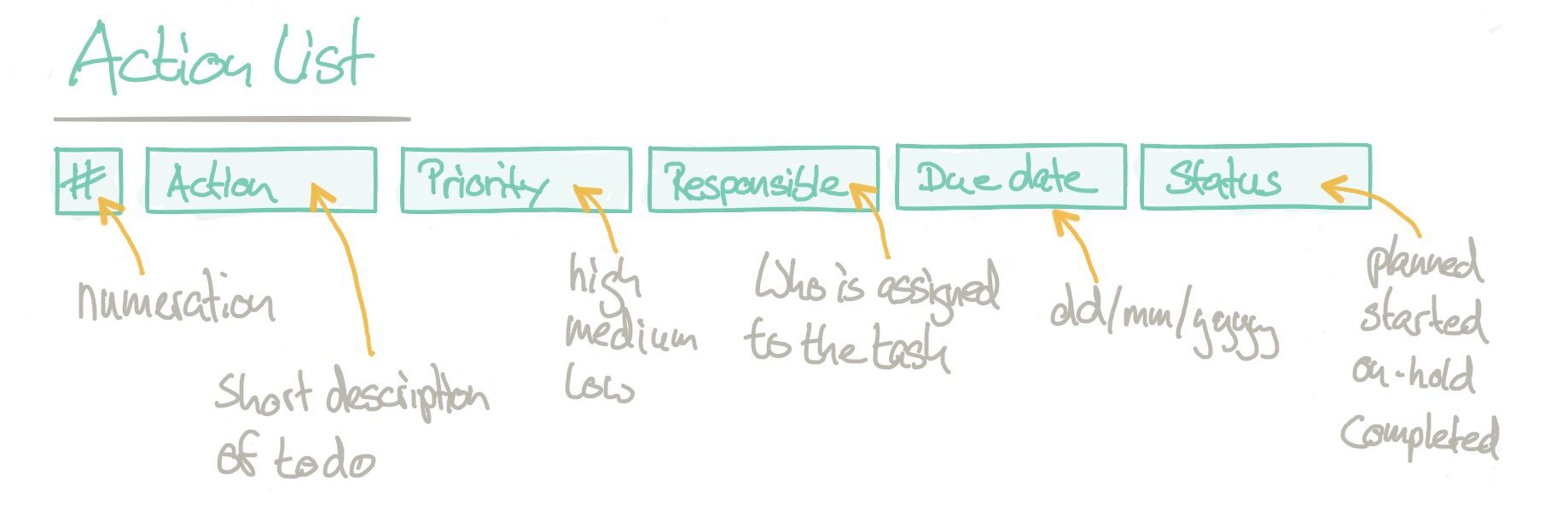
Alternatively, consider creating a Kanban Board. For digital task lists or Kanban boards, refer to paragraph Further Resources of this chapter.
When prioritizing, it’s essential to distinguish between importance and urgency of your tasks. The Eisenhower Matrix provides a straightforward framework for prioritization.
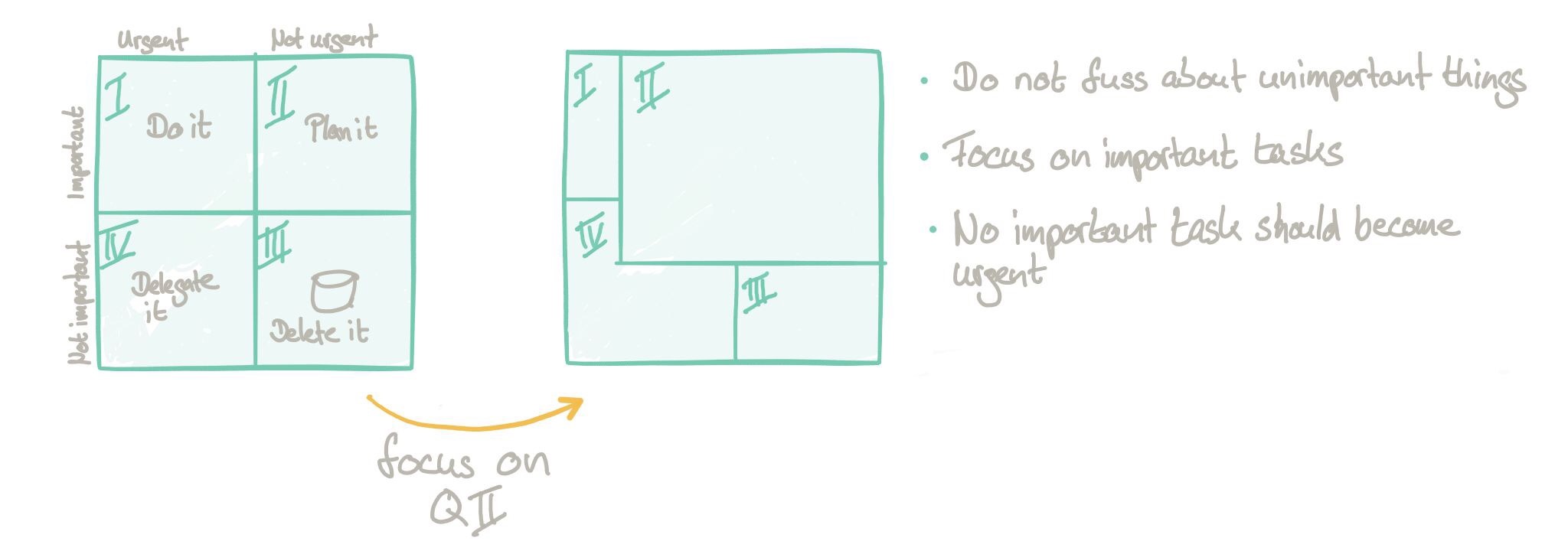
Plan and control your not urgent, but important tasks! Once an important task becomes urgent, your agenda is at risk of being thwarted. To organize these tasks (Quadrant II), consider your roles and corresponding goals to ensure this quadrant is filled with tasks that matter. Focusing solely on urgent and important tasks (Quadrant I) can lead to stress and a reactive mode.
Stephen R. Covey outlines four key activities to manage Quadrant II:
- Identifying Roles: Write down your key roles, such as your main position within your organization or project.
- Selecting Goals: Identify two to three results you want to accomplish in each role within the next week.
- Scheduling: Allocate time slots in your weekly agenda for these tasks.
- Daily Adapting: Review your agenda daily and adjust as necessary.
It requires discipline and courage to apply and adhere to this framework, but the benefits are worth the effort. Remember, as Helmar Nahr states, “Choosing priorities means deciding what will remain undone.”
Work Effectively and Get Things Done
Once you have a holistic overview of your workload, you can apply David Allen’s workflow for Getting Things Done. Start by placing all actions from meetings and workshops into your Inbox. This is the easy part; now comes the discipline! Remember the importance of allocating at least 30 minutes daily to wrap up your day and clean up your Inbox.
- Evaluation: Take the first item in your Inbox and determine if the task is actionable. If not, delete it or mark it for future consideration. If it is actionable, define the concrete next action.
- Execution: If the action takes less than two minutes, do it immediately. If it requires more time, schedule it for later and plan accordingly, considering prioritization principles. Alternatively, delegate the task by placing it on “Waiting for…”, but ensure to track its progress.
For actionable items that involve multiple steps, declare them as projects, define the next action as “Plan [Project XYZ],” and proceed as outlined in the Execution section.
You will find a visual representation of the workflow in David Allen’s bestseller - Getting Things Done (2019) or on Wikipedia - Getting Things Done.
Quoting Jim Rohn: “Discipline is the bridge between goals and accomplishment.” Take the time to clean up your Inbox and execute the workflow. This should become a critical part of your daily routine.
Furthermore, this approach is prone to procrastination. When reviewing your Inbox, apply the OHIO principle (Only Handle It Once). Even if you need to ponder the next action, take the time! Otherwise, your Inbox will overflow, creating an additional, ineffective list with no impact.
Step-by-Step Guide to Staying Focused and Productive
1. Set Clear Goals
Define what you want to achieve in both the short and long term. Clear goals provide direction and help you stay focused on the tasks that matter most.
2. Break Tasks into Smaller Steps
Large tasks can be overwhelming. Break them down into smaller, manageable steps to make them less daunting and easier to tackle.
3. Prioritize Your Tasks
Identify the most important tasks for the day and prioritize them. This ensures that you allocate your time and energy to what truly matters.
4. Eliminate Distractions
Create a distraction-free work environment. This may involve turning off notifications, closing unnecessary tabs, or setting boundaries with colleagues.
5. Proactive Planning through Time Blocking
Effective time management requires a proactive approach to planning your work hours. By blocking out dedicated time for tasks, you can enhance productivity and reduce stress.
6. Review Your Progress
At the end of each day, take a moment to review what you have accomplished. Reflecting on your progress can provide motivation and help you plan for the next day.
My Advice
- Prioritize effectively: Allocate your time to the most important tasks to maximize productivity.
- Eliminate distractions: Creating a distraction-free environment enhances focus and efficiency.
- Mess creates stress: Maintain a holistic overview: a single source of truth.
- Distinguish between importance and urgency: No important task should become urgent.
- Plan and control your not urgent, but important tasks: Prevent them from becoming urgent.
- Stay organized: Keep your To-Do list updated and visualized.
- Apply David Allen’s workflow for Getting Things Done: Clean up your Inbox and execute the workflow diligently.
- Stay disciplined!
Reflection Questions
- What techniques can you implement to eliminate distractions in your work environment?
- How can time blocking help you enhance your focus and productivity?
- In what ways can you ensure that your daily tasks align with your long-term goals?