Appendix
Agreements
 |
 |
 |
||
|---|---|---|---|---|
| 5 | any number | Communication | ||
| minutes | people |
What you can learn
This sets a tone and expectations near the start of a session. It helps the attendees know what the boundaries of the session are, and what behaviours are acceptable.
What you need
It is best to have each agreement on a card and to go through them near the start of the session.
How to do this
Decide which agreements are appropriate for your audience and meeting. Explain them clearly and simply near the start of the session.
You can also ask participants if there are any agreements they would like to add.
How we’ve used this
We change these depending on the session we’re running. Over time you will learn more techniques and so this list will keep evolving.
Here are some of the cards we have:
- Take Care: Take care of your own needs. You don’t need to ask permission to go to the bathroom, or get coffee.
- Cellphones: Keep your phones on silent please. If you need to take a call, just leave the room. We’d rather you were paying attention than worrying because your boss/wife/child is calling.
- Right to Pass: You have the right to pass in any activity or exercise we do. Just sit to the side and observe.
- Workbooks: These are yours to keep. Please take notes. We will let you know when we are doing specific exercises in the books.
- Timeboxing: We give a specific end time for each break. We will start at that time whether you are back or not. It’s up to you to choose to be on time or not.
Who shared this with us
Various people over the years, many from Sharon Bowman. We came up with the concept of using cards to remember all of the things we wanted to say.
Fast Pass
|
|
|
||
|---|---|---|---|---|
| 10 - 15 | 6 - 20 | Movement | ||
| minutes | people | Trust |
What you can learn
An activity to connect participants to each other through content related to the session. This is a great technique to use at the start of a session, so people who arrive early have something to do.
What you need
Flipchart pages stuck up on a wall, with questions. Have a minimum of three (for six participants) and a maximum of five (for 20 participants).
Some questions might be:
- What are your pets’ names?
- What do you know about Topic of session?
- Why are you here today?
- What is your biggest strength?
- What is your company’s greatest challenge?
Instruction flipchart:”After reading this, introduce yourself to a stranger and fill in the flipchart questions around the room with them.”
Marker for each participant.
How to do this
At the start of a session stick up the prepared flipcharts around the room and place the instruction flipchart near the front of the room.
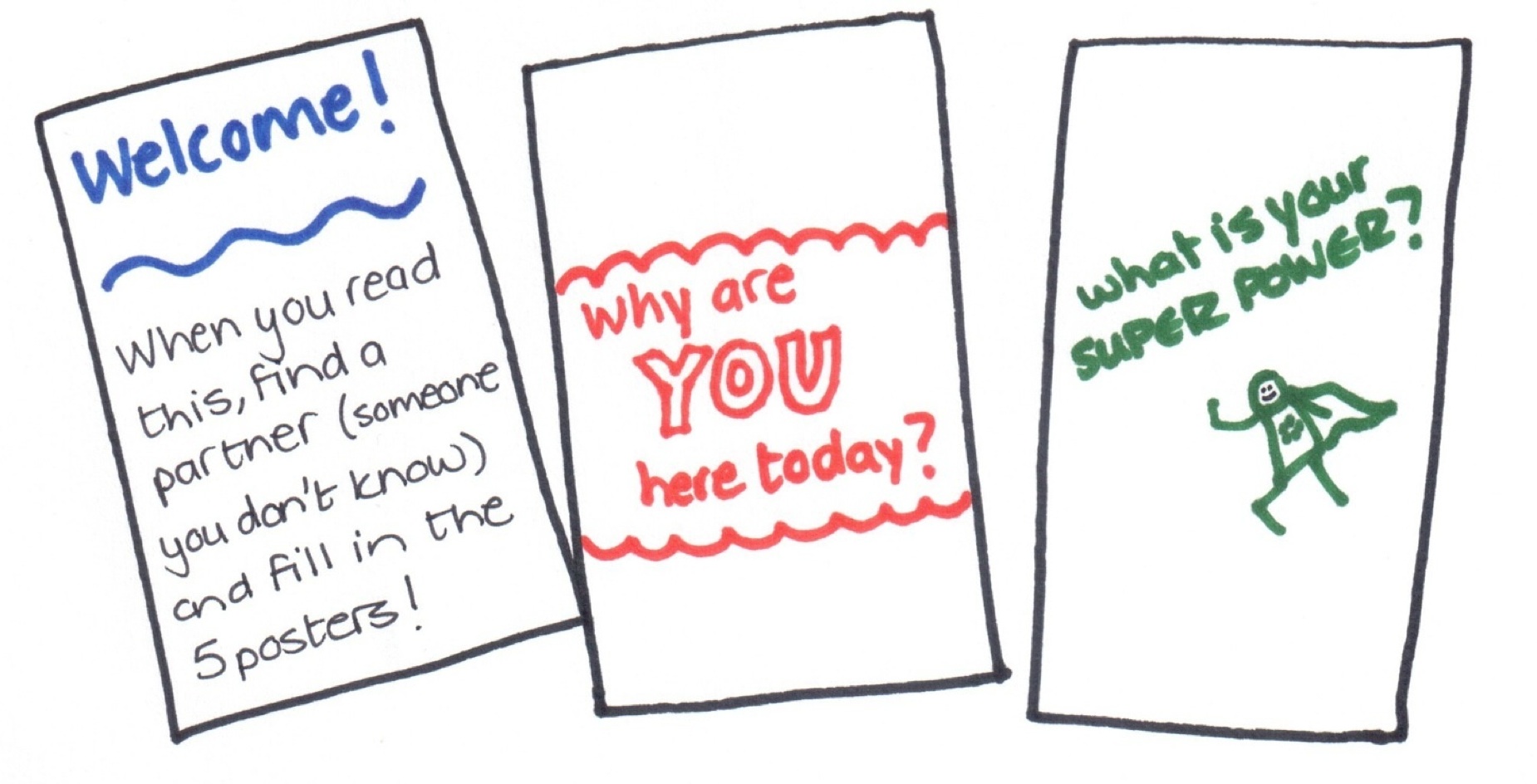
Encourage people to read the instructions if they don’t notice them, and let them know they can start whenever they like.
How we’ve used this
We often use this at the start of training courses, or large group meetings, especially if people don’t know each other. It is a great way to get strangers talking at the start of the day.
Who shared this with us
Jenga
|
|
|
||
|---|---|---|---|---|
| 30 | 4 - 30 | Testing | ||
| minutes | people | Quality |
What you can learn
This game is a great way to teach people the benefits of testing early and in smaller batches, before development is complete. This simple game demonstrates how it is actually faster to test earlier.
What you need
- 36 Jenga blocks per group of 6, number each block from 1 to 36. Be sure to write the number with a permanent marker on each side of the block (i.e. 6 times per block).
- Handouts with 4 bug numbers for each round. Pick any 4 numbers between 1 and 36 for each round. For example: 2, 17, 21, 36. You need one copy of the numbers for each group.
- A stopwatch or timer
- A flipchart or whiteboard to write up the results
How to do this
Split people into groups of 4 to 6. Try to have the same number of people in each group. Explain that the goal is to build a tower with Jenga blocks. The requirements are that the tower must use all 36 Jenga pieces and must be at least 4 Jenga blocks high, with the blocks stood up on the small end - see the picture below.

The tower does not have to be built like it is in Jenga when the game starts. Some people assume this, if they do, don’t correct them. It leads to a great teaching point since it makes fixing the bugs particularly hard. If people ask tell them they can build the tower however they want as long as it meets the requirements.
Round 1
Before the teams start to build ask each team to nominate two people on their team to be testers. Ask the testers to come forward and brief them separately. Hand the testers from each group the list of ‘bugs’ for the first round. This is just a list of 4 numbers between 1 and 36. Explain that they can’t show the bugs to the builders on their team, but once they have finished building the tower, the testers must find these ‘bugs’ and remove those pieces from the tower. If the tower collapses when they are removed, it needs to be rebuilt. The end result needs to meet the original height requirement, but the tower must be built from only 32 pieces (i.e. the original 36 without the four ‘bug’ blocks).
Once the testers return to their teams, let everyone know they can start and that they should let you know when they are complete. Start a timer at this point, so you can track how long it takes for each team to finish. Make sure testers don’t reveal the bugs until the end. Once people finished, capture the time it took for each group. Only take the time once the tower is complete without the ‘bugs’.
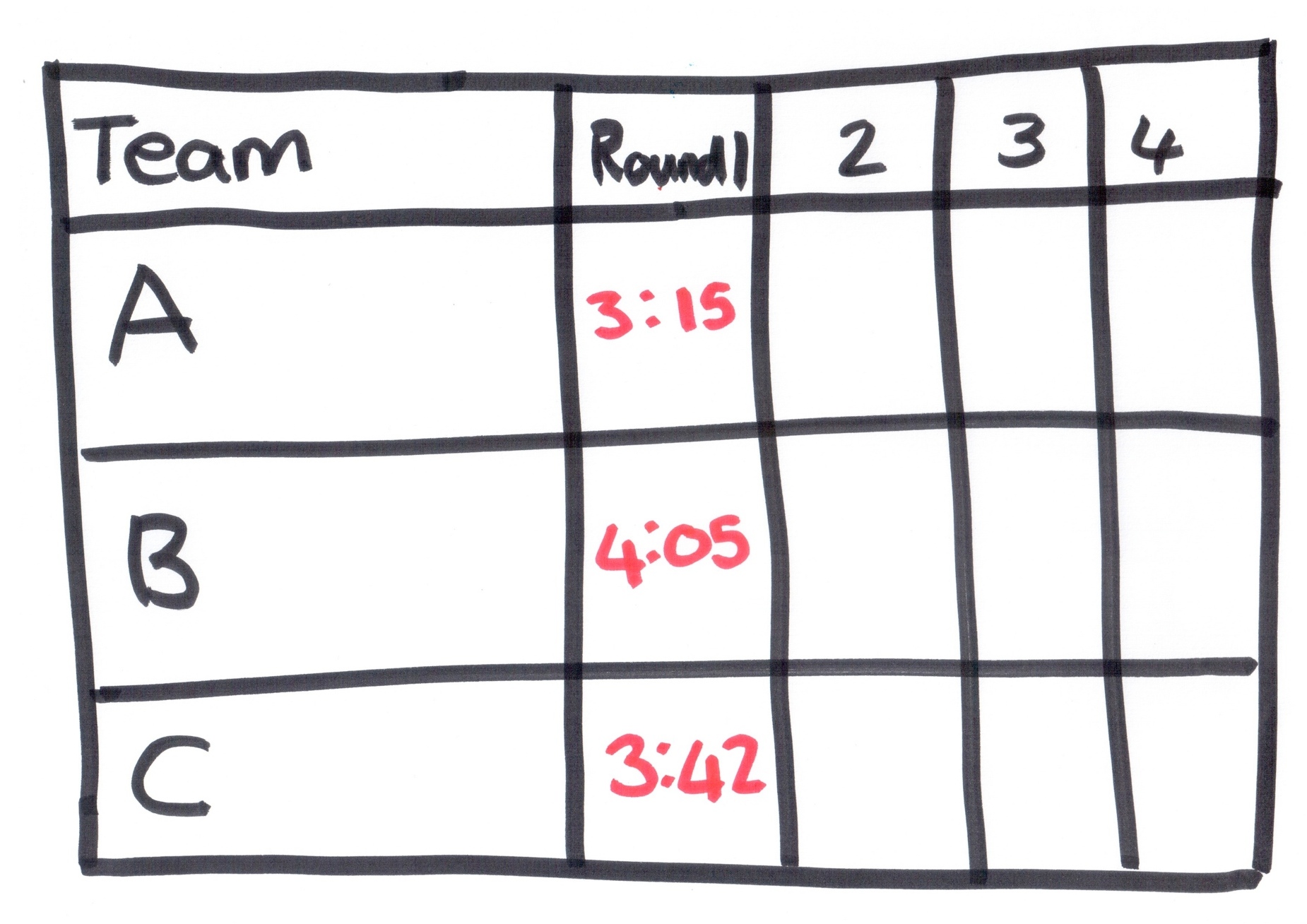
You can write the results on a poster like those shown below.
Round 2
Ask everyone to breakdown their towers for round two. Again give the testers four numbers for the ‘bugs’. This time tell them that they can test the tower after the builders have placed nine blocks. They still can’t show the team the bug numbers, but after the builders have placed nine blocks, they can tell them if any of the blocks are bugs. The builders can then remove them and continue to build. Once against start a timer as teams begin, and update the times on the score sheet for round two. In most cases the time should be less than the time for the first round.
Round 3
Again ask people to breakdown their towers. Hand out the bugs to the testers. Make sure you use different numbers for each round so that builders don’t start to guess what the bugs will be. It’s okay for teams to all get the same bug numbers though. This time let people know that the testers can check after each block is placed, and that block can be removed immediately if it is a bug. Again keep track of the time. It should now be significantly less that the first round.
Round 4
Let people know this is the final round. Sometime people can start to wonder how many times they need to build a tower at this point. Ask people to break down their towers, and hand out the bugs. This time tell the testers they can share the bug numbers with the builders at the beginning, and that they can use that information however they like. Most team immediately remove the four bugs and then build the tower. Double check though because occasionally team forget to put the bugs aside and end up including them in the tower even though they knew they are bugs in advance. Write up the time for the final round.
Debrief
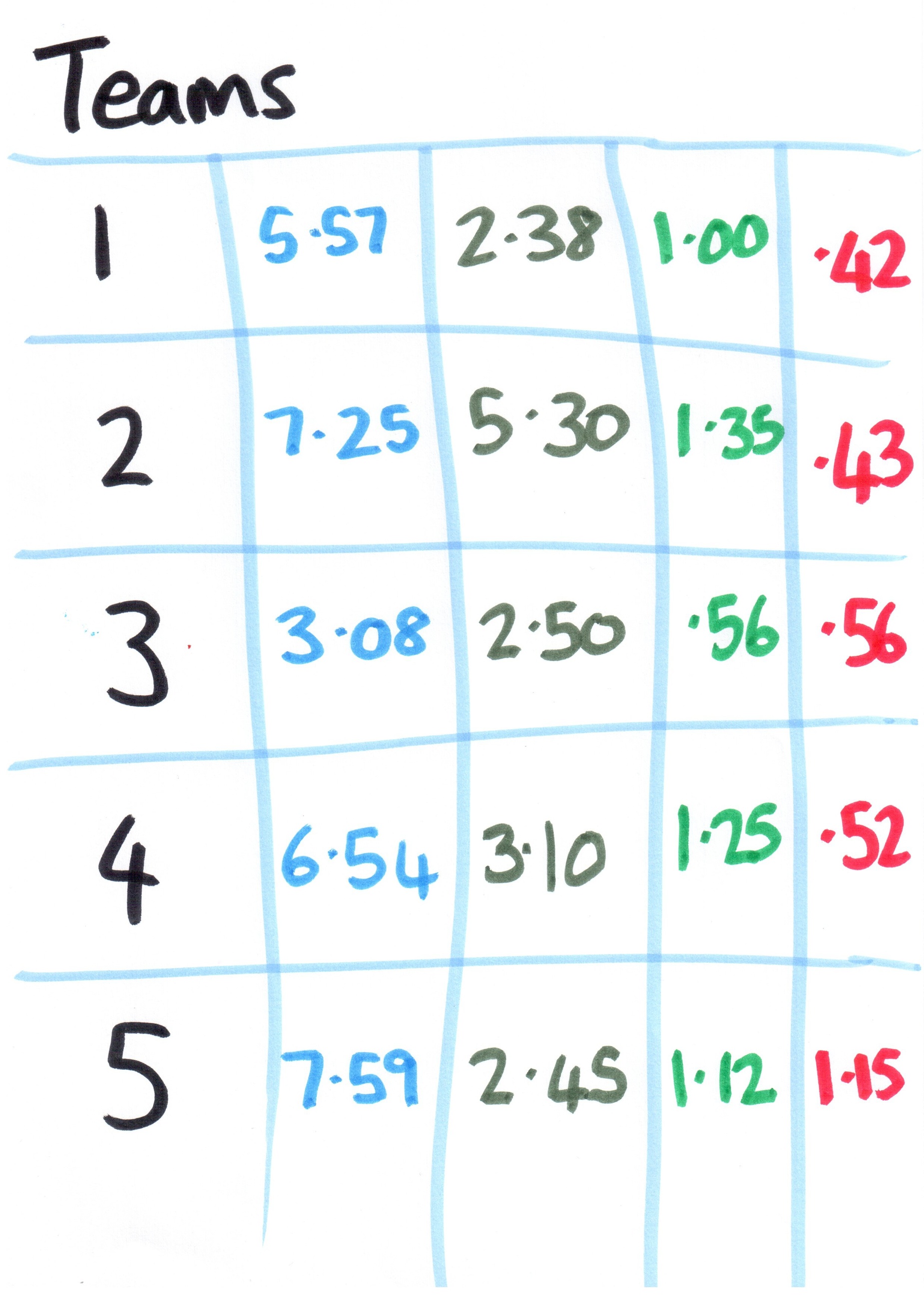
Now debrief the game. Start by asking people what they notice with the times. In our experience the times for the last two rounds are fractions of the original time. Below is a copy of the results from one of the times we have run this game.
Some other questions which are useful for the debrief are:
- Which round feels like how you work today?
- Which round is how you would like to work?
- How did it feel to fix bugs in the first round?
- How did it feel to fix bugs in the other rounds?
- Do you think testing early takes more time, if so do they results change your mind?
- Do you think round four (knowing the bugs in advanced) is possible in software?
- In which rounds were testers more involved? ###How we’ve used this We use this simulation whenever we introduce agile testing as a concept to a team. It demonstrates really easily how much of a time saver it is to test early. It’s a great way to start a workshop on agile testing. We especially love the last round (our own addition to the game), which helps people think differently about testing, and introduces the agile testing principle of preventing bugs rather than finding them. ###Who shared this with us Nanda Lankalapalli
Standing Survey
|
|
|
||
|---|---|---|---|---|
| 5 - 10 | any number | Visualisation | ||
| minutes | people | Movement |
What you can learn
This is a great technique to introduce movement into a session as well as visualising information.
What you need
Decide what questions you will ask, and how you will ask people to arrange themselves in the room.
Having some open space in a room without tables and chairs is useful.
How to do this
Ask people to stand. Explain that you want them to organise themselves in the room according to some criteria (e.g. amount of Scrum experience).
Explain how to organise themselves (e.g. a single line, with no experience near the door, and most experience near the other side of the room).
Allow time for people to move around the room.
Remind people to speak to others to see where they should stand relative to each other.
Ask people to notice where other people are relative to them.
How we’ve used this
Some ideas for criteria to organise by:
- how easy you think something will be to implement (easy: one side of the room, impossible: the other )
- how well you know people in the room (close to those you know, far from those you don’t)
- people’s roles within an organisation (a quadrant with a different role in each corner of the room)
- where people are from (in the centre: close by, edges of the room: far away).
Who shared this with us
Growing Agile Workshops & Courses
Workshops
We have created a series of workshops to help Agile Coaches. These workshops are “Ready-to Use”. We have done all the preparation and research and created a facilitation guide for you to use. We also have amazing mural boards and every workshop is interactive and fun.
Online Courses
We offer several online courses aimed at Scrum Masters, Product Owners and Agile Teams.
Our online courses are a little different to regular online video courses. We’ve applied the principles of Training From The Back of The Room to our online materials. That means each course comes with a workbook and exercises for you to do, as well as video’s to watch and techniques that you can use with your teams. Each activity is intended to deepen your knowledge of an area, so we suggest doing the course over a few weeks and taking the time to do all the exercises.
Take a look at our offerings here http://www.growingagile.co/online-courses/.
Growing Agile Books
Scrum Master Workbook - 15 Weeks of Accelerated Learning
Essential for new Scrum Masters! This is a workbook you print out and fill in each week. It will guide you through a range of topics that are critical for Scrum Masters to understand. Each week will include reading, exercises and a journal page for you to reflect. We also include cutouts for your toolbox on a range of different topics.
Scrum Master Workbook is available on Leanpub.
The Growing Agile Coach’s Guide Series
This series provides a collection of training and workshop plans for a variety of agile topics. The series is aimed at agile coaches, trainers and ScrumMasters who often find themselves needing to help teams understand agile concepts. Each book in the series provides the plans, slides, workbooks and activity instructions to run a number of workshops on each topic. The interactive workshops are all created using techniques from Training from the Back of the Room, to ensure participants are engaged and remember their learnings after the workshop.
The series is available in a bundle on Leanpub, or you can purchase the books individually.

Growing Agile: A Coach’s Guide to Training Scrum
We have been training teams in Scrum for about three years. During this time we have spent many hours preparing training plans and creating workbooks, flipcharts and slides. This book will help you plan and deliver interactive, fun Scrum training for anything from a short workshop on a particular topic to a full two-day course.
Growing Agile: A Coach’s Guide to Training Scrum is available on Leanpub.
A Coach’s Guide to Agile Requirements
Our requirement workshops are aimed at different stakeholders ranging from business, to Product Owners and teams. This book is a collection of some of those workshop and can be used to help improve the way you think about and communicate agile requirements.
Growing Agile: A Coach’s Guide to Agile Requirements is available on Leanpub.
Growing Agile: A Coach’s Guide to Mastering Backlogs
Often Product Owners can’t see the forest for the trees and there are so many items in their backlog and not enough hours in the day to groom it. We run short workshops where we work with the Product Owner’s actual backlog. The workshop is a working session, and an hour later the Product Owners emerge with an improved backlog.
Growing Agile: A Coach’s Guide to Mastering Backlogs is available on Leanpub.
Growing Agile: A Coach’s Guide to Release Planning
We often hear people say “We’re agile, we don’t need a plan”! or even worse “We can’t plan”. This is just not true. We run Release Planning workshops with many organisations. This book is a collection of our workshops that will help you run similar workshops to create agile release plans. We include teaching points on a range of techniques like Story Mapping and release burnups to help you explain to other’s how to use these methods effectively.
Growing Agile: A Coach’s Guide to Release Planning is available on Leanpub.
A Coach’s Guide to Agile Testing
If a team believes they are agile, but nothing has changed about the way they test, then there is still much to learn. We teach 5 key principles that explain why agile testing is fundamentally different to traditional testing.This books includes a collection of workshops to help teams grasp these principles and adopt an agile testing mindset. It’s not just for testers. A key part of agile testing is that the whole team is involved, so we always run these workshops with everyone in the team.
Growing Agile: A Coach’s Guide to Agile Testing is available on Leanpub.
Growing Agile: A Coach’s Guide to Facilitation
It’s taken us several years to master the skill of facilitation, and it continues to amaze us how few people learn the skill, or even understand what it means. People spend much of their lives in meetings, and yet so many meetings lack facilitation. We hope the collection of tips and techniques in this book will inspire you to grow your own facilitation skills and improve the meetings in your organisation.
Growing Agile: A Coach’s Guide to Facilitation is available on Leanpub.
Other books by Growing Agile
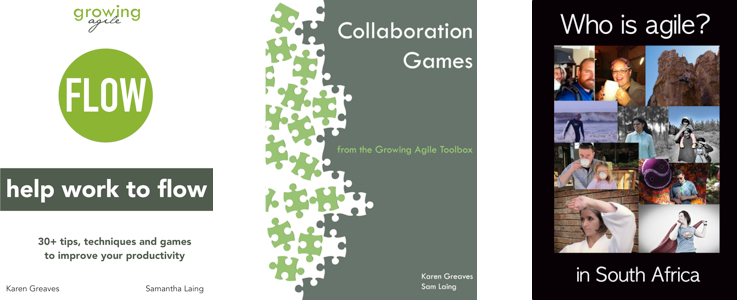
Flow
Do you have a never-ending to do list and not enough hours in the day? Imagine getting everything on your to do list done without stress or worrying. Imagine being twice as productive in half the time.
We have over 30 proven tips and techniques to help you achieve a state of flow, where time stands still and productivity soars. With these tips you will deliver value to your customers sooner in practical and simple ways. You will also be happier and less stressed.
Flow is available on Leanpub.
Collaboration Games
Add an element of fun to your meetings or workshops using these 12 short games that teach principles of collaboration.
Collaboration Games is available on Leanpub.
Who is Agile in South Africa
This book is based on the original Who Is Agile book, only this is a regional version for South Africa. It’s a collection of interviews with passionate South African agilists.
Who is Agile in South Africa is available on Leanpub.
About Growing Agile

At Growing Agile we help companies create great teams that create exceptional products. We are agile coaches passionate about helping you get the results you are looking for.
We are based in New Zealand, but work with clients from all over the world. We provide online individual or group coaching sessions, as well as online training for Scrum Masters, Product Owners and Teams.
Find out more about us at www.growingagile.co.
Our personal goal is to be every agile coach’s secret helper. We want to do all the hard work and prep so that you can focus on being a coach for your teams.