Count your interruptions
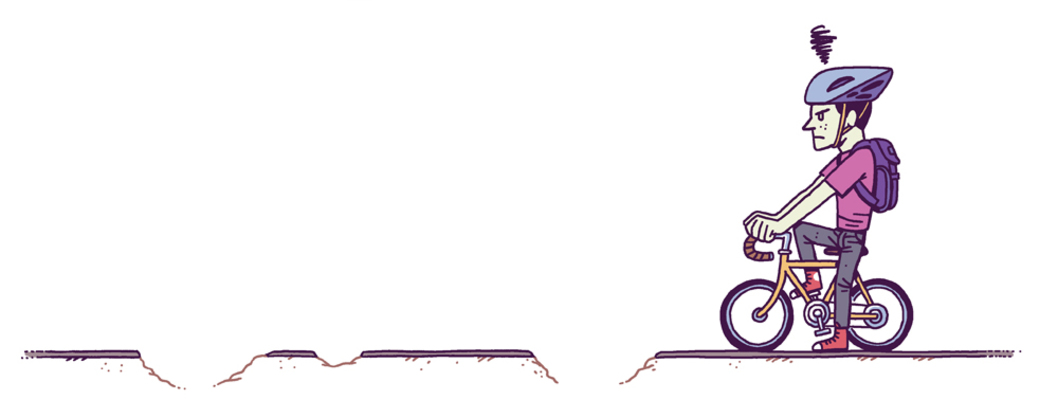
We all get distracted at work. If we had a pound for every time one of us got distracted while in the middle of something, then – well maybe that’s an experiment to try out!
Open-plan offices are very popular these days. They tend to be noisy places and agile software development teams tend to create some pretty vocal environments. So when a number of teams are working closely in a department there are a fair few decibels and a lot of interaction. Context switching is taxing (literally). Moving between tasks and getting familiar with the new context takes time and grey matter, particularly when we are deeply immersed in knowledge work.
In the book Peopleware, Timothy Lister and Tom DeMarco talk about the heavy cost of open-plan environments in terms of the sheer amount of distraction. Since they wrote that book, the number of distractions and the different types of interruptions have increased. Just think about the explosion of social media and the increased tendency of applications to make themselves known, such as Outlook flashing each email onto your screen as it arrives. Lister and DeMarco also describe a state that psychologists call ‘flow’, a state where a person is intensely focused on a task, time seems to fly and people can just burn through work. This state of being ‘in the zone’ (different to the state felt after a few pints of beer when one, usually misguidedly, feels unbeatable at pool) can take up to 15 minutes to reach. The research into flow also suggests that work needs to be challenging to take us into this state of intense concentration. A fair number of tasks in software, whether design, development or testing, are challenging. So distractions can cost a lot of wasted time, and therefore money.
The cost of distractions is made up of both the length of time we get distracted for and the absolute number of distractions we suffer. If you are getting distracted several times a day, or worse, several times an hour, the cost of losing where you were and having to immerse yourself back in the task again is very high.
Start to count your interruptions and distractions – it can be quite revealing, even shocking. Every time a member of the team is interrupted or distracted by something, count it. A person could do this on their own, but it works very well as a team activity. Count all the interruptions and distractions for a given period of time. This will give you some data to start analysing and using as part of the input to your retrospectives.
Key benefits
Just through measuring the interruptions, teams start to become really aware of quite how many times they get distracted. Teams start thinking about the associated cost, particularly when they are deeply engrossed in a piece of work.
This approach provides a visible way of measuring waste incurred through interruptions. It’s a light-hearted approach too, which gives teams a better chance of sticking in teams’ daily processes.
Collection provides a good source of data for input into retrospectives and for experiments with improvement ideas, especially if you break the interruptions down into types as described below.
Another great use for this data that we’ve found is that it helps teams to establish working patterns for quiet or interruptible time. That can be really helpful in a large department or project, working closely with many other teams. Having conversations with others about the best times for avoiding interruptions can lead to agreements on quiet time and lead to happier, more productive teams, synchronising their periods for immersion in the deep flow of working on challenging tasks.
How to make it work
It is hard to quantify losses of concentration in absolute terms, so there is possibly more value in the measure as a trend in the number of distractions. Once a baseline number of interruptions has been established, the team can then experiment with how to reduce them.
It is not easy to calculate an exact time lost per interruption. However, if we make an assumption that it takes 10 minutes (instead of 15, to err on the lower side) to settle into a task, we can make a fairly simple calculation of the cost we incur. For example, in a team of eight people, if each person is interrupted just 6 times a day, then that is 8 hours gone. A whole person, or 12.5% of the team’s capacity, is wasted every single day. That is just by being interrupted, and does not include the time spent on the interruption itself.
The other key thing to decide on is how to record the data and to what level of detail. Try to keep the data visible and make the process light-hearted, so people remember to do it and are motivated. The simplest way is just a tally system on a whiteboard. Some teams favour more elaborate record-keeping, collecting other pieces of information like time of day, type of interruption, duration, what they were doing at the time and even the response they gave (an answer, pointing to documentation, teaching, ‘wrong number’).
Some physical action performed when a person moves between tasks can work well. A colleague of ours suggested that to make it more engaging for the team, they should throw pieces of Lego into a box using bricks of different colours for different categories of interruption. For example, red for a telephone call, white when a person comes to the team, blue when an email arrives, etc.
On a cautionary note, it’s important to make sure people realise this counting interruptions is not about stopping communication between colleagues, or making it unacceptable for anyone to ask for help from another team. It is about identifying the unnecessary stuff and maybe rethinking the way in which we use the plethora of tools at our disposal. From a team perspective, it can still be desirable to put aside periods of time to work without any interruption at all, in order to enable members to focus on challenging tasks.