The Leanpub Podcast 🎙 Feat. Gareth Holebrook, Author of Ishi: The Discipline of Determined Intent
In this episode of the Leanpub Podcast, Len Epp speaks with Gareth Holebrook, author of Ishi: The Discipline of Determined Intent.

Episode Details
In this episode of the Leanpub Podcast, Len Epp speaks with Gareth Holebrook, author of Ishi: The Discipline of Determined Intent. Based in Auckland, Gareth brings together a remarkable set of experiences — Royal Navy weapons engineer, agile transformation specialist, Visa practice leader, partner to L. David Marquet on Intent-Based Leadership, and veteran of over 30 ultra-endurance events - to address a structural problem he sees destroying careers and organisations: the absence of a mechanism to distinguish endurance from self-harm while choice still matters
 Leanpub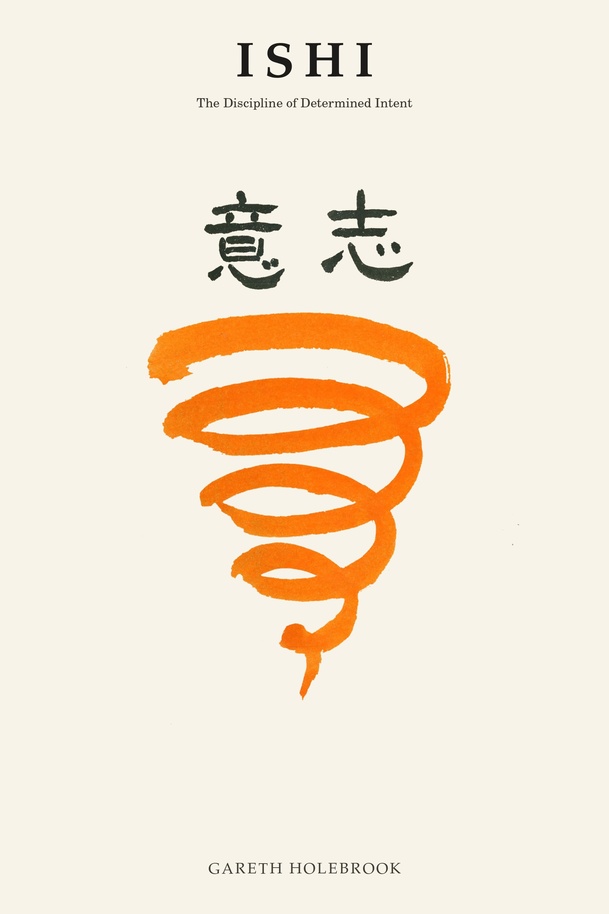
From Manchester to the Royal Navy to New Zealand
Gareth grew up in Manchester and joined the Royal Navy at 18 as an engineering apprentice, specialising in electronic warfare and communications. He served in the Adriatic during the Yugoslav wars, where daily maintenance evolutions - stripping and re-greasing weapons systems, fire drills, watchkeeping - embedded the principle that muscle memory built in practice is what holds when conditions become dangerous. After leaving the Navy following redundancies in 1994, he worked in manufacturing at Sony, studied with the Open University while working full-time, moved to New Zealand in 2000, and joined GPS navigation startup Navman before founding his own altitude-training tech startup. When that business failed after the 2008 global financial crisis, he transitioned into agile coaching, eventually becoming Agile Practice Leader at Visa and connecting with former US submarine commander L. David Marquet.
The Collapse at Kona
The book opens with Gareth's account of collapsing at kilometre 35 of the Ironman World Championships marathon in Hawaii in 2022. After 18 years of qualification attempts and a year of meticulous preparation - ceramic jockey wheels, a top-tier coach, a detailed nutrition spreadsheet - a single overlooked detail proved critical: sodium intake. In the crosswind on the bike leg he had repeatedly missed his salt tablets, and by the run he was severely hyponatraemic. He lay unconscious on the course for 40 minutes with 7 kilometres remaining. A sponsor gave him an electrolyte solution, he recovered, and he finished in 13 hours 16 minutes — two hours slower than planned.
For years Gareth framed this as a story of unstoppable persistence. Writing the book forced a different reading: a lifelong pattern of goal fixation, of becoming so blinkered that awareness switched off while effort continued. That pattern, he argues, is not a character flaw but a structural failure - the absence of a governing mechanism that could have caught the drift before collapse made correction impossible.
The Ishi Spiral
The book presents the Ishi Spiral, a four-phase discipline drawing on Japanese concepts: **Decide (Ishi 意志)**, **Forge (Shugyo 修行)**, **Persist (Gaman 我慢)**, and **Reflect (Hansei 反省)**. Gareth describes the spiral - rather than a closed loop — using the Zen calligraphic form of the Enso circle: when you return to the beginning you are not in the same place; you have grown, the environment has changed, and you have learned. The phases are not sequential stages to complete but interconnected practices active throughout any sustained endeavour.
A central tool is the **Ishi card**: a written governance artefact on which the practitioner records their intent, their first move, their strategies for persisting when discomfort arrives, their exit triggers, and the questions their future self will ask about the decision quality - not the outcome. Gareth draws on Annie Duke's work on resulting and on L. David Marquet's book *Distancing* (co-authored with Professor Mike Gillespie) to explain why psychological distance from one's own ego is essential to both the Decide and Reflect phases.
Organisational Case Studies
The book's fourth section applies the spiral to real organisational failures: American Apparel's CEO burnout, Kodak's failure to reflect and redirect, Bonser Aviation's collapse from insufficient deliberate practice, the 1971 sinking of HMS Artemis in Gosport through accumulated small lapses, and the 2023 grounding and sinking of HMNZS Manawanui in Samoa, whose bridge transcripts reveal crew members unpractised in procedures they were expected to execute under pressure. Each case, Gareth argues, shows the absence of one or more phases of the Ishi Spiral - not individual moral failure but systemic drift that had been accumulating long before the visible collapse.
Writing the Book on Leanpub
Gareth signed up to Leanpub in early 2020, drawn by its incremental, iterative publishing model. The book itself became an Ishi - a declared intent, governed over several years through deliberate daily writing practice (a thousand words a day at one stage, then a daily Kaizen post on LinkedIn), persistence through COVID disruptions, a dropped client, and a week writing in a camper van at the Sydney Ironman World Championships in October 2024. He launched *Ishi: The Discipline of Determined Intent* on 6 January 2026 - deliberately chosen as Quitter's Day, the second Friday of January - alongside a companion Ishi Guide and a separate book of 100 Kaizens, all published on Leanpub
This interview was recorded on July 6, 2026.
The full audio for the interview is here: [[episode-audio-url]]([episode-audio-url]). The Leanpub Podcast is available on our YouTube channel at [https://www.youtube.com/leanpub](https://www.youtube.com/leanpub), in Apple Podcasts here [https://podcasts.apple.com/ca/podcast/Leanpub/id517117137](https://podcasts.apple.com/ca/podcast/Leanpub/id517117137), and almost everywhere else people listen to podcasts.
About the Book
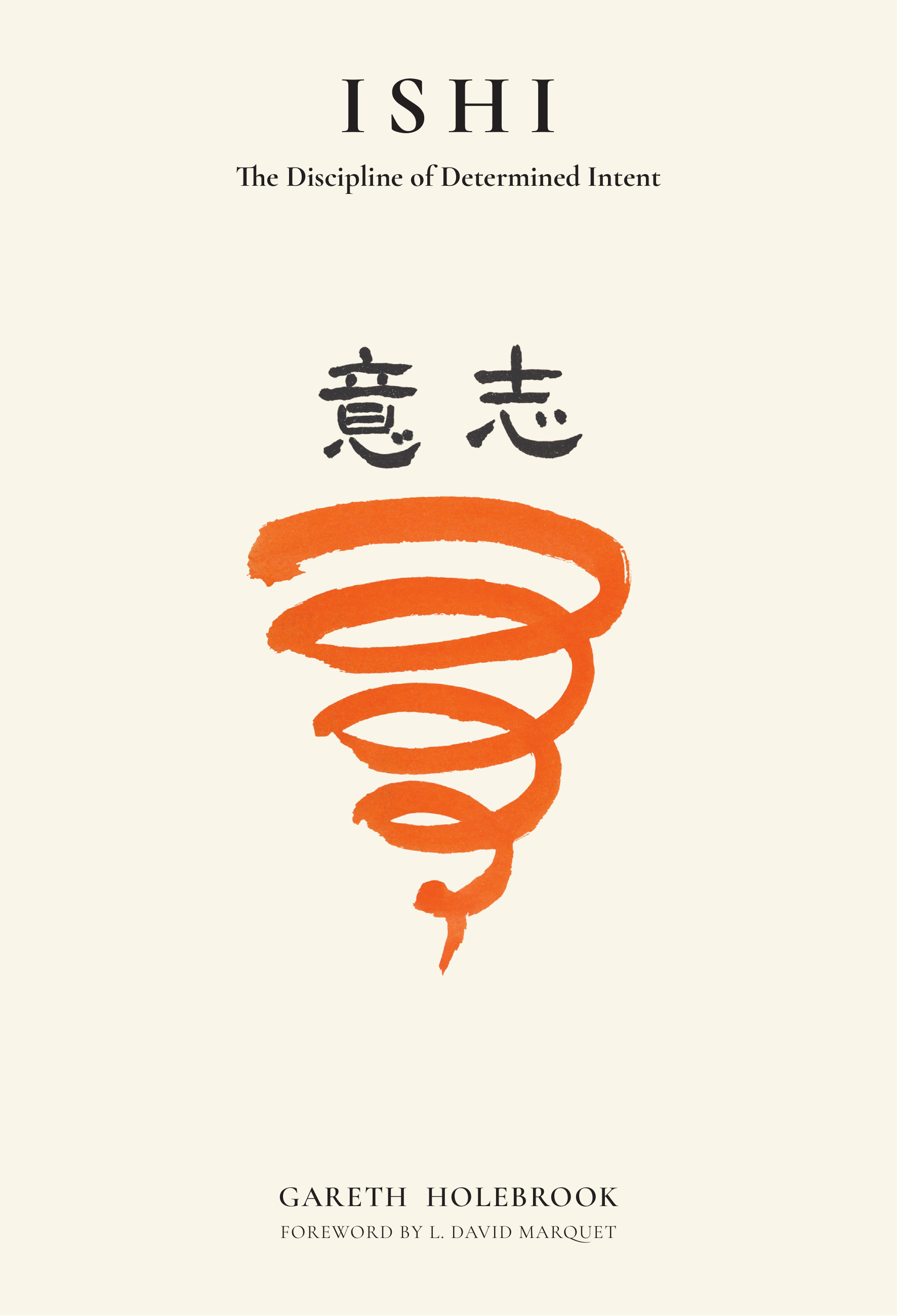
In 2022 I collapsed at mile 22 of the Ironman World Championships marathon in Hawaii after years of qualification attempts. The failure was not physical breakdown but absence of self-governance. Effort continued while awareness had already stopped.
The same pattern sank HMS Artemis at her moorings in 1971, evaporated €1.9 billion at Wirecard and destroys careers in software engineering, clinical practice and technical leadership every year. Capable people operating inside accepted standards drift into failure through accumulated lapses in attention. By the time collapse becomes visible, erosion has been active for years.
This book presents the Ishi Spiral, a four-phase discipline that governs how intent is set, how practice is structured, when persistence is justified and how reflection prevents drift before collapse forces correction. The 4 phases: Decide (Ishi 意志), Forge (Shugyo 修行), Persist (Gaman 我慢) and Reflect (Hansei 反省) are working concepts tested under real load, not theory assembled at a distance.
The problem is structural, not motivational. People push through fatigue because stopping feels weak, or abandon work before effort compounds because discomfort gets misread as misalignment. Both patterns destroy capacity. Both emerge from the same failure: the absence of a mechanism to distinguish endurance from self-harm while choice still matters.
The book documents failure alongside whatever success survived it. Personal collapses, organisational case studies and the patterns that connect them. It does not promise transformation in thirty days, reassurance when discomfort appears, or ease. It offers coherence between what was intended and what was done when motivation left and fatigue developed
If effort feels misaligned, burnout is approaching or persistence has turned into obligation defended by sunk cost, this exists to interrupt that pattern before collapse becomes inevitable.
Ishi is not a framework. It is a discipline. Disciplines are tested under load, not admired from a distance.
About the Author

Gareth Holebrook works with executives, senior engineers, and coaches on the governance of sustained performance.
A former Royal Navy engineer and agile transformation specialist, he has led teams at Visa and partnered with L. David Marquet on Intent-Based Leadership. His work addresses the gap between committing to difficult outcomes and maintaining coherence under pressure without drifting into burnout.
He has competed in dozens of ultra-endurance events, including the Ironman World Championship in Hawaii and the Kiwiman Double Extreme Triathlon. The discipline required to persist without breaking translates directly to leadership, engineering and organisational change.
The Ishi Spiral emerged from this intersection. His book, Ishi: The Discipline of Determined Intent, launched in January 2026 and establishes the discipline of self-governance grounded in Japanese philosophy, deep theory and lived practice.
He writes regularly on Substack at https://substack.com/@garethholebrook and speaks on disciplined persistence in North America and Europe.
Leanpub Book LAUNCH 🚀
Clips From This Episode of the Leanpub Podcast