Who is Renee Troughton?
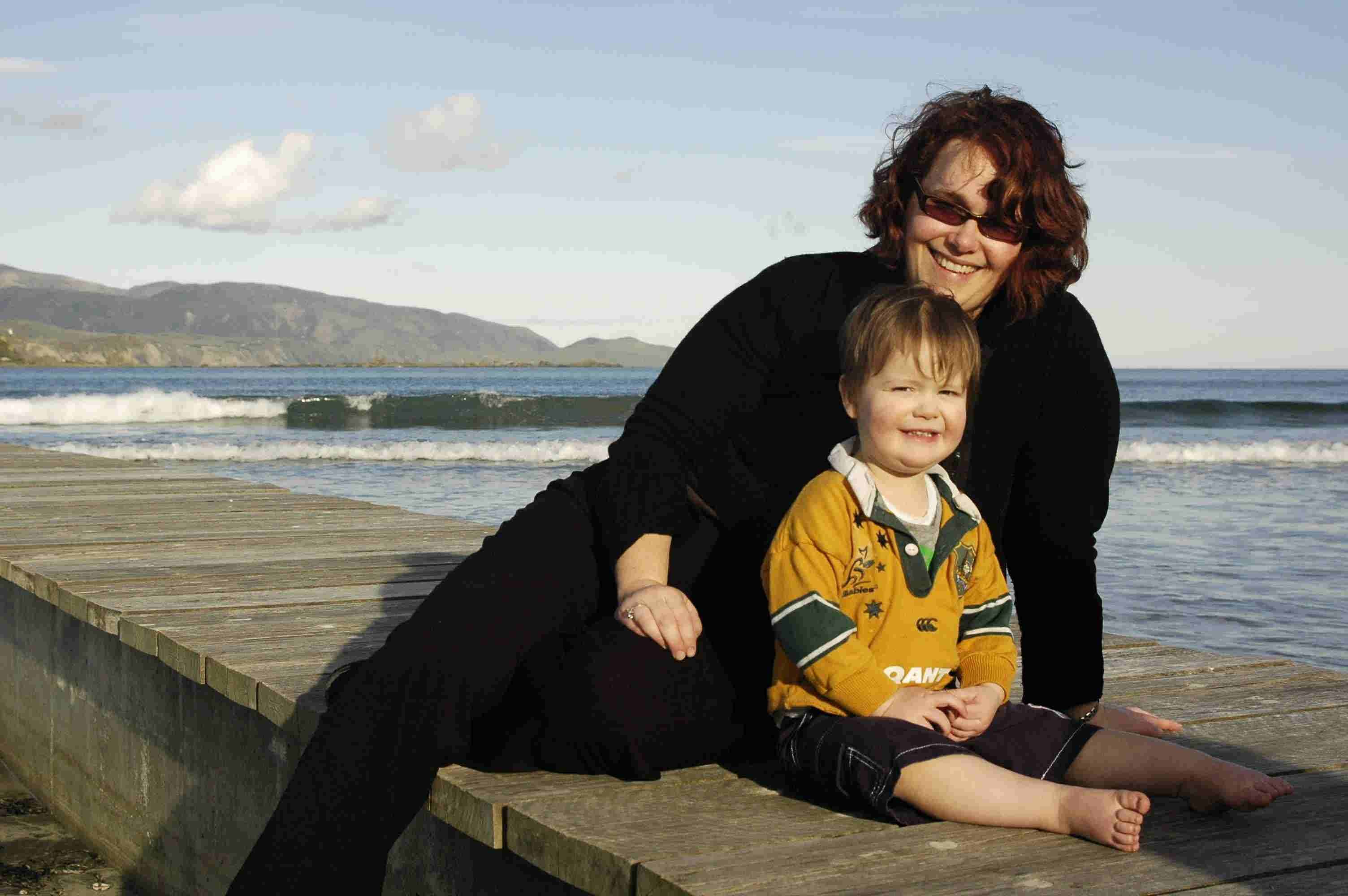
Renee
What is something people usually don’t know about you but has influenced you in who you are?
I am fortunate enough to have gone through two life threatening events and come out alive. The first happened in my mid twenties when I had been working eighty hour weeks for almost half a year. It really put into perspective what life was about for me and that there was more to it than just work.
My husband, who was my high school sweetheart, also manages to keep me very emotionally balanced. He is my rock, my sun and stars and most definitely the ‘better half’.
What would have become of you if you were not doing the job you do today?
When I was younger I wanted to go into meteorology or be a graphic artist, but at the time there were limited opportunities for employment in those fields in Australia. I have always loved watching wild weather, tornadoes and cyclones, but not the pain that those natural phenomenons inflict upon humanity.
I would still really love to be involved in the development of a Massive Multiplayer Online Role Playing Game as a Lore Designer. Part of my impetus to write the fantasy trilogy the Chronicles of Larnorn was to build the world that I would want to play. I found over time that I really just enjoyed the creativity, complexity and escapism that writing my own world provided. I could quite easily spend all of my time writing.
I appreciate a lot more now that I am a creative person and that I need an outlet for this.
What is your biggest challenge and why is it a good thing for you?
Keeping a balance between family, fun, creativity and work. I have had times in my life when I have been so disengaged with work that it created a cesspool of apathy that bled into my personal life.
It is incredibly difficult to not slide into apathy; to remain focussed on enjoying the job that you do. If you don’t enjoy your job then you need to make a change - either find something in it that you do enjoy and focus on that or look for other opportunities.
Equally as bad, is enjoying your job so much, that you ignore your friends and family, or having a job with so much pressure that it consumes your every thought. Not being able to sleep is really good indicator of such a problem.
Between my job and family I love to contribute to the Agile community by blogging, podcasting and writing books, but finding the time is very difficult.
What drives you?
Maximising human potential. This isn’t about working too hard - it is about making the most of your time. It is about doing something with your life where you can make a difference. We can all be contributors to life, we can all be superheros. Being a superhero isn’t about having amazing powers, it is about doing something amazing with your life. Ask yourself this question - are you living your life or are you contributing to life, to humanity on this world?
I like having the opportunity when working with teams to try and make a spark in their life. Individuals may be disengaged for a number of reasons but I have found that with Agile, and the autonomy change that goes with it, that you can make a difference for the better in people’s lives.
What do you think makes a great team?
I certainly don’t think it is a Social Contract that does that. I’ll give you a tip - if you need a Social Contract then there are bigger problems with your team - specifically around trust and respect.
Joseph Pelrine began writing a white paper/book on teams a few years ago that described teams using an analogy of cooking a stew or a soup in a saucepan on a stove. If you didn’t apply enough heat then they would never cook. If you applied too much heat then it would spill over or burn. The balance was in getting a simmer and keeping the team there.
Applied in context, good teams are about ensuring that there is the right amount of focus and pressure but not too much pressure. Good teams are about individuals who have not succumb to apathy, who are not being driven by fear and who are empowered to find their own path to the outcome desired. Good teams are teams that have fun. They are teams that live the manifesto - focussing on delivery of value to customers and reducing waste whilst at the same time respecting and collaborating with the individuals in their team.
What is the essence of Agile?
The efficient production of complex thought work items by empowered and collaborative teams through rapid feedback loops on both the work that is being done and how the work is being delivered.
‘Efficient production’ requires a focus on waste reduction.’Complex thought work’ is appreciation that Agile is a set of strategies for dealing with complexity when doing work that requires some form of mental effort to enact a transformation.
Cynefin’s ‘Probe, Sense and Respond’, Lean’s ‘Plan, Do, Check, Act’, Scrum’s ‘Sprint Planning, Sprint Review and Sprint Retrospective’ and Lean Startup’s ‘Build, Measure & Learn’ cycles are all variants of this concept. The basics are start to build quickly, analyse the effectiveness of what you have built and then determine if a new direction is required.
What is the last book you have read and which book made a huge impact in your life?
The last book I have read is ‘Nonviolent Communication’ by Rosenberg, Marshall. I have found it both a very useful book for a framework on personal empathy when coaching, but also at home when trying to grow connections with my children.
The book that has probably made the biggest impact on my life is Richard Dawkin’s ‘The God Delusion’. Raised a Roman Catholic, I had only just started to question my faith when I was encouraged to read this book. It brought into light all the questions that had been lurking in my soul and overnight I became an atheist. This triggered a period of melancholy and loss in my life until I re-established my drive for maximising human potential.
If you were going to have a dinner party with anyone alive or deceased - which three people would you invite and why?
The first person I’d invite is Jim Carrey to entertain the kids and the rest of the dinner party if it got too serious.
The second person I’d invite is either George R. R. Martin or Chris Metzen so that I could learn from their expertise.
Lastly I would invite Michael Polanyi - an Agilist before his time in the scientific community.
What is the one piece of advice you would give to someone just starting with Agile?
Keep experimenting and learning. When Agile was new there was no rule book. Best practice emerged through vast amounts of experimentation. But best practice isn’t always going to fit in your environment which is why experimentation is critical.
What question do you think I should also ask and what is your answer?
I’m going to pass on this as all the questions I wanted asked in this book are here.
Whom do you think we should ask next in Australia and/or New Zealand and why do you feel they should be included in the book?
As an author of this book I had the opportunity to seed it by choosing the four people in Australia and New Zealand that have influenced me the most. This was incredibly hard, as once I had listed all the names of coaches and community members that I have worked with over the years I ended with a list of sixty-nine people.
The first person I was keen to invite to participate in this book was Kim Ballestrin. I have had the pleasure of working with Kim as my co-chair for the Agile Approaches and Practices stream for the Agile Australia conference. I have found Kim to be incredibly thoughtful, dedicated, driven, pragmatic and patient. She was the first to teach me about Cynefin and started up Australia’s first Cynefin Meetup group.
The second person I was keen to invite was Ilan Goldstein. One of Australia’s few Certified Scrum Trainers, Ilan is incredibly pragmatic when applying Agile, is a great trainer and has been in the trenches long enough to learn all the nuances of how to make Agile work.
Neil Killick was my third choice to be added to this book. He is one of the highest contributors to the Agile community on twitter and has been leading the charge on the #noestimates movement.
And last, but by no means least is my best friend, and business partner, Craig Smith. I first worked with Craig over eleven years ago when he was still coding and I was starting my foray into Agile. When I returned back to Australia after a five year stint in New Zealand I was pleasantly surprised to see how strong Craig was in fostering an Agile learning culture and community throughout Australia. Craig co-runs the Agile Brisbane Meetup, is an extensive contributor to all facets of the Agile Australia Conference and runs the YOW Conference. He is also an active podcaster for The Agile Revolution, contributes heavily to InfoQ and trains often with Software Education.