Raspberry Pi Versions
In the words of the totally awesome Raspberry Pi foundation;
The Raspberry Pi is a low cost, credit-card sized computer that plugs into a computer monitor or TV, and uses a standard keyboard and mouse. It’s capable of doing everything you’d expect a desktop computer to do, from browsing the internet and playing high-definition video, to making spreadsheets, word-processing, playing games and learning how to program in languages like Scratch and Python.
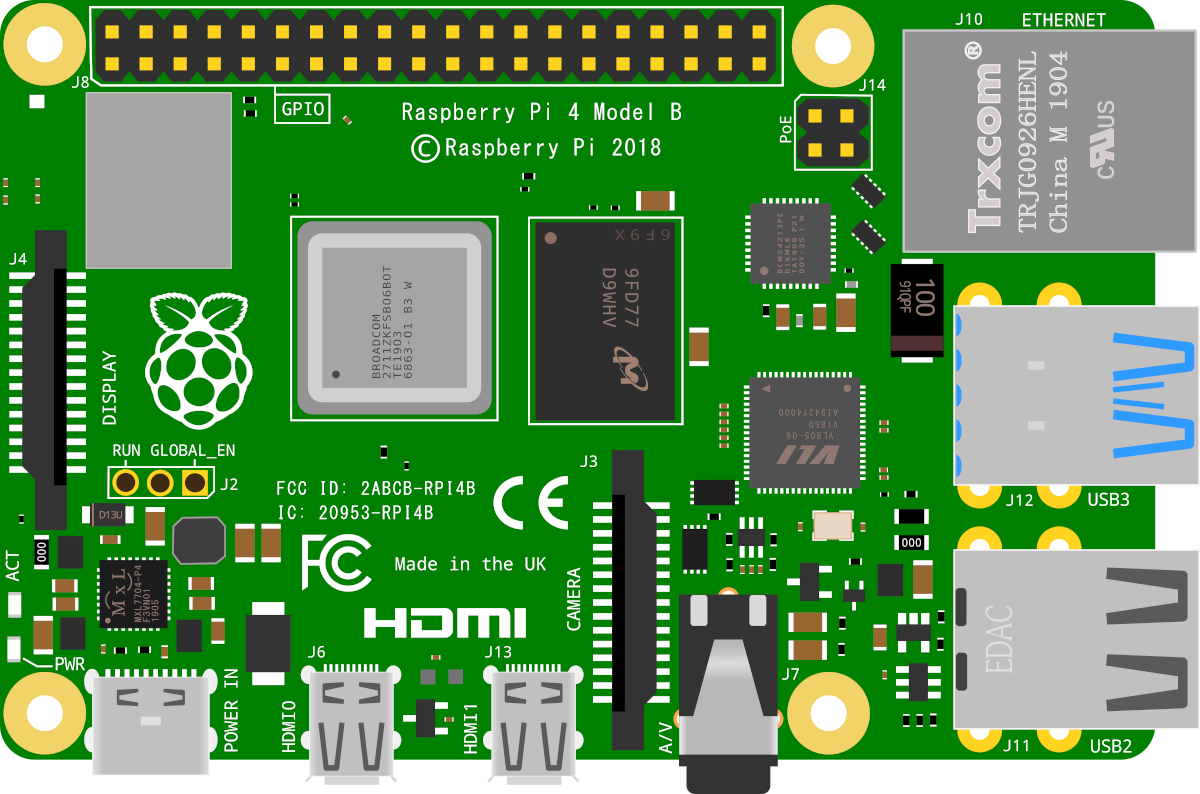
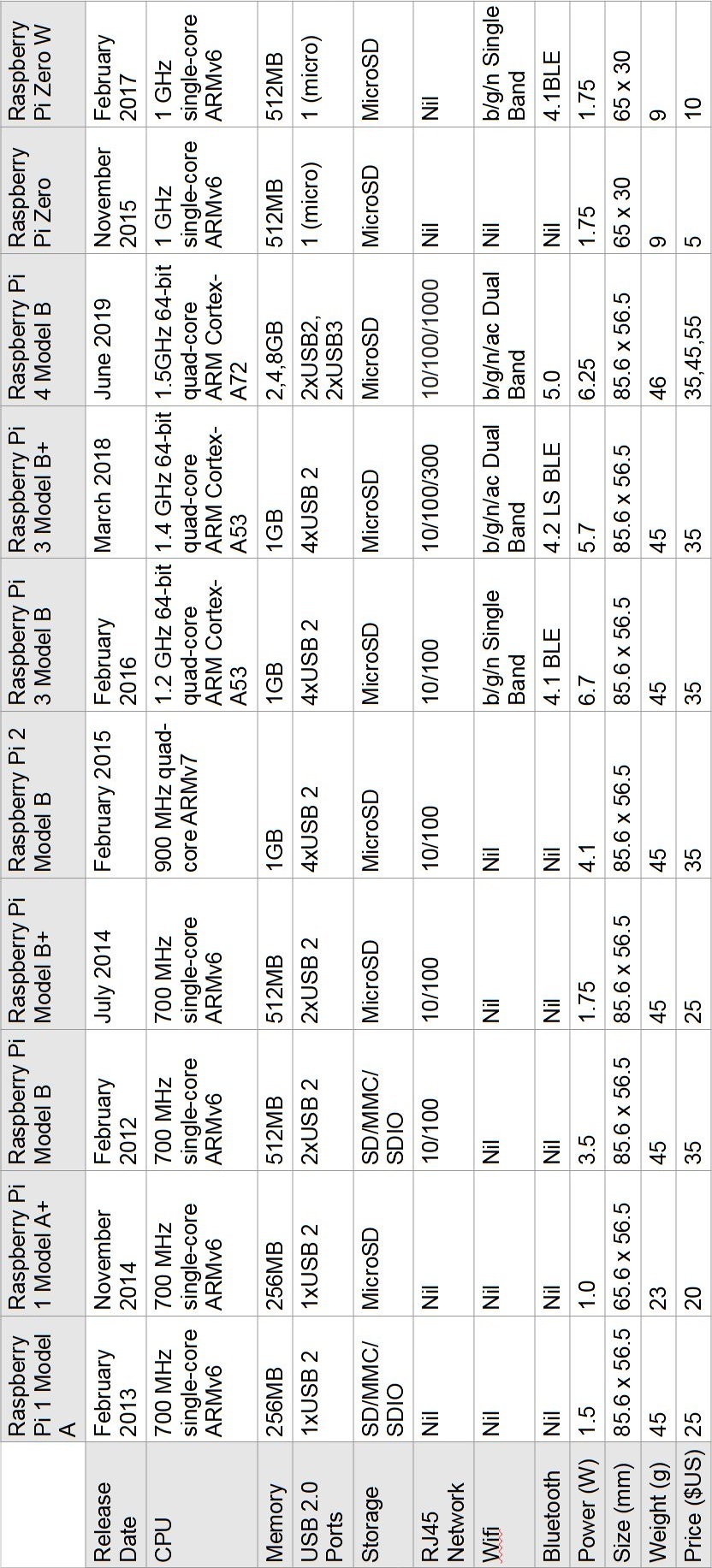
There are (at time of writing) twelve different models on the market. The A, B, A+, B+, ‘model B 2’, ‘model B 3’, ‘model B 3+’, ‘model B 4’ (which I’m just going to call the B2, B3, B3+ and 4 respectively), ‘model A+’, ‘model A+ 3’ , the Zero and Zero W. A lot of projects will typically use either the the B2, B3, B3+ or the 4 for no reason other than they offer a good range of USB ports (4), 2 - 8 GB of RAM, an HMDI video connection (or two) and an Ethernet connection. For all intents and purposes either the B2, B3, B3+ or 4 can be used interchangeably for the projects depending on connectivity requirements as the B3, B3+ and 4 have WiFi and Bluetooth built in. For size limited situations or where lower power is an advantage, the Zero or Zero W is useful, although there is a need to cope with reduced connectivity options (a single micro USB connection) although the Zero W has WiFi and Bluetooth built in. Always aim to use the latest version of the Raspberry Pi OS operating system (or at least one released on or after the 14th of March 2018). For best results browse the ‘Downloads’ page of raspberrypi.org.
Version Comparison