The Beginning Is The End
In the beginning…
I awoke to the sound of muffled talking, sliding chairs and clicking keyboards. It was Friday morning and I was laying on a sumo chair in one of our pairing rooms. The rooms were no larger than an average meat locker where a butcher might hang the cuts from the previous day. We often used those rooms for storing tables and boxes and sleeping after late night deployments.
My half dead phone was what really woke me up. My wonderfully patient wife asking if she and the kids were going to see me today. Such were many days where I worked. Unpredictable deployments of all types of software late at night easily carried our work into the AM hours. We would catch a few games of Team Fortress while the bits were being rolled out across the servers. It was a good way to pass the time. We laughed between sips of Mountain dew and head-shots.
This is the life we chose for ourselves. Sure we felt pressure from management and product owners to get software out the door but at the end of the day this behavior of slowly killing ourselves with working long hours, eating poorly and stressing out about the confines of a fairly stoic approach Scrum was our choice. The only thing forcing this mindset on us was crumbling expectations and the drive to shoot at the ever-moving target.
I collected all the artifacts that fell out of my pockets during my lengthy nap between the hours of 5:00am and 7:00am and opened the door leading out to the dev pit. It was an open development space with tables, a few orange couches, a thirty foot magnetic scrum wall (we had big plans) and a brick wall. I remember trying to playoff that I was not disoriented from the couple of hours “sleep” and if I could at least make out the lines on the brick wall I’d be OK - ironic isn’t it, I’m sure there’s a metaphor in there somewhere.
Sometimes I’d slide back to my desk, began sipping hot Mountain Dew and started to hit the keys again. Other days I’d just go home. Today I decided to head home. I gave a few head nods and courtesy grunts to assure my coworkers that I was in fact not a zombie and headed out the door.
I hopped in my car and began the twenty-four mile drive home. On the clear-minded side of things doing something that could get people hurt like driving while extremely tired is a royally stupid move. Unfortunately, in my mind, I was trained (through reinforcement learning) to do my job this way. I was willing to risk life for something so insignificant because that’s what I was conditioned to do.
I didn’t know it yet, but this day was going to be different. Today I was going to discover that I had built on something so terrible that it not only almost killed me but I was on my way to leaving something I loved doing - writing software.
Despite my best efforts of windows down, pinching cheeks, slapping my face doing “extreme eyes” with toothpicks, 2 miles from my house I fell asleep and began to head off the into a ditch between the road and train tracks near a parked train. Fortunately, there was another car passing by and he laid on the horn to wake me.
You know those moments when you know you’ve drank too much coffee (as if such a thing was actually possible) and you can see your heart pounding out of your chest like a Tom and Jerry cartoon… Yeah, it was a lot like that.
In that moment I decided I was done with software.
It’s funny how we often deal in absolutes, as if there is some nagging thirst that can only be quenched by our using the words always and never. I almost always never struggle with that. I feel that it is the logic boards we have built into us; forcing absolution out of us just as easily as pressing keys on our keyboards to create 1’s and 0’s.
We are more than that. More than what we do at work or at home. Have you ever had a burning thought that you could never shake; like trying to put down a can of Pringles but quickly returning to it uttering the “just one more” catch phrase of addiction?
When I said I was going to put down software that day it was a claim made in vain. I couldn’t do it. The fact was that writing code made me smile, it was part of my inner nerd and it wasn’t going away. I couldn’t put down the software developer can of Pringles and I knew it, so I just decided that there was a better way to eat this thing called work-life balance.
If I was going to be the husband, the dad, the developer and the person I needed to be I was going to have to start living in a new balance - a Nerd Life Balance.
I know what you’re thinking, “wow, another smattering of words that is going to tell me how to be a better me!” or “a book that will help me understand balance better.” No, I’m here to tell you that is not at all what this is about. It’s about making a difference and making an impact.
I’ve done this software developer thing for about twenty years now. In that time I have been part of a few startups, a few really large companies and even started up a few companies of my own. Eighteen of those twenty years I have slept under desks, in closets, worked without seeing my family for some time, destroyed my health and my family. I wasn’t alone in my destruction and even worse, I was often the one encouraging those behaviors.
Many of my fellow workers, the people I coded with and managed did the same. We all seemed to have one goal, ship software and destroy ourselves in the process. It was as if we were disposable copper top batteries, plugged into the matrix waiting to run out of useful energy. Only until recently (the last few years) do I feel like I have finally been doing this Nerd-life thing “right” and living life with genuine enthusiasm first and finding “balance” in that.
In an article posted by Emma Jacobs of the Financial Times was quoted saying:
“Most efforts fail if we aim for work-life balance as it’s superficial unless you change how work is done.”
I love that. It states one simple and clear point of view… what we’ve been doing all these years, trading hours of our lives for sheets of paper or pixels on the screen; it’s not working.
Throughout my entire career there were only a few times that I was told that I need to stay late and get things done; not that there wasn’t “implied” pressure or expectations. There was a lot of that. The point is that at any time I could have made a choice, a choice to say “No” or I could have accepted the obvious fact that the work will be there tomorrow. So why didn’t I?
I love being a developer. I love that I can create something that will genuinely delight someone else. I love failing when I try something new and working to get better at it. I love that the work I do gives me challenging problems to solve. Most of all I love solving those problems and “winning.” I call this the “Skinner effect” and I believe that is why many of us struggle with spending long hours at this physical place called work.
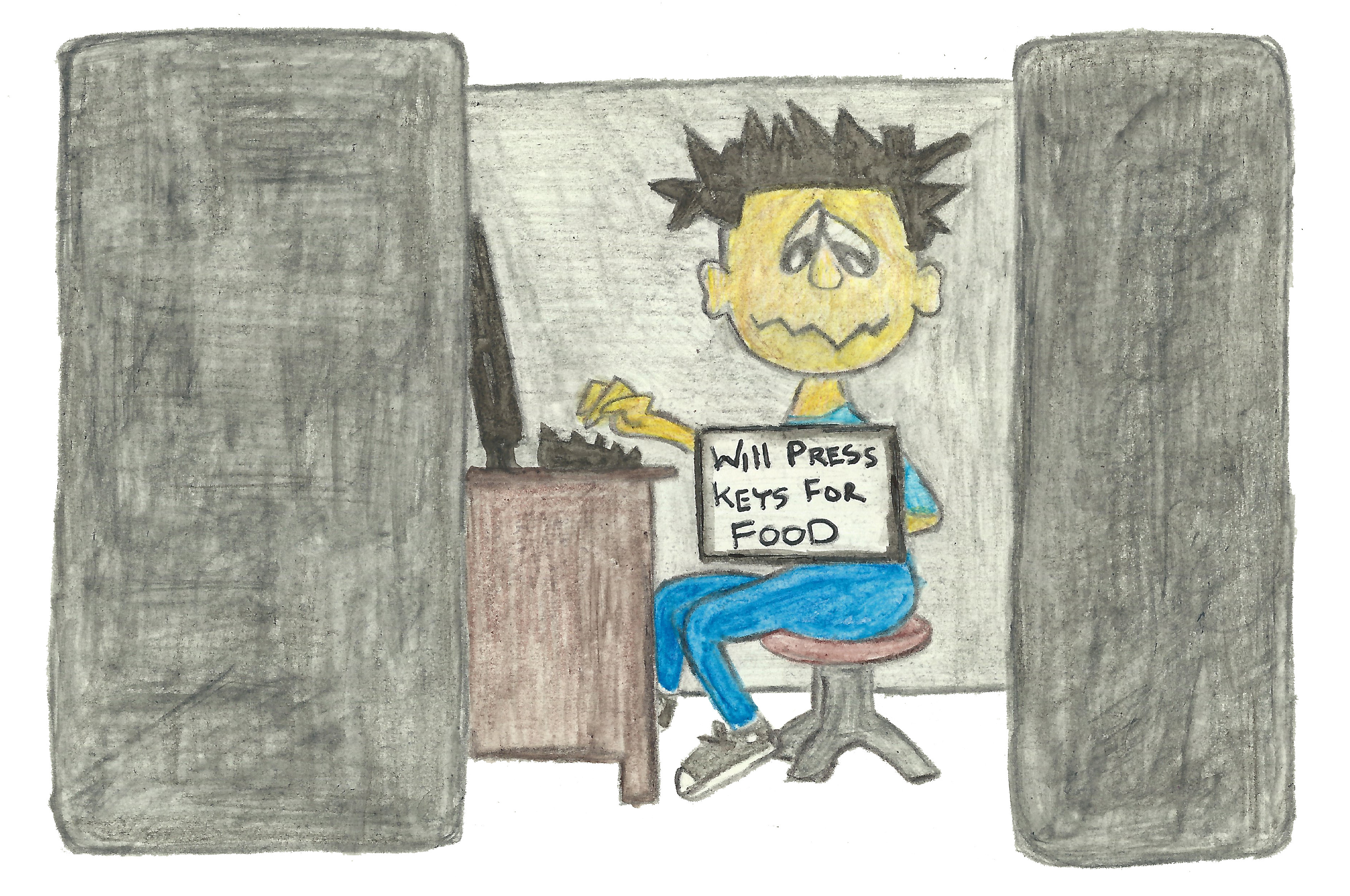
My idea of the “Skinner effect” comes from the research B.F. Skinner did using his operant conditioning chamber (The “Skinner Box” - which, incidentally B.F. Skinner did not like his device being called a Skinner Box). The idea is simple, we are rewarded for “winning” and punished for “loosing.” Everything we do as developers tends to lead to behavioral reinforcement in some way, shape or form.
Game theory calls this reinforcement learning. It simply states that, “more successful behaviors tend to be held more tenaciously and will occur more frequently.”
Every time we build our software or run our tests we get feedback. We are constantly being rewarded in small increments for getting it right or scolded by our test runners for getting it wrong. I won’t get into all of the research done on our brains, dopamine and the anticipation of success but I do want to point out that this is both a psychological and physiological thing.
Just observe developers that are near a solution in the software they have written - you’ll see them unable to leave the keyboard, as if they have been physically connected to it. Basic needs such as food and the bathroom breaks quickly become optional when we are on the edge of solving something.
Second only to this, in my opinion, is the idea that we are really poor estimators of time and effort. Ask any developer have they ever lost track of time when working on a hard problem? Developers can be considered the “eternal external optimists” - while on the inside we are burning with uncertainty and desire to solve the seemingly unsolvable problem.
As far as estimating, ask the same developers to estimate a problem that has never been solved and you’ll get a ton of sheepish grins around the table. Our minds spin on the incalculable scenarios we might run into while solving the problem and we even begin to thread out solutions to the unknown. Developers are amazing creatures, we can be both confident and completely uncertain about a problem and how to solve it simultaneously.
It’s like playing one of the seemingly millions of mobile games. We find ourselves captivated by the brilliant yet simple design. It feels familiar somehow, like the smell of Halloween. We are mystified by the “amazing” game play and the perceived story. Here’s the rub: it is just an excellent deception. Once you peel back the facade of crushable candy or sparkly gems sliding majestically across the screen you see something that is absolutely captivating to any psychologist. You see a Skinner box. A box whose walls are constructed of in-app purchases, amazing marketing and gamification. The reality is that there are some seriously smart people who are paid to come up with ways to keep you in the game. Next time you are “playing” (or more appropriately, being owned by) one of those games and it rattles off “AMAZING!” or prompts you with a “free” spin, consider this: who is playing who?
I know this sounds a bit harsh but we are addressing one of the Nerd world’s greatest deceptions: the idea that we are in control because we have the keyboard. There are innumerable variables to the work-life equation which often cause the final calculation to be irrational. So then how does one stop the madness? How do you know if there is even any madness to begin with? We are, after all, problem solvers, over achievers and hard workers. We are nerds and this prospect of defeat will not drag us down it will only make us stronger!
An author from wikipedia defines Nerd as:
Nerd is a descriptive term, often used pejoratively, indicating that a person is overly intellectual, obsessive, or socially impaired. They may spend inordinate amounts of time on unpopular, obscure, or non-mainstream activities, which are generally either highly technical or relating to topics of fiction or fantasy, to the exclusion of more mainstream activities.[1][2][3] Additionally, many nerds are described as being shy, quirky, and unattractive,[4] and may have difficulty participating in, or even following, sports. Though originally derogatory, “Nerd” is a stereotypical term, but as with other pejoratives, it has been reclaimed and redefined by some as a term of pride and group identity.
After reading that I’m sure some might think, “Wow, nope not me - I am not a nerd!” To which I will reply, “Reread the last part of that definition.”
“Though originally derogatory, “Nerd” is a stereotypical term, but as with other pejoratives, it has been reclaimed and redefined by some as a term of pride and group identity.”
| Year | Spelling | Published | Context |
|---|---|---|---|
| 1950 | Nerd | If I Ran The Zoo | A small humanoid creature looking comically angry, like a thin, cross Chester A. Arthur. |
| 1951 | Nerd | Newsweek | Someone who once would be called a drip or a square (Detroit slang: extreme form of scurve |
| 1952 | Nerd | St. Joseph, Michigan Herald-Press | Synonym for scurve, opposite of George. Also a drip. |
| 1957 | Nerd | Glasgow, Scotland Sunday Mail | “ABC for SQUARES”: “Nerda square, any explanation needed?” |
| 1961 | Millard Fillmore Nerd | Swarthmore College Hamburg Show | Name of a self-confessed square, who has not broken a single rule |
| 1965 | Nurd | RPI Bachelor | Used to refer to 61 students |
| 1970 | Nurd [sic] | Current Slang | Someone with objectionable habits or traits…. An uninteresting person, a ‘dud.’ |
| 1980 | Nerd or Nurd | Slang | An over-studious person, esp a computer devotee |
| 2000s | Nerd | Slang | Began being transposed with the term geek though the two terms have distinct meanings |
| 2015 | Nerd | Nerd Life Balance | An individual who is genuinely passionate about something and who wants to share it with everyone |
Table derived from reference.com
It is my opinion that this last section is really the only true meaning of what a nerd today is. The word no longer follows the stereotype of its origin from the 1950’s Dr. Seuss book, If I ran the Zoo.
Let me see if I can give some perspective. Say, for instance, you love computers. Everything about them excites you; if there is a new processor that hit the market you’re already working up when you’re going to buy one (at least) and how you might over clock it because you love getting the most out of the experience of tweaking. You are constantly talking about it with anyone who will listen and challenge your ideas. Additionally you feel compelled to share this passion with anyone who might want to learn. One might say that you are indeed a “computer nerd.”
Now let’s say you were the type of person who loves gardening. (Word of caution: given that I know absolutely nothing about plants other than: 1. some smell and look nice and 2. some you can eat. Hopefully this example will help to “grow” the thought.)
Everything about plants excites you; if there is a new bulb ready for planting that you see at the local nursery you’ve already worked up how many you need to make you home garden experience perfect. You are constantly talking about it with anyone who will listen and challenge your ideas. Additionally you feel compelled to share this passion with anyone who might want to learn. One might say that you are indeed a “Garden nerd.”
So what’s the difference other than personal hygiene and number of cans of energy drinks consumed (sorry, I couldn’t help raising the sarcastic stereotype flag - believe it or not gardeners probably do have good hygiene)? Nothing really. There is one key aspect to this thinking: if you are passionate about something and you’re compelled to share it, then you just might be a nerd and if you are… read on.