Symbolic polynomial math
File: symbolic-math.lisp
A small computer-algebra system: polynomials as association lists, exact rational arithmetic (addition, subtraction, multiplication), derivatives, integrals, and definite integrals by the fundamental theorem of calculus.
The program stores a polynomial as a sorted alist of (exponent . coefficient) pairs with like terms combined and zeros dropped, so  is
((2 . 3) (1 . -1) (0 . 5)). The calculus is the power rule in both directions:

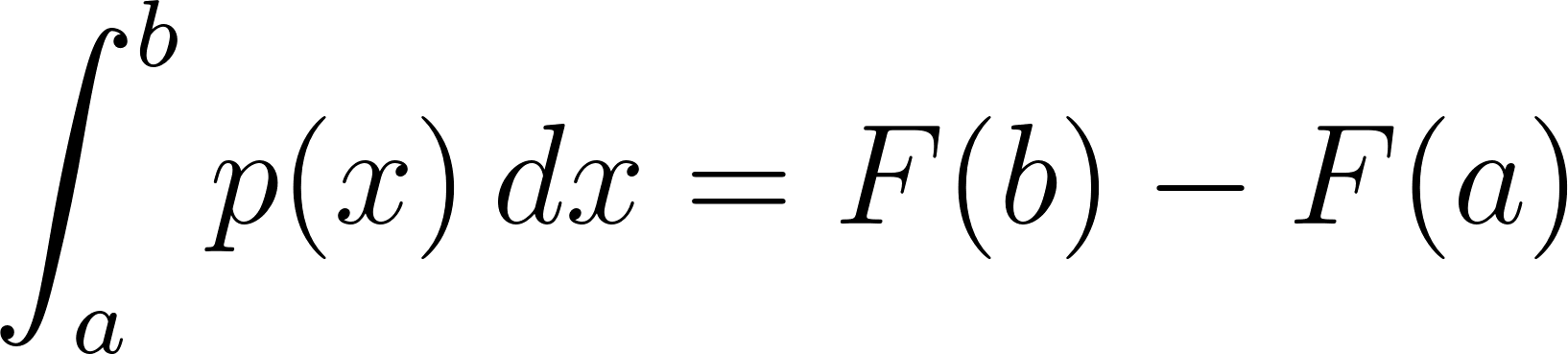
and a definite integral evaluates the antiderivative at the endpoints:
The code
  1 ;; sbcl --script symbolic-math.lisp   (symbolic polynomial calculus)
  2 ;;;; Polynomials are alists ((exponent . coefficient) ...):
  3 ;;;; descending exponents, like terms combined, zeros dropped.
  4 ;;;; 3x^2 - x + 5 = ((2 . 3) (1 . -1) (0 . 5))
  5
  6 (defun normalize (terms)
  7   (let ((h (make-hash-table)))
  8     (loop for (e . c) in terms do (incf (gethash e h 0) c))
  9     (sort (loop for e being the hash-keys of h using (hash-value c)
 10                 unless (zerop c) collect (cons e c))
 11           #'> :key #'car)))
 12
 13 (defun poly (&rest coefs)               ; (poly 3 -1 5) => 3x^2 - x + 5
 14   (normalize
 15    (loop for c in (reverse coefs) for e from 0 collect (cons e c))))
 16
 17 ;;; Arithmetic & evaluation
 18 (defun p+ (&rest ps) (normalize (apply #'append ps)))
 19 (defun scale (p k)
 20   (normalize (loop for (e . c) in p collect (cons e (* k c)))))
 21 (defun p- (p q)      (p+ p (scale q -1)))
 22 (defun p* (p q)                         ; every term times every term
 23   (normalize (loop for (e1 . c1) in p
 24                    append (loop for (e2 . c2) in q
 25                                 collect (cons (+ e1 e2) (* c1 c2))))))
 26 (defun degree (p)    (if p (caar p) -1))
 27 (defun evaluate (p x) (loop for (e . c) in p sum (* c (expt x e))))
 28
 29 ;;; Calculus: power rule, reverse power rule, fundamental theorem
 30 (defun deriv (p &optional (n 1))
 31   (if (zerop n) p
 32       (deriv
 33        (loop for (e . c) in p
 34              unless (zerop e)
 35              collect (cons (1- e) (* e c)))
 36        (1- n))))
 37
 38 (defun integ (p &optional (n 1))
 39   (if (zerop n) p
 40       (integ
 41        (loop for (e . c) in p
 42              collect (cons (1+ e) (/ c (1+ e))))
 43        (1- n))))
 44
 45 (defun bound (b)                        ; rationals stay exact
 46   (case b
 47     (:pi pi)
 48     (:e (exp 1d0))
 49     (t (if (rationalp b) b (float b 1d0)))))
 50
 51 (defun definite (p a b)
 52   (let ((f (integ p)))
 53     (- (evaluate f (bound b)) (evaluate f (bound a)))))
 54
 55 (defun critical-point-p (p x &optional (tol 1d-9))
 56   (< (abs (evaluate (deriv p) x)) tol))
 57
 58 ;;; Display
 59 (defun term->string (e c v)             ; magnitude only: 3x^2, x, 5
 60   (let ((m (abs c)))
 61     (format nil "~:[~a~;~*~]~@[~(~a~)~]~@[^~a~]"
 62             (and (= m 1) (> e 0)) m     ; hide a coefficient of 1
 63             (and (> e 0) v)
 64             (and (> e 1) e))))
 65
 66 (defun ->string (p &optional (v 'x))
 67   (if (null p) "0"
 68       (with-output-to-string (out)
 69         (loop for (e . c) in p
 70               for first = t then nil
 71               do (write-string (cond ((not first)
 72                                       (if (minusp c) " - " " + "))
 73                                      ((minusp c) "-")
 74                                      (t ""))
 75                                out)
 76                  (write-string (term->string e c v) out)))))
 77
 78 (defun integral->string (p &optional a b (v 'x))
 79   (flet ((show (limit) (case limit (:pi "π") (:e "e") (t limit))))
 80     (format nil "∫~@[[~{~a~^,~}]~](~a) d~(~a~)"
 81             (and a (list (show a) (show b)))
 82             (->string p v)
 83             v)))
 84
 85 ;;; Examples
 86 (let ((p (poly 3 -1 5))                 ; 3x^2 - x + 5
 87       (q (poly 1 2)))                   ; x + 2
 88   (format t "p          : ~a~%" (->string p))
 89   (format t "p + q      : ~a~%" (->string (p+ p q)))
 90   (format t "p - q      : ~a~%" (->string (p- p q)))
 91   (format t "p * q      : ~a~%" (->string (p* p q)))
 92   (format t "2p         : ~a~%" (->string (scale p 2)))
 93   (format t "degree, p(2): ~a, ~a~%" (degree p) (evaluate p 2))
 94   (format t "p', p'', p''': ~a | ~a | ~a~%"
 95           (->string (deriv p))
 96           (->string (deriv p 2))
 97           (->string (deriv p 3)))
 98   (format t "∫p, ∫∫p    : ~a | ~a~%"
 99           (->string (integ p))
100           (->string (integ p 2)))
101   (format t "~a = ~a~%" (integral->string p 0 1) (definite p 0 1))
102   (format t "~a = ~,4f~%" (integral->string p 0 :pi) (definite p 0 :pi))
103   (format t "x=1/6 critical? ~a  x=0? ~a~%"
104           (critical-point-p p 1/6)
105           (critical-point-p p 0)))
How it works
normalizekeeps polynomials in canonical form: it sums coefficients per exponent in a hash table, drops zero coefficients, and sorts by descending exponent. Every constructor and arithmetic function calls it.polybuilds a polynomial from coefficients highest-degree first:(poly 3 -1 5)means.
p*multiplies every term of one polynomial by every term of the other (add exponents, multiply coefficients) and letsnormalizecombine like terms. The canonical form keeps multiplication down to three lines.- Coefficients are ordinary Lisp numbers, so ratios stay exact. The antiderivative of
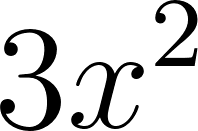 has coefficient
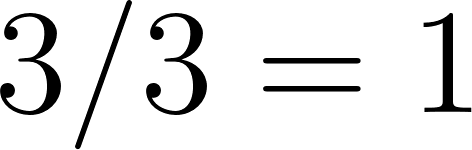 , but the antiderivative of
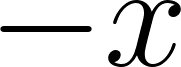 carries the rational
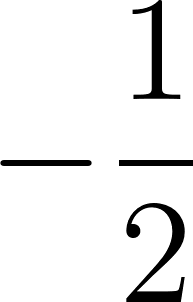 .
derivandintegtake an optional repeat count:(deriv p 3)is the third derivative, computed by recursing on the single-step rule. Theunless (zerop e)clause drops the constant term underderiv.boundaccepts integration bounds as numbers or the keywords:piand:e. Rational bounds (integers and ratios) stay exact, so(definite p 0 1)returns the exact rational11/2; only:pi,:e, and float bounds produce a double float.critical-point-pchecks whether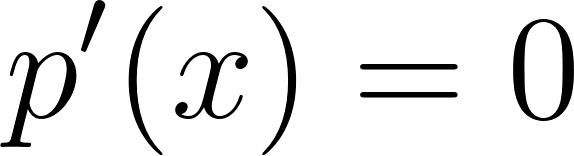 within a tolerance. For our quadratic,
 at
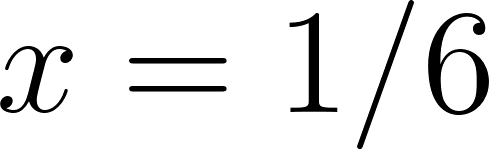 , and since
1/6is an exact rational, the derivative evaluates to exactly zero.->stringprints polynomials the way people write them:3x^2 - x + 5, not3x^2 + -1x + 5.term->stringprints one term’s magnitude and hides a coefficient of 1 on non-constant terms;->stringadds the signs: a leading-for a negative first term, then+or-between terms. Theformatdirective~:[...~;...~]picks one of two clauses based on a boolean, and~@[...~]prints a group only when its argument is non-nil, which is how the variable and exponent appear only when needed.
Running it
1 $ sbcl --script symbolic-math.lisp
Actual output:
 1 p          : 3x^2 - x + 5
 2 p + q      : 3x^2 + 7
 3 p - q      : 3x^2 - 2x + 3
 4 p * q      : 3x^3 + 5x^2 + 3x + 10
 5 2p         : 6x^2 - 2x + 10
 6 degree, p(2): 2, 15
 7 p', p'', p''': 6x - 1 | 6 | 0
 8 ∫p, ∫∫p    : x^3 - 1/2x^2 + 5x | 1/4x^4 - 1/6x^3 + 5/2x^2
 9 ∫[0,1](3x^2 - x + 5) dx = 11/2
10 ∫[0,π](3x^2 - x + 5) dx = 41.7794
11 x=1/6 critical? T  x=0? NIL
Check the ninth line against the symbolic answer:

The program agrees exactly: 11/2 is a Lisp ratio, not a rounded 5.5. Arithmetic stays rational from the antiderivative (-1/2x^2, 5/2x^2 in the output) to the answer. Only the integral up to :pi needs floating point, because  is irrational.
Using it
Use it to check calculus homework, generate exact examples for teaching, or as the symbolic core of a larger system. Natural extensions: polynomial long division (which pairs well with p*), composition 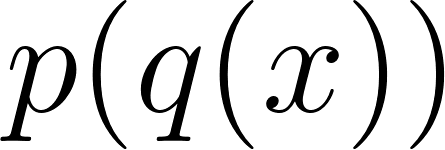 built from
p* and p+, rational functions as pairs of polynomials, or a solve for quadratic roots. The choice of representation (canonical alists) keeps every operation short, and it deserves as much study as the calculus.