Introduction
“The world as we have created it is a process of our thinking. It cannot be changed without changing our thinking.” - Albert Einstein
Extreme Agility is a collection of thoughts that you may highly disagree with. Many are in conflict with the teachings of business administration - and may also contradict your personal experience. This book purposefully exposes you to a different way of thinking through small anecdotes and provoking headlines.
Maybe you won’t get beyond the index before you state “This guy is totally bonkers”. That’s okay - just a few years ago, I myself might have argued, “Is the author a lunatic?” I’m not. I consulted dozens of organization and led critical initiatives to success. Today, I coach, train, mentor and consult others to help them become more successful. A common theme is: “As long as you continue thinking and doing what you always did, nothing will change”
The suggestions made in this book are hyperbole - and at the same time, they aren’t. I have observed dozens of companies and how they work. Some have taken certain topics to heart and have benefitted greatly: Their understanding grew, their processes became more effective - and their ventures more profitable.
I don’t encourage you to implement the things mentioned in this book without understanding either what you are doing, why you’re doing - or how to do it. Instead, I expose you to a whole load of problems that you might never knew you had. I purposefully do not offer you a way how to solve them: You might just do what I suggest without reflection and then blame me for giving you terrible ideas.
Once you discover how the underlying message of each section can benefit in your situation - you are ready for Extreme Agility!
It’s all about change
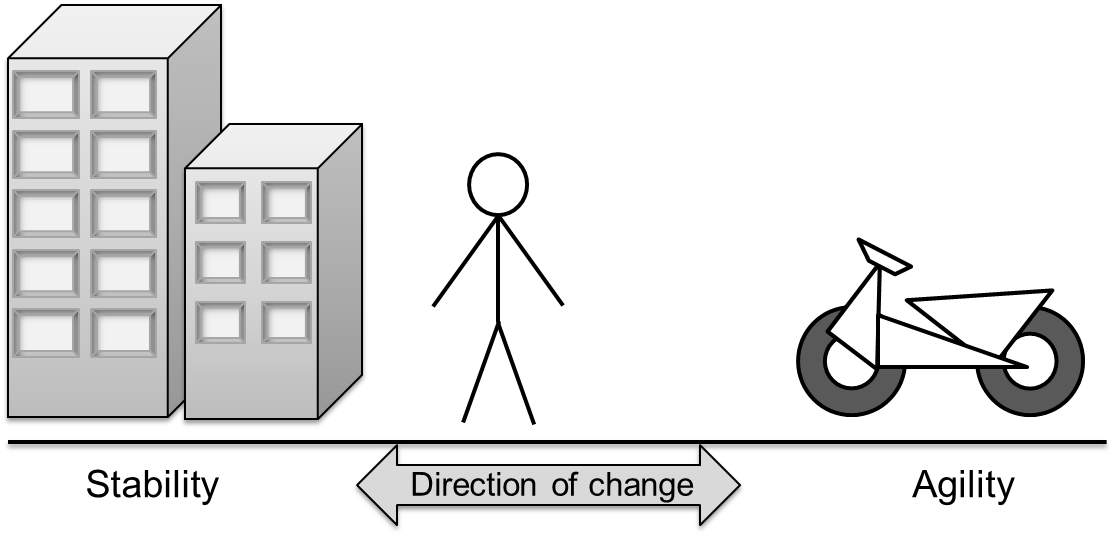
Regardless of where you stand, how far you want to go or where you want to be: You need to take at least one step - to make a significant change - otherwise, there will be no change. Only by changing towards the direction that you want to go, will you actually make progress. This book offers a vast amount of suggestions for directions into which you might want to be heading. Some are complementary, others mutually exclusive - there will be no “100% mark” that you can achieve by following the book. I offer you options, it’s up to you what to make of them, which to pick or how far to take them.
The intention of this book
“It can be the result of habitual tendency, whatever the cause, to view the world with limited sets of options. Conversely, some believe free will is the ability to choose from beyond apparent options.” - from Wikipedia

A false dichotomy - also called “false dilemma”, is a situation where people think that they must choose between two or more specific presented options, when there are other options which that person may not be aware of while they decide. Take a look at the Wikipedia quote: How often have you encountered this kind of thinking: “If we don’t do it like this, then it’s not going to work!” - a classic false dichotomy caused by a limited perspective.
Here are just a few examples, which we will explore more in-depth later in the book:
- We need a hierarchy to maintain order in the company.
- We need a detailed action plan to ensure project success.
- We need to measure whether we are on the right track.
These statements are cleverly disguised false dilemmas. Let’s just dissect the first one. The hidden implication is: “Either hierarchy, or chaos.” The dichotomy is much easier to spot when we put it like this. The false dilemma is: “I do not know any other method of preventing chaos except creating a hierarchy” - equating the speaker’s ignorance about alternatives with an absolute absence of further options.
This book has been written to help you become aware of such false dilemmas and to provide hints of existing alternate options. The magic happens when you leave the trodden paths, in order to discover new and better ways of moving forward.