Appreciating Your Life
To appreciate life is common advice. It’s so common we tell it to ourselves regularly via quotes, pictures of nature, and in quick status updates. All of this is of course fine. The advice is simple and effective; life is what we’re in, and to enjoy it and appreciate your own life just makes practical sense for mental, emotional, and even physical well being. But like so much advice, it’s really not that helpful. No one really tells us HOW to enjoy life and there’s a lot of confusion on the issue. Money seems to be a path many people take. Starting a family is another.
Drugs. Alcohol.
Writing. Painting. Music.
Entrepreneurship.
Being just the BEST at your job.
There are as many ways to appreciate life as there are people to appreciate it.
None of these things alone work. To appreciate life is not as simple as achieving anything. It’s not like you’ll reach a point, or succeed at a goal and suddenly have appreciation for life. It’s also not something that is constant. You appreciate life one day, and struggle to find any enjoyment, happiness, or calm the next. Appreciating life is like appreciating puns, sometimes they’re great, and other times they’re told by your dad and inappropriate times (**eyes roll**).
Eye rolls at bad puns aside, it’s important to always take advice with a grain of salt and a hefty dose of critical thinking. So how can you actually start to appreciate life, knowing that achievements don’t guarantee appreciation? Well, I’ve got a few steps you can try out and modify as you see fit to best suit your own needs.
1. Recognize the difference between Happiness and appreciation
Happiness is an emotion. Appreciation is an active mental process that dictates how you interpret your situations, thoughts, and emotions. You can be happy and appreciate life but you can also be exhausted, frustrated, fed-up, angry, sad, or any combination of ‘negative’ emotions and still appreciate your life. As a practical analogy, consider the dentist. I know I hate going to the dentist, and the experience is always unpleasant, but I know that the visit has great benefit. The benefits don’t mean I like the dental
2. Don’t Compare your Life to Anyone Else’s
Don’t compare your life and actions to people more successful than you. You’ll never find out how to live your own life if you’re constantly trying to live someone else’s. What one person does might not work for you.
Yet you should certainly take lessons from other people and fit them into your experience. This is essentially what learning is. It’s the most powerful tool we can use to advance our own purposes. But don’t do exactly what someone else does. They had a different starting point than you do, so you can’t end up in the same place they did by following an identical path.
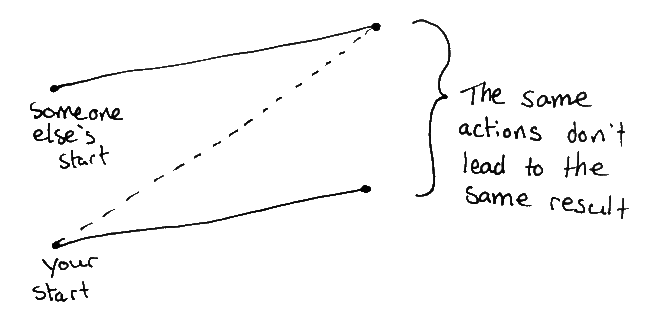
Don’t compare your life to someone who has it worse than you either. People sometimes like to point out how our lives are so much better than the lives of other people. This is factually accurate, but making those comparisons is not healthy for anyone. These kinds of comparisons lead to unhealthy guilt. Guilt doesn’t foster appreciation, it plants seeds of resentment. You’ll start to assign blame to people for the disparity in fairness either by putting yourself down or by feeding hatred of those people you are comparing yourself against. Don’t be sorry that you were born into a certain life. Instead, recognize your good fortune and notice that it comes with a responsibility to do more with the tools you’ve been given.
You don’t have to be sorry. You have to be responsible.
3. Think about Death
Death is great. Well, perhaps not great, but it is certainly not as bad as we are lead to believe. What may seem to be a curse is actually a blessing in disguise. Death really is the ultimate motivator. Being honest with myself, I think that if I were granted immortality, I might never accomplish anything. I would enjoy life’s pleasures to excess, become bored and depressed, and probably sleep for centuries. I would put off work indefinitely because I could do it tomorrow, or next year, or next century. But of course the time where my work was important and relevant would have long passed. Death puts a hard stop on our actions. We cannot put things off.
“I’ll do it when I’m dead” is not an option.
Let’s get to work!
4. Perform an Active Appreciation Exercise
Actively appreciating your life is something you should do from time to time. It’s really quite simple too. As you go about your business (you can try this anytime, anywhere) mentally pay attention to as many details as you can and ask yourself a few questions:
- how does my body feel? It’s sometimes also effective to mentally describe your body motions. For example, if I’m riding my motorcycle, I occasionally mentally direct my body by thinking “Right hand, twist the throttle while neck turns to the left and then to the right. Look at the sky in the distance…”
- What external factors are at play to make this very moment occur as it is? (There are TONS of factors. It boggles the mind!) I like to think about the infrastructure and innovation required to allow me to flick on a light with a switch on the wall. Amazing!
- What emotions am I feeling? Label and think about your emotions to better understand when they show up. While doing this, don’t actively try to stifle them, just pay attention to them. If you’re angry, be angry but think about what caused it. If you are calm, contented, and joyful, also pay attention to why you feel that way.
Thinking about these questions always gets me into a meditative state which brings along a nice sense of calm. I also tend to focus on my breathing if I’m having trouble focusing.
5. Become Comfortable with Temporary
You won’t always be happy. You won’t always feel like appreciating life, or doing an active appreciation exercise. You’re not always hungry and you’re not always full of energy. These are just facts. They are neither good nor bad, they simply are part of the nature of our lives.
Impermanence is a permanent fact, and to be upset with that is dooming yourself to a constant struggle with your own emotions.
When you are happy, enjoy your happiness
When you’re in existential turmoil, let it be so.
Remember the last time you were happy? Or the last time you felt sick because of what you heard on the news? Those feelings didn’t last. Of course in those moments they were real and powerful, and you have to recognize the strong effect they will certainly have on you, but if you have a healthy understanding of the temporary nature of all of your emotions, actions, and situations, you can more calmly approach everything you do.
And with the calm comes appreciation.
With appreciation comes understanding.
Understanding brings value.
Value drives.
Drive gives life.
Keep living. Keep appreciating.