Cangjie Codes
The cangjie typing code for a Chinese character has a maximum of five characters. Each code element can be represented by a symbol i.e. 日, 月, 金 etc or by one of 25 letters.
There are a total of 24 code elements in all. (Z isn’t used and X is used for “Special” cases.)
Cangjie Codes and Groups
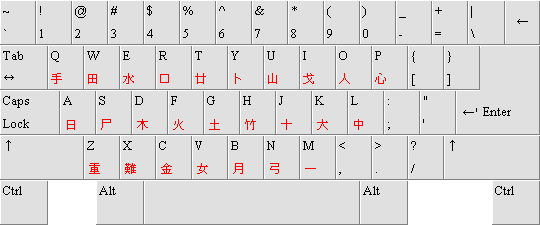
The image below shows a keyboard with Cangjie codes at the bottom right corner of each of the “letter” keys.
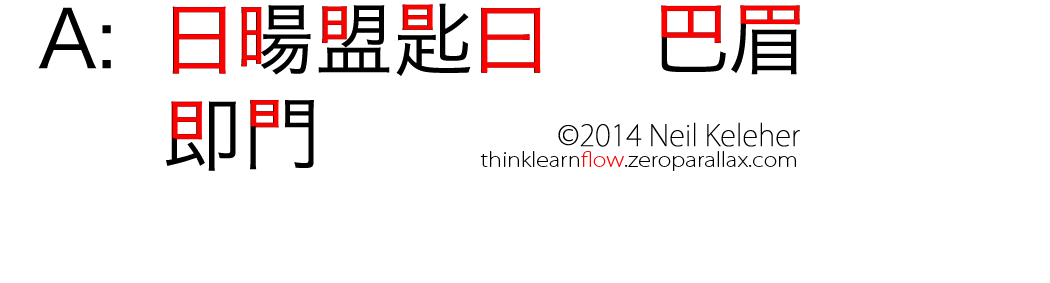
The a code, 日 can be used to represent parts of characters like 是, 門.
The full code for 是 is “amyo” or 日一卜人.
The full code for 門 is “an” or 日弓.
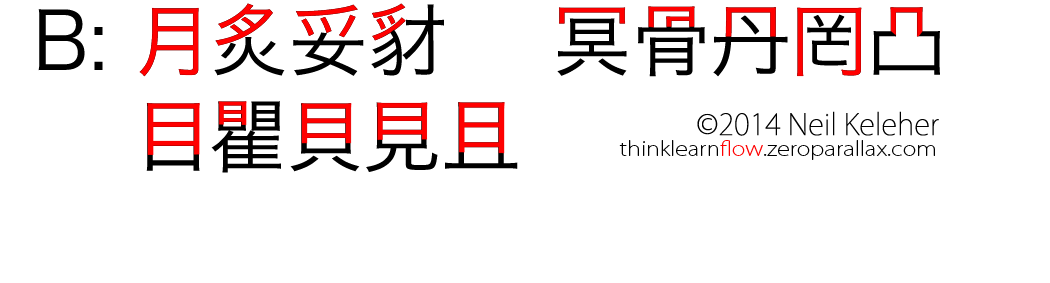
The b code, 月, can be used to represent parts of characters like 且, 具,骨.
The full code for 且 is “bm” or 月一.
For 具 the code is “bmmc” or 月一一金.
For 骨 the code is “bbb” or 月月月.
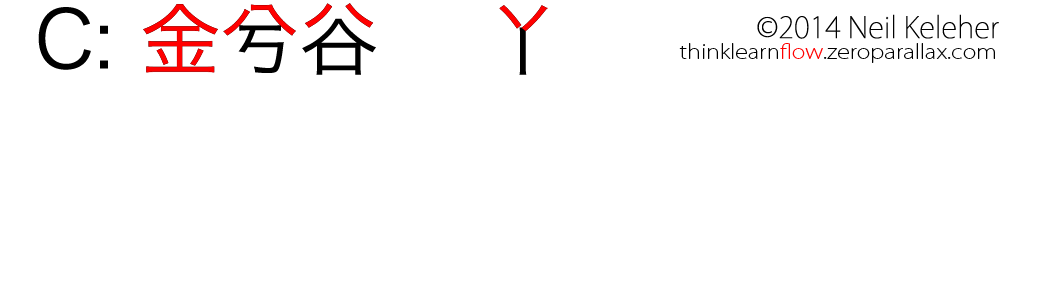
The c code, 金 can be used to represent parts of characters like 父, 分 (the upper part).
Code Groups
The 24 codes can be broken into 4 groups:
- Philosophical,
- Strokes,
- Body Parts and
- Shapes.
There is also one element, the “x” element that doesn’t belong to any of these groups.
Philosophical Group
The philosophical group contains the code elements for:
sun日, moon月, gold金, wood木, water水, fire火 and ground土.
To remember these codes, I think of:
- A and B as Sun日 and Moon月.
- C is the first letter of Cold which rhymes with gold金.
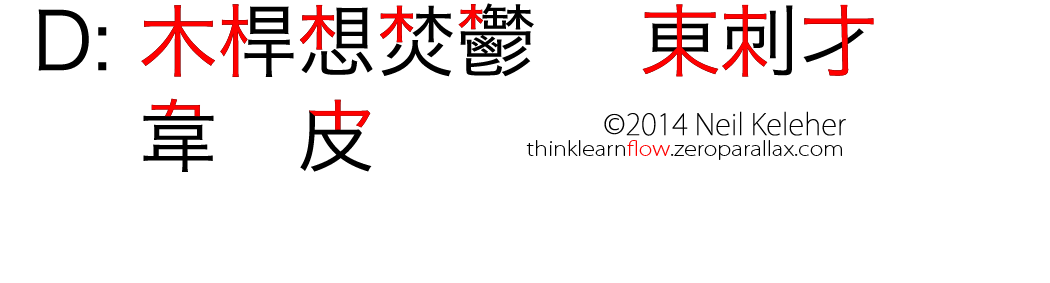
- D is the first letter of Dead, Dead wood木.
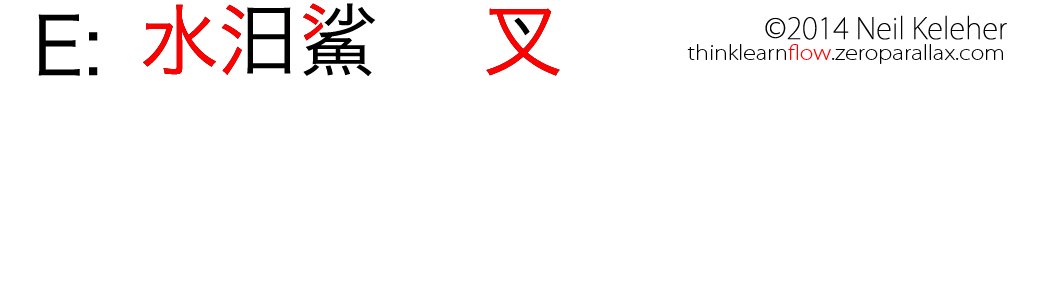
- E is the first letter in the word Eternal. The character for Eternal, 永 is similar to the character for water, 水.
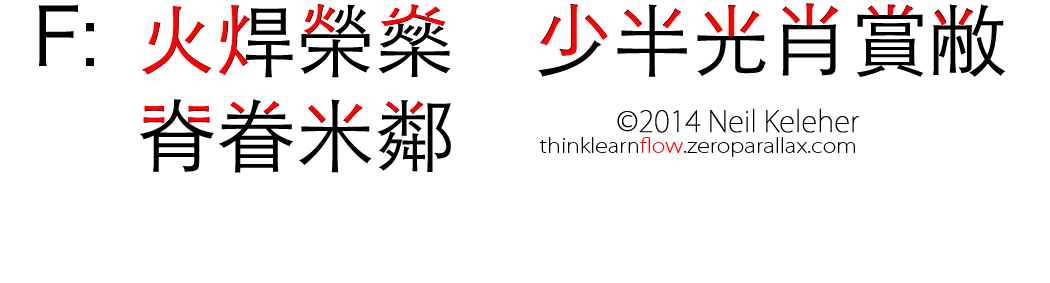
- F is for Fire火.
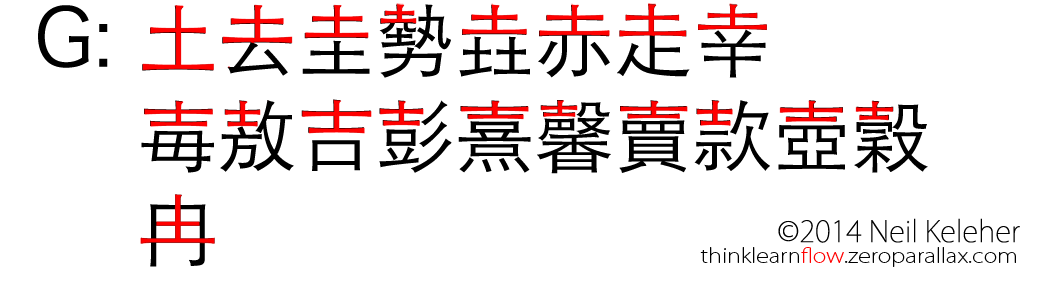
- G is for Ground 土.
Stroke Group
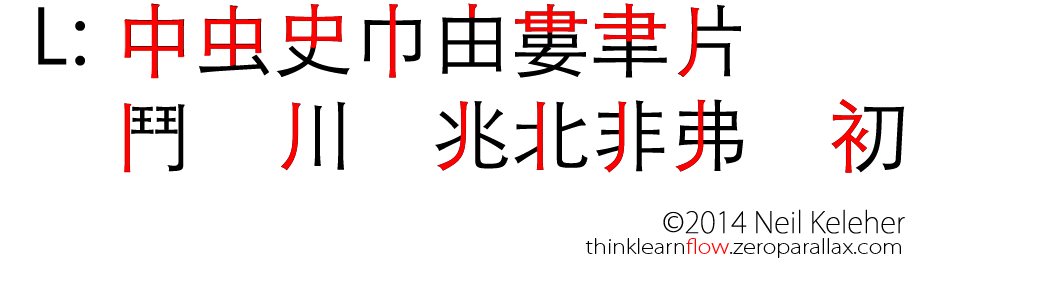
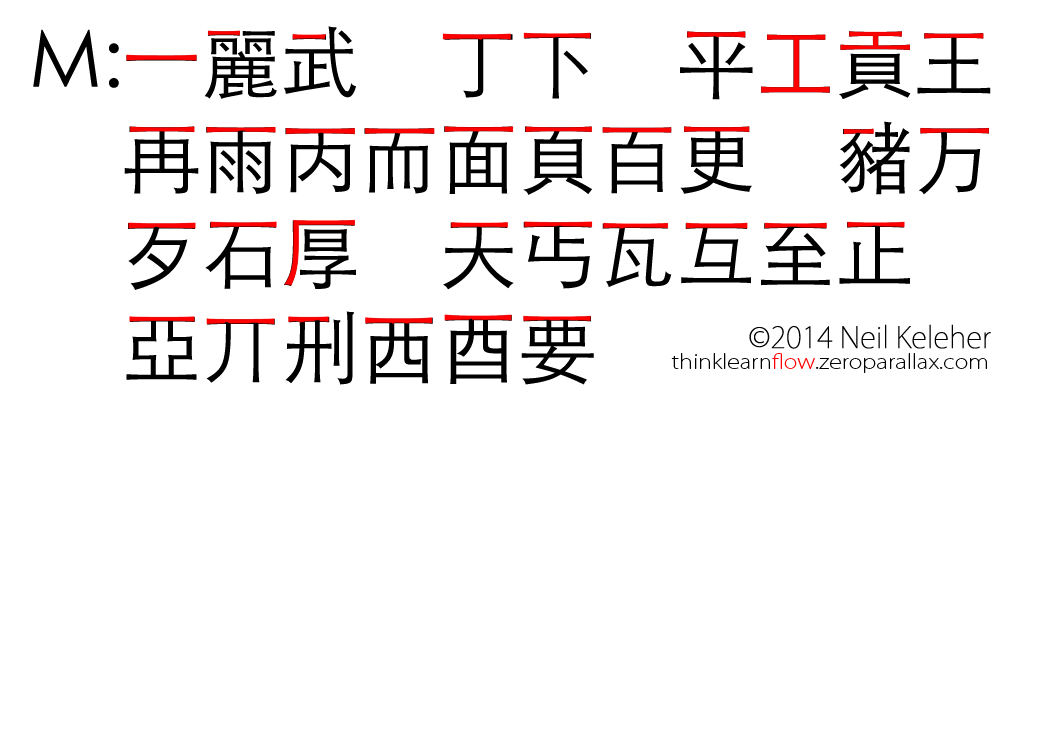
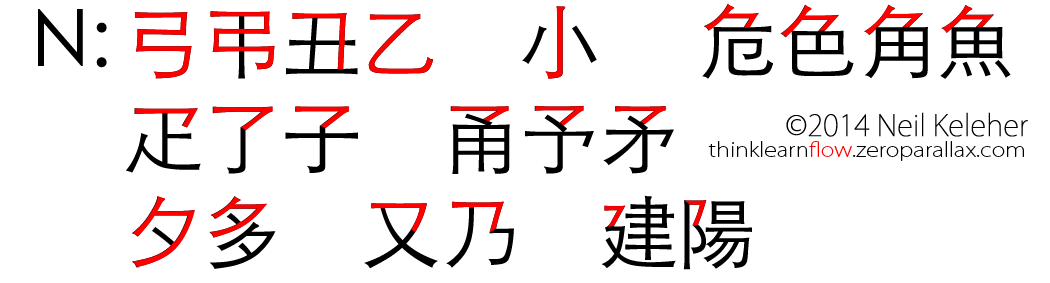
The stroke group (as in calligraphy strokes) contains elements for slant, dot, cross, fork, vertical stroke, horizontal stroke and hook stroke.
For this group:
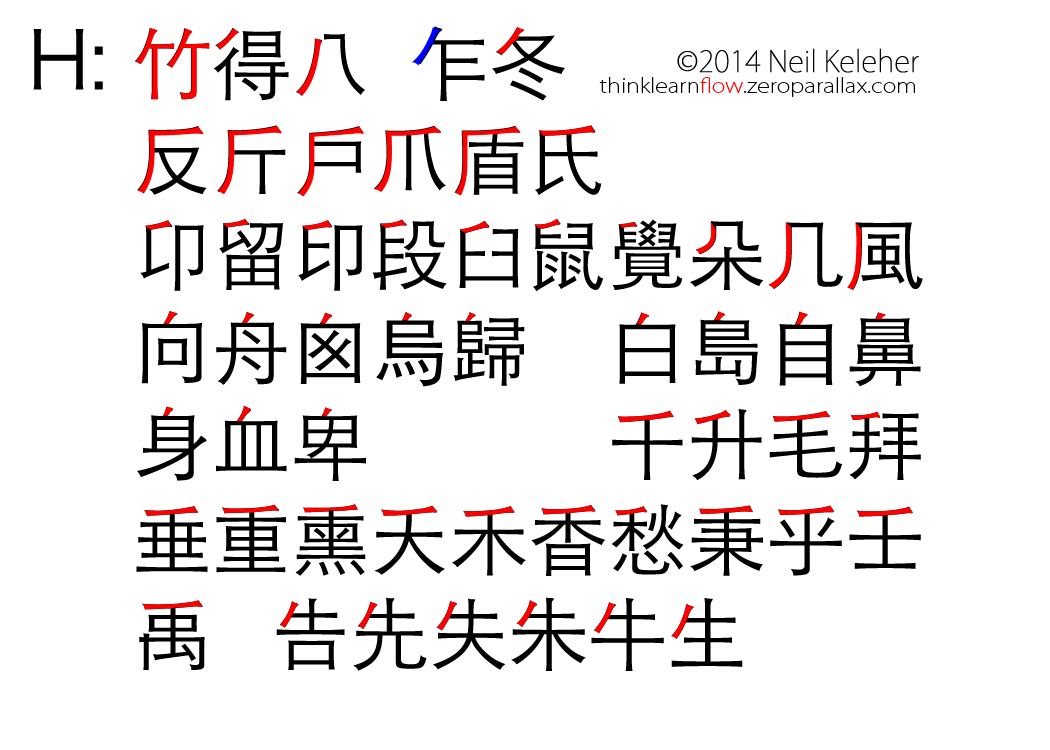
- H, the element for bamboo 竹 looks like an H.
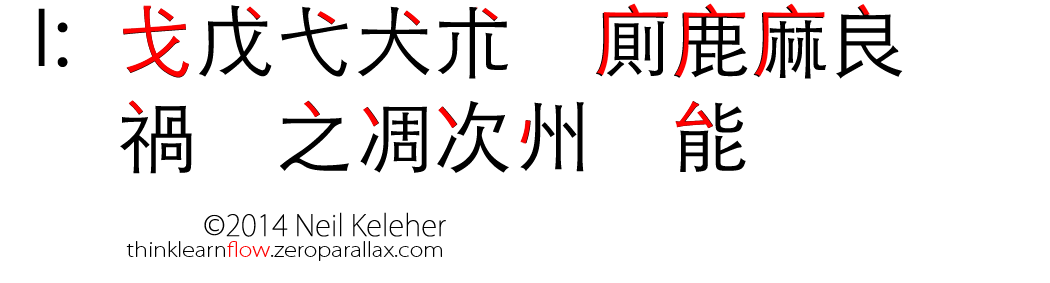
- i, The weapon element 戈 is easy to associate with little i since there is a dot on top.
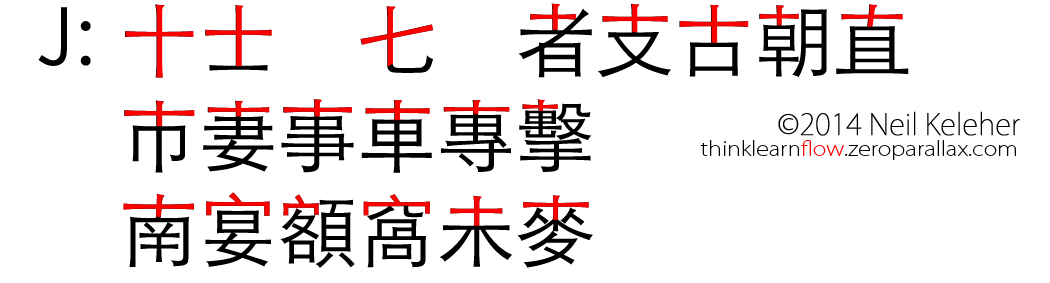
- J, For the cross stroke 十, I think of Jesus on a cross (j).
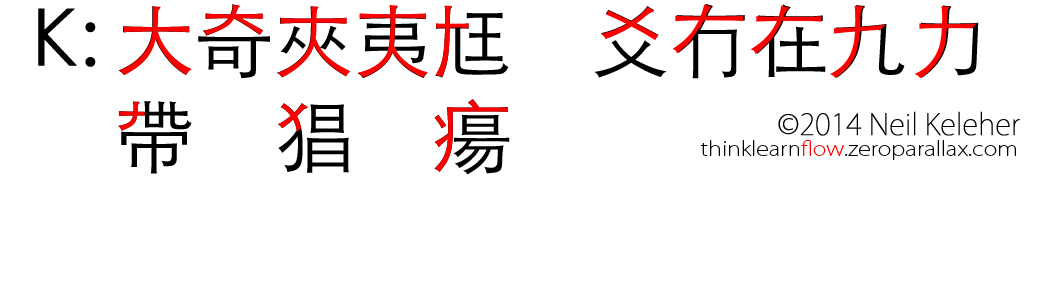
- K, For the fork stroke 大, it looks a little like a k turned on its side with the legs down.
- l, The vertical stroke 中 looks like an l.
- M, Meanwhile I associate the horizontal stroke 一, with the chinese word 面 which means surface, and is prounounced “Mian”.
- N, For the hook stroke, 弓, you could think of the letter “n” as being like a hook.
Body Parts Group
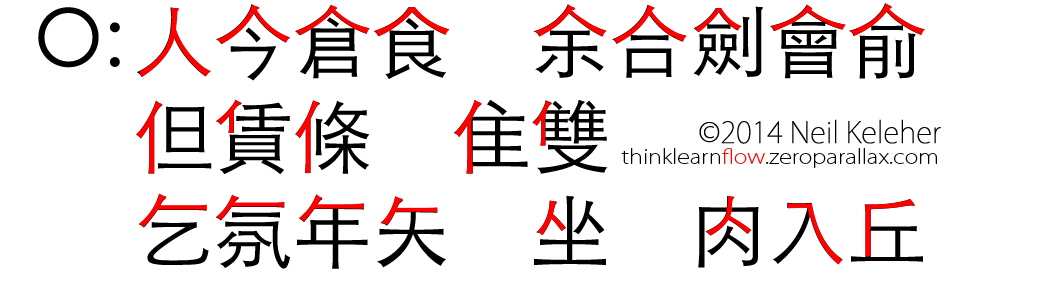
The body part grouping contains elements for body人, heart心, hand手 and mouth口.
- O, I can’t think of how I remembered body or person 人 for o. “Oh” what is it?
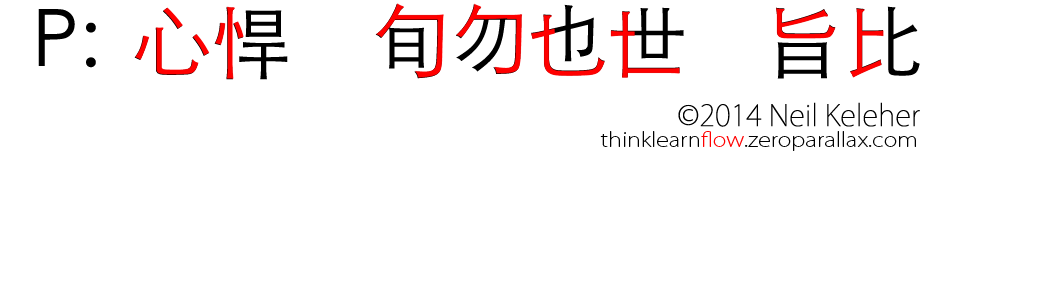
- P, For heart 心, the heart is a Pump, hence P.
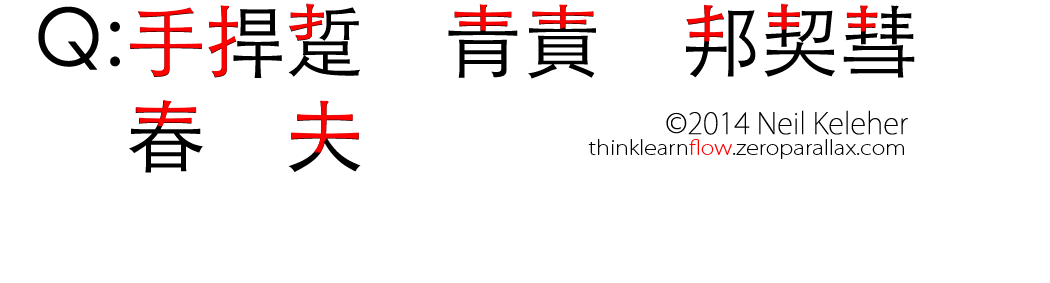
- Q, As for hand 手, for some reason it just sticks that a hand looks like a Q.
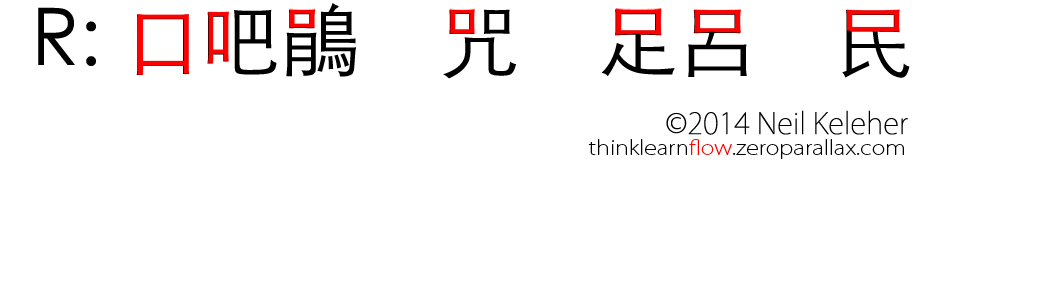
- R, As for mouth 口, capital R has an “enclosed” shape at the top. (Actually, except for pump and heart, for all of these, I just rememebered them without any particular association!)
Shapes Group
The “shape” grouping contains elements for corpse 尸, twenty 廿, mountain 山, woman 女, field 田 and fortune teller卜.
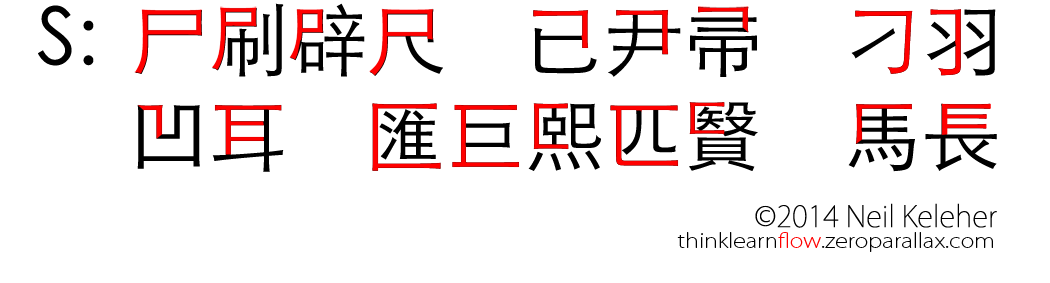
- S, For s the element it represents 尸 looks a little like the top of an s.
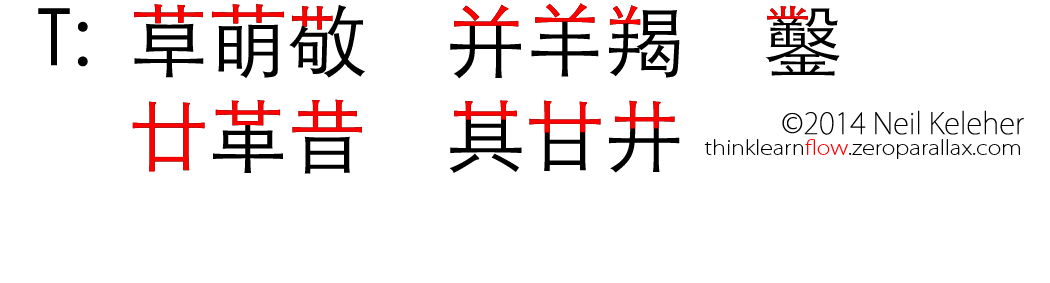
- T, The element for t, 廿, looks like a t.
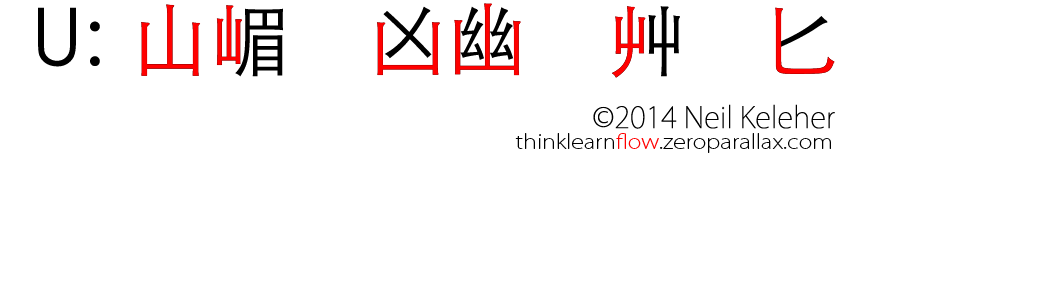
- U, Likewise the mountain 山 element looks like a sharp edged u, but with a line down the middle.
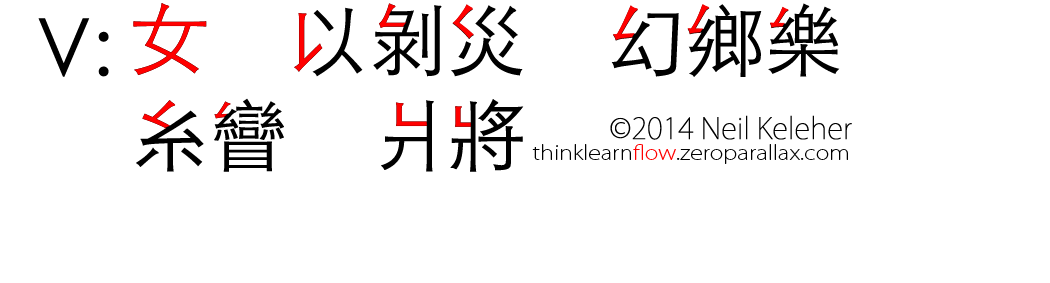
- V looks like the “point” in the character for woman 女.
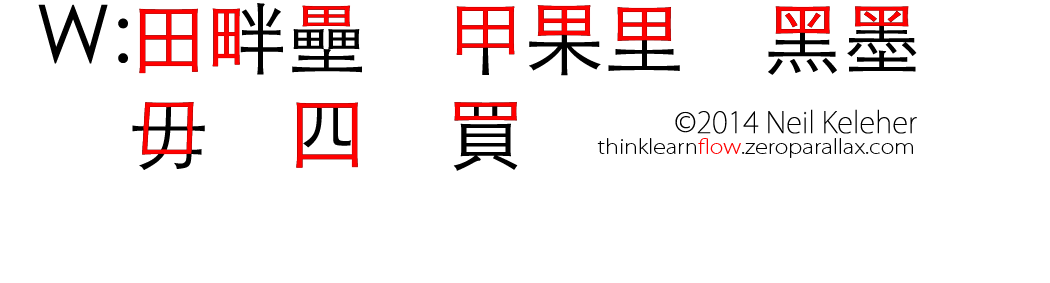
- W, For field 田 and W, I think of Wide fields.
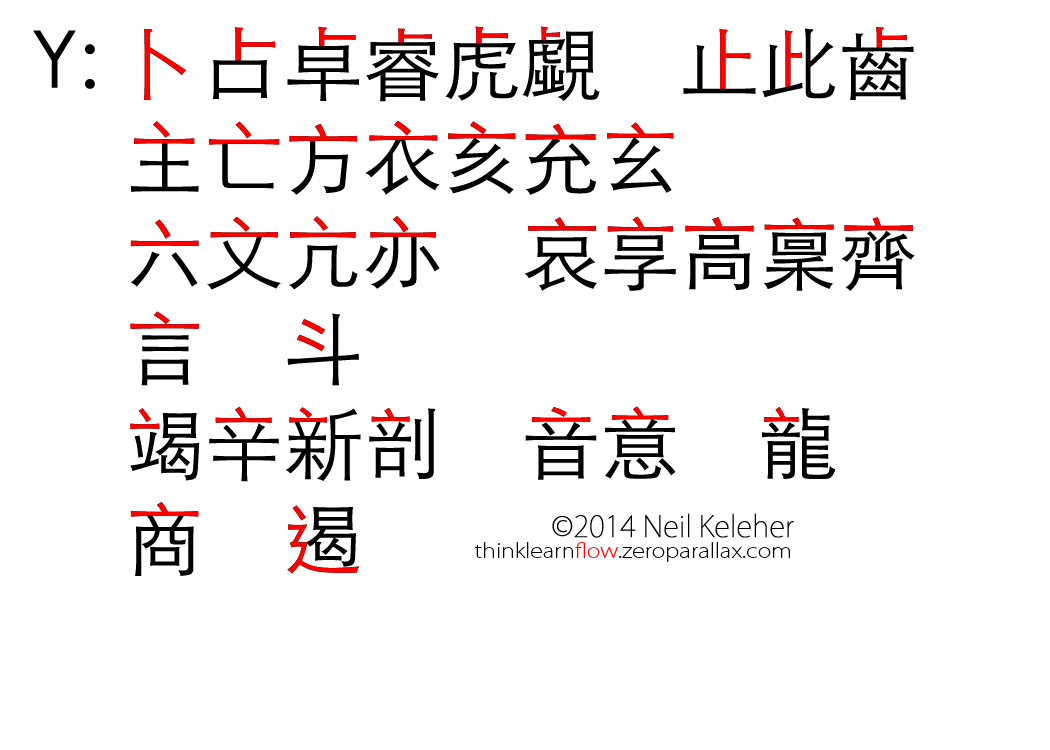
- Y, And as for the code for y, 卜, It looks like a Y.
Difficult (x code)
The final code, x, is used for characters which are difficult to code using the above elements.
Of all the cangjie code elements, x is the only one that isn’t at the beginning of any character code.
Examples of characters that use the x code, along with their cangjie codes are:
肅lx, 齊yx, 兼txc, 黽rxu, 鹿ixp, 慶lxh