IV Framework Landscape
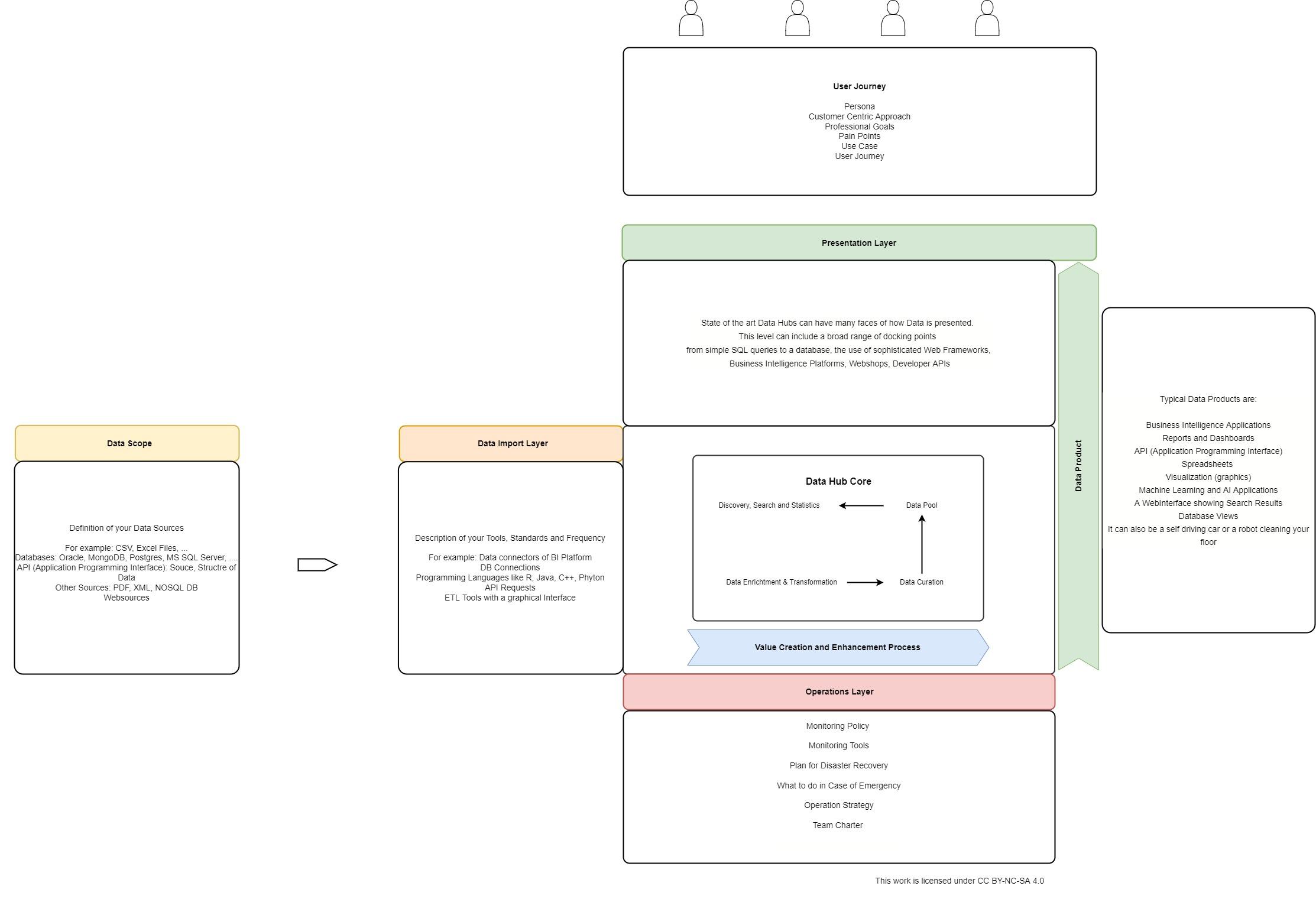
The initial three chapters laid the foundation for the Framework’s core, delving into both the operations perspective and the significance of a customer-centric approach. These fundamental principles guide the subsequent pages as we delve deeper into the Framework’s core components, unraveling a robust structure that can be expanded upon to gain a comprehensive understanding of your Data Hub.
In the upcoming sections, we embark on a detailed exploration of the Framework’s core elements, providing a nuanced view that extends beyond the operational aspects. By expanding upon these foundational pillars, we aim to offer a clearer and more expansive depiction of your Data Hub. Through this extended exploration, the Framework evolves into a dynamic tool, accommodating the intricate nuances of data operations and customer needs, ensuring a holistic and adaptable approach to data management and utilization.
The book comes with the Framework Core and Framework Landscape as editable Diagrams (included in the Package Bundle) which can be open and edited with (https://www.diagrams.net/)
Expanded it looks like this:
Engaging with the Framework:
The versatility of the Framework extends to seamless integration across diverse platforms, ensuring adaptability and accessibility in various contexts.
- Storage Integration:
The Framework effortlessly integrates with popular storage solutions, including Google Drive, Dropbox, OneDrive, GitHub, and GitLab. This ensures that your data management processes align seamlessly with your preferred storage platforms, promoting flexibility and convenience.
- Platform Integration:
It is designed to smoothly integrate into a spectrum of collaboration and productivity platforms, such as Google Workplace, Microsoft 365, Confluence Jira, Notion, and Next Cloud. This strategic integration facilitates a cohesive workflow, enabling users to leverage the Framework within their preferred collaborative environments.
- Cross-Platform Compatibility:
Whether you operate within the realms of the web, Windows, MacOS, Linux, or Chrome OS, the Framework offers consistent performance and functionality across these diverse operating systems. This cross-platform compatibility ensures that users can harness the power of the Framework regardless of their preferred operating environment.
- Known-Third Party Integrations:
The Framework goes beyond the conventional and aligns with various third-party applications and tools, including Atom, Wordpress, JupyterLab, MediaWiki, DokuWiki, and more. This extensive integration network enhances the Framework’s utility, allowing users to seamlessly incorporate it into their existing toolkit, fostering a cohesive and efficient workflow.
In essence, the Framework’s adaptability shines through its integration capabilities, providing users with a tailored experience across storage, collaboration platforms, operating systems, and third-party applications. This comprehensive approach ensures that the Framework becomes an integral part of your existing digital ecosystem, enhancing your data management and operational efficiency.
For more Information see also: diagrams.net Integrations
Github Download Link
This work is licensed under CC BY-NC-SA 4.0
Building a Data Hub from Scratch
If launching a startup or implementing a new data department is on your agenda, this section serves as a comprehensive guide, consolidating insights from previous chapters.
- Customer-Centric Approach: Identify potential customer needs, assess willingness to pay for services, and analyze the overall market situation along with the competitive landscape.
- Strategic Analysis: Explore how your goals can be achieved, delineating the necessary information systems and tech stack required for success.
- Data Scope Definition: Define your data scope by determining where and how data will be harvested to meet the identified needs.
- Transformation Requirements: Assess the transformation needs for the collected data to align with your objectives.
- Data Core Structuring: Structure your Data Core, recognizing that not all functions like discovery, search, and statistics may be needed initially.
- Best Practice Data Product Creation: Establish a best-practice approach for creating your first data product, ensuring alignment with user needs.
- MVP Development: Develop your data product as a Minimum Viable Prototype (MVP) to gather early feedback.
- Feedback Refinement: Refine your data hub procedures based on the feedback received, iterating for continuous improvement.
- Framework Integration: Utilize the framework landscape to stay updated and prepared throughout the process.
7 Key Takeaways
- Holistic Framework Integration: The Framework seamlessly integrates into various platforms, offering a holistic solution that aligns with popular storage services, collaboration platforms, and operating systems.
- Versatile Storage Compatibility: Users can harness the power of the Framework by connecting it to popular storage solutions like Google Drive, Dropbox, OneDrive, GitHub, and GitLab, ensuring versatility in data management.
- Collaboration Platform Synergy: Its integration capabilities extend to major collaboration platforms, such as Google Workplace, Microsoft 365, Confluence Jira, Notion, and Next Cloud, fostering a streamlined and collaborative workflow.
- Cross-Platform Consistency: The Framework ensures consistent performance across a spectrum of operating systems, including the web, Windows, MacOS, Linux, and Chrome OS, providing users with a unified experience.
- Extensive Third-Party Integrations: With known third-party integrations including Atom, Wordpress, JupyterLab, MediaWiki, DokuWiki, and more, the Framework becomes an adaptable tool that fits seamlessly into existing workflows.
- Adaptive to Diverse Environments: Whether you are working in the cloud, on your desktop, or across different operating systems, the Framework adapts to diverse environments, enhancing its utility for users.
- Enhanced Operational Efficiency: The comprehensive integration capabilities of the Framework contribute to enhanced operational efficiency, allowing users to incorporate it into their digital ecosystem effortlessly, resulting in a more streamlined and efficient workflow.