I The Framework
This content is not available in the sample book. The book can be purchased on Leanpub at http://leanpub.com/buildingandoperatingdatahubs.
Data Scope
This content is not available in the sample book. The book can be purchased on Leanpub at http://leanpub.com/buildingandoperatingdatahubs.
Data Import Layer
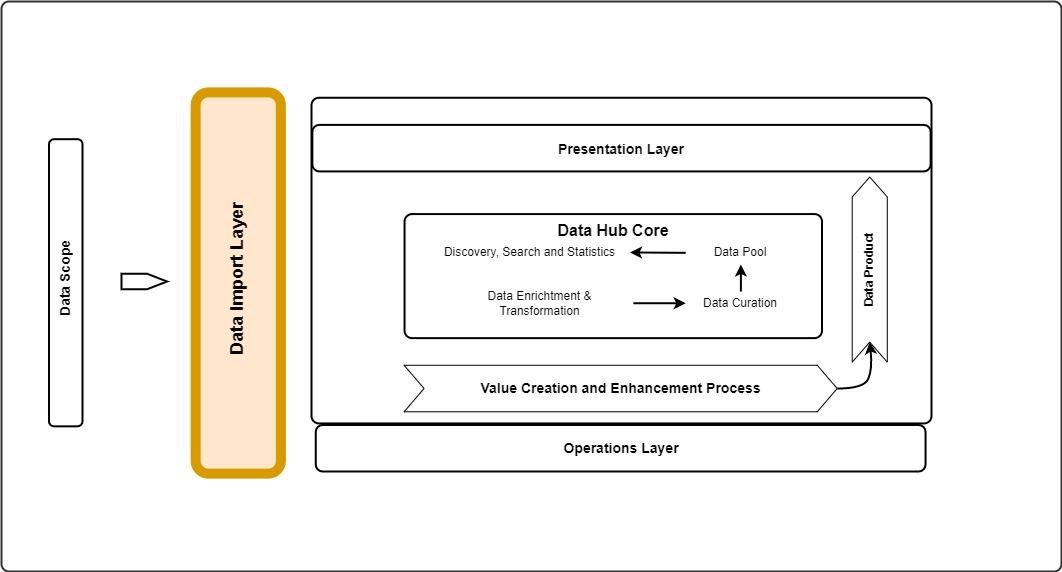
The Data Import Layer serves as the gateway, defining the intricate process through which data sources, meticulously listed and described in the Data Scope, find their way into your Data Hub. It is the linchpin that answers critical questions about how data is seamlessly imported into the heart of your Data Hub Core.
Key Inquiries Addressed by the Data Import Layer:
- Frequency: How often is data imported into the Data Hub? Establishing a cadence for data imports ensures timely and relevant updates.
- Technical Systems: What systems are employed for data importation? The selection of appropriate technical systems is crucial for efficiency and compatibility.
- Programming Languages: Which programming languages are utilized in the data import process? Understanding the language of data integration is pivotal for a smooth and error-free operation.
- Skills Required: What skills are essential for managing the data importation process? Identifying and honing the necessary skills ensures a proficient and capable team.
- Automation: To what extent can data harvesting be automated? Distinguishing between data that can be automatically harvested and data requiring manual intervention is fundamental.
- Limitations and Restrictions: What limitations exist in terms of data import? Are there restrictions, whether technical or policy-related, that need to be navigated?
- Potential for Automation: Where lies the potential for further automation in the data import process? Identifying areas for increased automation enhances efficiency and reduces manual workload.
Cost Optimization Through Strategic Analysis
Conducting a thorough analysis within the Data Import Layer can yield profound positive effects on the cost structure of your enterprise. By addressing these key inquiries, you not only ensure the smooth influx of data but also pave the way for strategic decisions that optimize resource utilization and enhance overall operational efficiency.
The role of the Data Import Layer inside the Framework:
Operations Layer
This content is not available in the sample book. The book can be purchased on Leanpub at http://leanpub.com/buildingandoperatingdatahubs.
Monitoring Perspectives on your Data Hub:
This content is not available in the sample book. The book can be purchased on Leanpub at http://leanpub.com/buildingandoperatingdatahubs.
Shaping Operations Policies and Strategies
This content is not available in the sample book. The book can be purchased on Leanpub at http://leanpub.com/buildingandoperatingdatahubs.
Beyond Technicalities: A Commitment to Excellence
This content is not available in the sample book. The book can be purchased on Leanpub at http://leanpub.com/buildingandoperatingdatahubs.
Presentation Layer
This content is not available in the sample book. The book can be purchased on Leanpub at http://leanpub.com/buildingandoperatingdatahubs.
The Versatility of Presentation:
This content is not available in the sample book. The book can be purchased on Leanpub at http://leanpub.com/buildingandoperatingdatahubs.
Data Hub Core
This content is not available in the sample book. The book can be purchased on Leanpub at http://leanpub.com/buildingandoperatingdatahubs.
Value Creation and Enhancement Process
This content is not available in the sample book. The book can be purchased on Leanpub at http://leanpub.com/buildingandoperatingdatahubs.
Data Product
This content is not available in the sample book. The book can be purchased on Leanpub at http://leanpub.com/buildingandoperatingdatahubs.
7 Key Takeaways
This content is not available in the sample book. The book can be purchased on Leanpub at http://leanpub.com/buildingandoperatingdatahubs.