Who is Mark Nilsen?
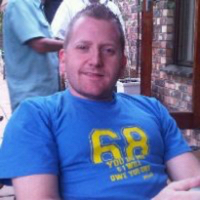
Mark Nilsen was proposed by Cara as he is a passionate agile advocate.
What is something people usually don’t know about you but has influenced you in who you are?
Between 1996 and 2004, I represented South Africa in three Paralympics, two World Championships and over 10 additional international events in two sporting codes; swimming and table tennis. The experiences I had and shared with others had a profoundly positive and long lasting influence on my life and on me as a person.
What would have become of you, if you were not doing the job you do today?
I would probably have either been a Cultural Anthropologist or a Doctor of Nutritional Biochemistry and Physiology. I find the psychology of humans and the behaviour and cultures of groups/tribes fascinating. Lately, I seem to have acquired a strong desire to learn more about nutrition and the biochemistry and physiology of metabolism and metabolic diseases.
What is your biggest challenge and why is it a good thing for you?
Both personally and professionally, I find time management a big challenge. There is so much that I still want to do and learn and I battle to balance my time adequately between my family life, work life, and my own personal time. In a way this is a good thing because it forces me to prioritise and give attention to the things that I value the most. I don’t always get it right, but I try.
What drives you?
In completely random and un-edited order; to learn more, to help people and teams improve and to achieve success (whatever that might be for them), to make a difference in peoples’ lives, to get better at certain things, to see people loving their work, to be healthy, to be a good father, to be a good husband.
What is your biggest achievement?
I would say my sporting achievements – especially given that the first 12-15 years of my life were very challenging physically. In particular I would say that winning the singles titles at the British Open Wheelchair Table Tennis Championships in 2000 and the African/Middle-East Championships in 2004 were highlights.
Is there a piece of music that has a special meaning for you?
Strangely enough I still like ‘Don’t Worry Be Happy’ by Bobby Mcferrin. I really believe that to a large extent being happy is a choice. And being happy is infectious. If we all worried less and were happy more, the world would be a better place. Otherwise, I like a variety of music; ranging from rock to pop and even some milder house music.
What is the last book you have read?
The last book I read was Leadership and Self Deception: Getting out of the box. My reading list is so huge the question is what book I read next!
What question do you think we should also ask and what is the answer?
I think you should also ask what question you shouldn’t ask and the answer is yes. :-) Sorry, that’s not very helpful, so let me try that again. You should ask what your guest believes are the most important changes that could help transform a knowledge or creative work industry like software development from one characterised by low engagement levels, to one of motivated people and successful businesses. I believe that at least one part of the answer lies in a critical re-examining of the assumptions we hold so dearly around human motivation and why people want to work. The majority of the management principles around today are antiquated. As Professor Gary Hamel put it:- “Right now, your company has 21st-century Internet-enabled business processes, mid-20th-century management processes, all built atop 19th-century management principles.”
Another part on the answer is enhancing our understanding of psychology, cultural anthropology and complexity theory. If we grow our toolbox in these ways, we might just begin to rescue people from todays’ widespread global workplace depression. As Einstein said: “We can’t solve problems by using the same kind of thinking we used when we created them.”
Whom do you think we should ask next in South Africa?
The people I’ve met most regularly over the years! Karen Greaves, Samantha Laing, Kevin Trethewey, Peter Hundermark, Cara Faye and Joanne Perold.
Whom do you think we should ask next, not in South Africa?
Henrik Kniberg, Dave Snowden, Esther Derby or David Anderson. All 4 are incredibly knowledgeable people – all in their own different ways.
How would you define your relation to the South African Agile community?
To be honest, it’s not as strong as it could, or probably should, be. I have met many great people over the years travelling to courses and conferences in and around South Africa, but, regular meet ups are difficult unless you live in Cape Town or Johannesburg.
Durban, August 2016
How to connect with Mark
Twitter: @MarkNilsenSA