Chapter 2: Getting Started
We spend time at the start of a workshop building connections and getting people to bond with each other and us. This immediately increases the level of trust in the room. If you are running a 90 minute workshop with people who all work together, you don’t need to spend as much time on this. In that case we might only do a Fast Pass. If you are doing a full day session with people who don’t know each other well, we’d recommend following the full plan below.

|
Materials needed
|
4Cs Training plan
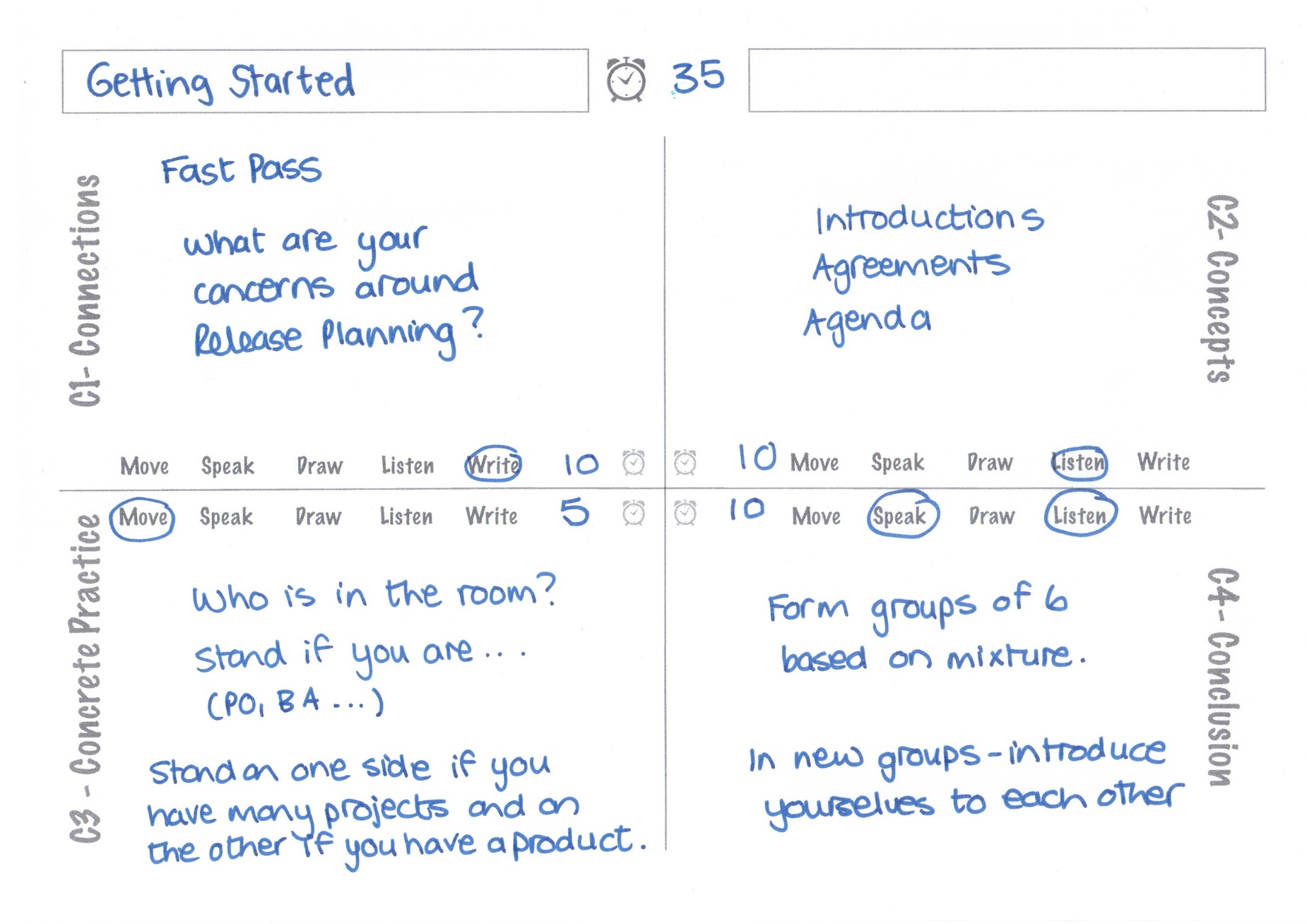
FastPass (C1)
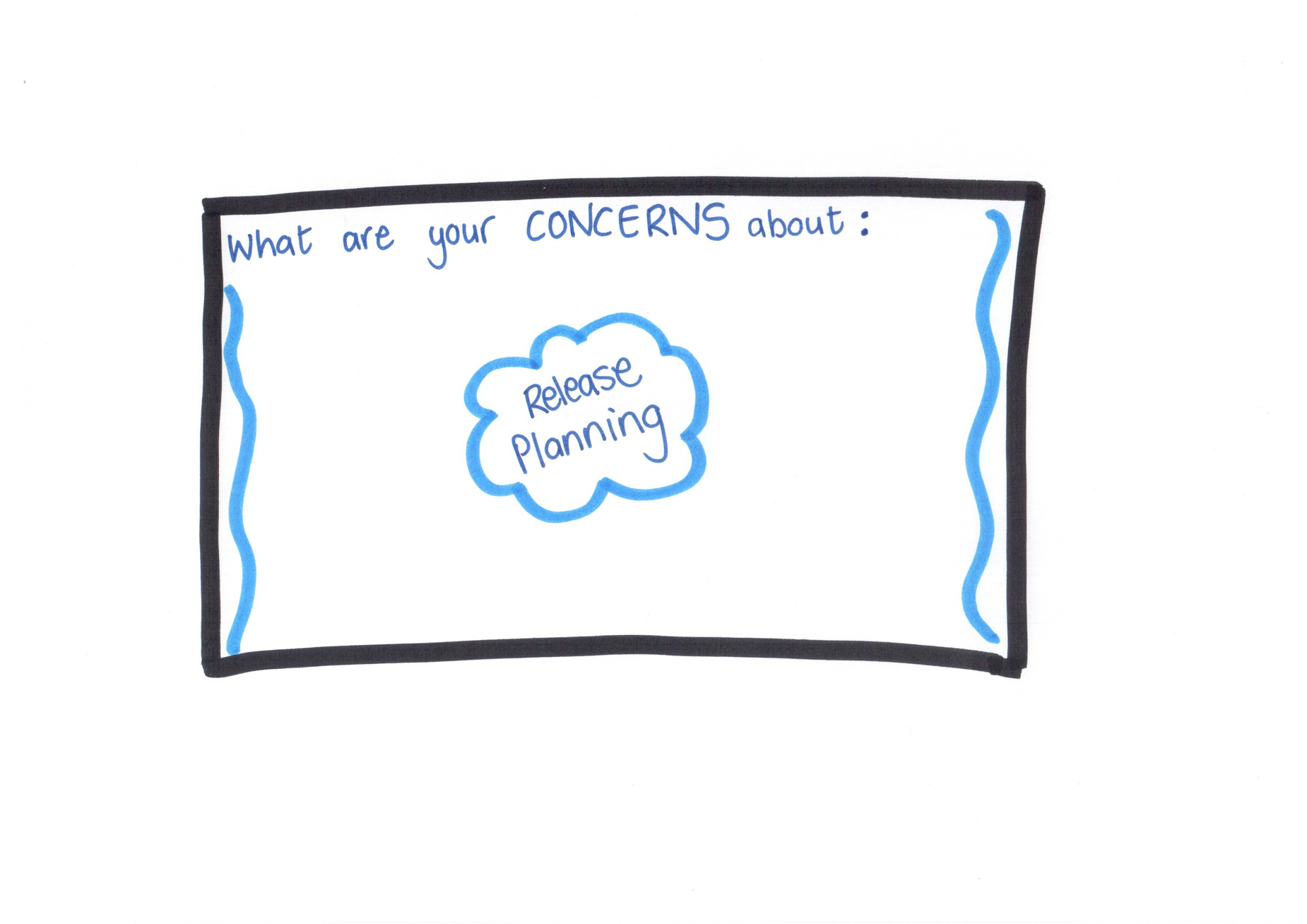
Start with a Fast Pass poster. Ask everyone to write up sticky notes for the poster. The poster we chose for this workshop is “What are your concerns about Release Planning?”. This allows for participants to instantly identify with the topic and for you to get a better understanding of their frustration points.
The poster is usually a flipchart sheet with the question written on it in bright colours. You can see an example of the poster on the slide below.
Slide
Introductions (C2)
Simply introduce yourself by saying who you are and what your experience is. Don’t bore people - keep it short and entertaining. Our names, Twitter handles and company website are shown on a slide (see below). If you are doing this training in house with people you know, this slide might not be needed. Perhaps instead share something people might not know about you. You probably also want to mention the goal of the workshop, and why you are there.
Slide
Agreements
Next go through some Agreements (like rules, but we don’t like that word - too formal). For example: “Please put cellphones on silent, but feel free to leave the room if you need to take a call”. This helps to set the tone for the workshop. It also allows everyone to understand the boundaries of behaviour that are expected for the duration of the workshop. The Agreement cards in the Coach Toolkit will help you remember things to mentioned. Pick the cards most appropriate for the workshop and run through each of them quickly.
Agenda
Briefly go through the agenda for the day. Most people want to know at a high level what will be covered, and most importantly when the breaks and lunch are, and what time they will finish. We put this information up on a slide, and explain that the times are approximate, although we should be within 10 minutes of them at all times.
Who is in the room? (C3)
This helps everyone in the room get to know a little bit about each other. Firstly shout out a few roles, asking people to stand if it applies to them (e.g.: Project Manager, Developer). Ask if anyone’s roles was not mentioned. If so, ask what their role is. This allows you and attendees to see what roles are present.
Then ask the class to do a Standing Survey to see who works with many projects/products and who works with just one. Again this helps everyone form a picture in their minds of who fits in where. We encounter two types of Product Owners, ones who manage many small projects or products, and ones who manage one large product. These workshops are applicable to both types. You can use different questions depending on which differences or similarities you want to highlight in a group of participants, given the topics to be covered. Be sure to ask people to form groups below according to the questions asked in this section.
Form groups (C4)
Ask the class to form groups of five to six people with a mix of roles and types in each group. The class self-organises to do this. This generally breaks up groups of people who arrive together and already know each other well. Encourage people from the same teams or companies to join different groups. Once people have formed groups ask them to find a table and introduce themselves to everyone in their group. Let people know this will be their group for the rest of the workshop.