5. Case studies



5.1 Case study: The Financial Times
The Financial Times is one of the world’s leading news organisations, recognised internationally for its authority, integrity and accuracy. It is part of Nikkei Inc., which provides a broad range of information, news and services for the global business community.
The story of the FT’s experience of internal conferences is deeply fascinating. Internal conferences offer a window into what is happening within the broader Product & Technology department and provide opportunities to communicate any changes within the team.
During the four years covered in this case study, the FT saw three things emerge:
A dramatic growth in pride and recognition of product and technical excellence
Showcasing innovation and letting people tell their stories at these events all encouraged more experiments and boundary-pushing by teams afterwards.
Enabling the sharing of pain points across teams galvanised people to break out of their silos and find creative and tangible solutions to problems.
Dedicating time to talking about what their engineers were proud of triggered a new passion for setting and raising the standards, for inspiring each other and generating excitement that was longer lasting.
Open debates brought Product and Technology together to form a powerful partnership. Previously two separate groups, the Product and Technology departments came to recognise each other and ultimately combine in 2016 - leading to far smarter decisions being made around their business model and tech strategies.
The conference was a manifestation of cultural change and then a yardstick for measuring it
The department saw emergent leadership; opening up the floor to questions and topics encouraged new voices.
Open debates and the freedom to discuss topics led to the evolution of a deep democracy for some difficult departmental changes such as adopting DevOps and shifting ownership for Quality Assurance to engineers.
The bonding experience of the event created connections that continued far beyond the day - peer coaching and training activities were spun up and a new rhythm of bootcamps and rotations between teams helped conversations to continue.
The FT became a destination employer - a place people wanted to be
Everyone started to take responsibility for making the FT somewhere they wanted to be, no longer relying on the leadership team to set the rules.
More people started talking about diversity & inclusion, psychological safety, empathy and respect. Employee-led initiatives and groups started to form around mental health, diversity, coaching and mentoring, in addition to various engineering specialisms.
Engineers started to contribute to the wider community, such as engaging with coding clubs for under-represented groups outside the organisation, talking at conferences about what they do and providing open-source toolkits for building accessible websites.
5.1.1 How it all began
Unwittingly, the FT triggered their first event just as a cultural shift was trying to happen - so what started out as a conference about technology became a catalyst for real change.
That change can be mapped out across the next four years - each conference not only nudging that transformation along a bit, but also acting as a mirror to reflect on just how far the department’s culture had evolved since the previous event.
The decision to run the event came the day after some engineers and their CTO attended a large external conference. This group realised that the recent changes that had already happened at the FT - a massive growth in investment in technology, accompanied by a broad move towards agility in terms of methods, processes, engineering practices and technology choices - meant there was a huge amount of knowledge and experience within the department already. The challenge at that time was not a lack of knowledge, but a lack of knowledge-share.
Much has been said about the challenges of empowered teams and about the silos that happen as a direct result of team autonomy. Independent structures are great for streamlined decision-making and agility, but dreadful in terms of sharing ideas, services, skills, experiences and best practices.
Not only that, but there were an awful lot of opinions that weren’t being shared. Leadership would talk about agility, about empowerment, about wanting a collaborative culture - but if they were the only ones doing the talking, then change was going to be very slow indeed.
The decision was made: run an internal technical conference, “by the people, for the people”. This would mean a group of volunteers from within the department creating it from scratch, calling upon their colleagues to generate content.
5.1.2 2015 - it began with a vision
Over the past few years there has been an almost exponential increase in the speed of change within the technology sphere. Coupled with this has been the growth of the FT Technology department in terms of numbers and expertise. The size, scope and speed of delivery is greater than ever. It is close to impossible for individuals to keep abreast of all these changes.
However, communication, in a friendly, inclusive environment, can help. By communicating we can address the challenges and increase the benefits of this rapid change. We can and should learn from each other so that great ideas, useful tools and smart ways of working can be shared.
Vision statement:
- Engine Room Live is an internal conference for the FT Technology department, an opportunity to learn from each other and make connections between teams to increase communication, productivity and innovation.
- Participants get a chance to take part in a conversation that matters to them, and to test out their public speaking voice in a safe environment.
- Attendees get to discover and take away good ideas and new channels of communication with other attendees. A chance to lift your head from the weeds and think about something other than delivering the next feature.
- The company gets better working practices spread around more teams, happier staff and improved communication between teams and people, so that job satisfaction, productivity and efficiency can increase.
They sold it to the rest of the department as a chance to ‘lift your heads up from the coal face for a day and maybe even choose a better pickaxe’ [40].
FT’s tech department leaders showed their support for the event by joining in as delegates on the day. The department’s Delivery Coach kicked things off with a short introductory talk on how much the FT Technology department had changed in the last few years and how a conference fitted in perfectly with the ‘always learning’ ethos of the FT’s then parent company Pearson [22].
Having set the scene, a day of panel discussions followed - some of which were written up enthusiastically by attendees on the FT’s blog [23]. Having invested a lot of energy and excitement into the day, the results were remarkable.
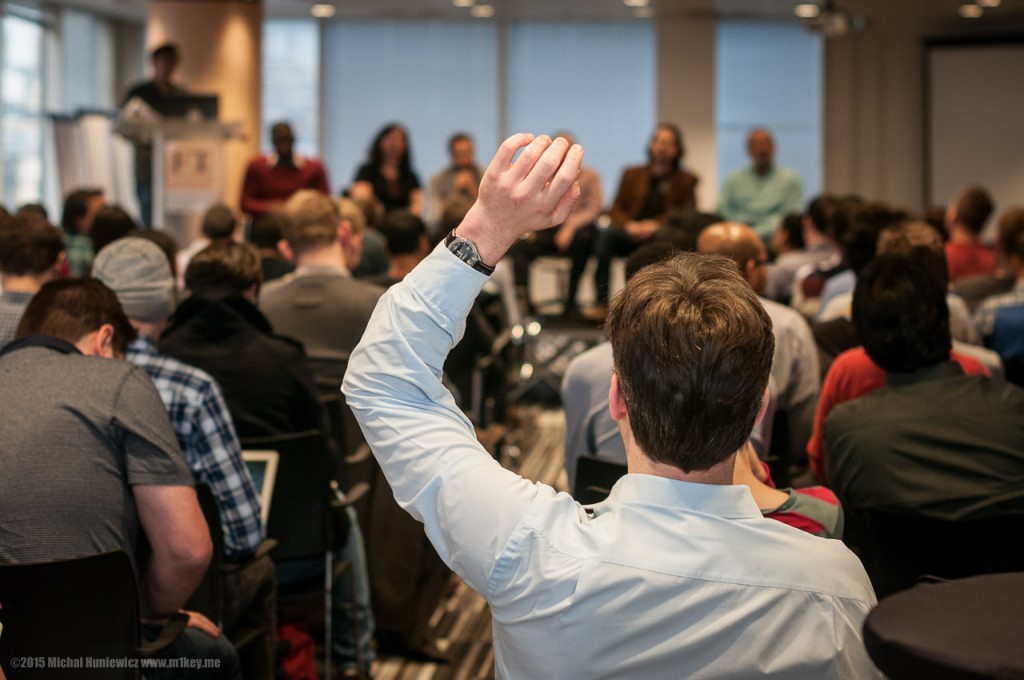
No-one quite anticipated just how much impact the day could have. Here is what emerged:
- Teams came away saying they would definitely be trying new ways of working (the organisers followed up - they did!).
- A monitoring “action group” emerged as a result of opening up a discussion on dealing with alerting overload in the world of microservices - one team’s problem became a department-wide challenge to focus on.
- A centralised Dev Tooling team, who owned the automated deployment mechanisms, committed publicly to making small individual tools for dev teams to free them from the perceived tyranny of central control.
Most importantly, there was a real sense that people had started to think about how they could change things. The event itself - and the CTO’s talk at the end of the day about how people needed to take empowerment, rather than waiting for it to be bestowed upon them - had a profound effect and encouraged lots of opinion-sharing over the drinks that followed that evening. Those opinions continued to be shared and debated over the next few weeks and months.
5.1.3 2016 - change is in the air
By the time the second conference came around in 2016, a lot had changed already, and 25 people volunteered to help organise it. More topics were put forward for discussion, more people volunteered to sit on the panels - people had found their voices! People who had sat on panels in the first year were now speaking at external conferences; other people who had been inspired to realise they could make change happen had begun lunchtime learning sessions and working groups.
Some of the attendees in 2016 felt that they’d been a bit shy the first time around, and wanted to get stuck into the really hard topics this year. So DevOps got some real attention - with one of the most brave, respectful, but deeply honest discussions that could be hoped for with a topic that impacted so many people across the technology department.
It was obvious at this point that the FT’s Tech and Product team no longer relied on their leadership team to talk about change - movements were beginning from the ground up and they were starting to see employee-led change.
5.1.4 2017 - getting into the groove
Fast-forward to 2017, and the topics that were being discussed had moved from technical challenges to cultural issues. Diversity and Inclusion featured highly and some very candid, sometimes painful stories were told to a room full of 150 colleagues - a moment that made FT Technology leadership proud. It legitimized the claim that the FT Product & Technology team has a great culture of respect, openness and honesty.
If it is not already clear - internal tech conferences are about so much more than tech.
5.1.5 2018 - change is Business As Usual
By 2018, conversations about the type of organisation the FT wants to be were a part of the fabric. There were year-round employee-led working groups on diversity and inclusion, leadership skills, collaboration styles, accessibility, standards, data and success metrics. People were now familiar with the idea that if they wanted something to change, they could start the conversation.
In terms of public speaking experiences, there were regular Lightning Talk sessions to give people a small non-threatening window to speak at, social events organised by a “Culture Club” and lots of “pop-up” (ad hoc) learning activities.
5.1.5.1 Pushing the boundaries
A major change in the preceding 12 months was the opportunity for further collaboration across the FT and with external organisations. The company had been bought by Nikkei in 2016 [24], and so the FT team had been involved in collaborations with the Nikkei technology department; they also worked on an innovative external project with Google. Partner companies were also now working with the FT to build capabilities for their “FT Specialist” publications.
5.1.5.2 A new type of conference
The focus of 2018’s Engine Room conference was on helping people within the department to lift their head up and realise that whilst cross-team collaboration is amazing, cross-organisation collaboration is even more so! The main organiser said he wanted to “help people understand that we’re a bigger organisation than they think” [25].
With a different purpose comes a different format. This was more of a top-down piece of education for the department, and partners were brought in to share their knowledge, creating an opportunity for awareness and cross-fertilisation of ideas at a broader level. A fixed agenda of well-attended talks with Q&A time replaced the panel sessions of previous years.
So many of the important conversations about how people work together - working styles, technology choices and coming together to solve bigger issues - now just happen because the channels for discourse are open and well used.
5.1.6 What’s next for Engine Room Live?
The FT will bring back panel sessions in 2019, where the original values and vision of Engine Room Live will be revisited.
The values of the first conference - “by the people for the people”, building up social capital by opening up debates and letting the audience dictate the conversation - have become deeply embedded in the organisation. They didn’t need a big event to bring this to life in 2018, but they’re not ready to take them for granted just yet either!
5.1.7 3 Takeaways
Across FT’s four years of Engine Room conferences, some high level lessons are:
There is so much more to a tech conference than tech
This could be your chance to engage your department in some powerful conversations so that they can help define and shape the way forward.
It doesn’t stop at the event itself
If you are clear on your objectives, they should continue to be pursued outside of the event. Follow up to ensure that there is an immediate impact, but also be ready to nudge and nurture other complementary activities in pursuit of your goals.
Always focus on what you are trying to achieve when deciding on your format
As your department changes, so will your needs from an event such as this. Don’t be afraid to change a tried and tested formula if your needs have evolved.

5.2 Case study: Metaswitch
Metaswitch is a “software for telecommunications” company with 800-900 people worldwide. Whilst most of the technology teams work in the UK, some are across Europe, the US, New Zealand and Malaysia.
For Metaswitch, the motivation for running an annual internal tech conference is pretty simple; it’s to keep engineers energised, engaged and innovative. Other departments within the organisation started the trend of annual events by running global training days, flying teams in from around the world to offer a consistent and shared educational experience. Being less globally distributed than the other parts of their organisation, the technology department did not have the same motivations, but it inspired them to consider what they could achieve themselves if they got everyone together in engineering for a couple of days.
This led to them holding their first technical conference to see if people liked it – which they did. Calum Loudon (Lead Architect and conference organiser) tells us that whilst the benefit for the sales team of a day together was formal and consistent training, for the technology department it was all about cohesion and the chance to educate, learn from and inspire their peers.
The developers at Metaswitch say that the reason they work there is the calibre of their fellow developers - so this is what they want to highlight with their conference.
They’ve been running events for five years, and have a consistent format and method that “feels really grooved now”, says Loudon. (See the Toolkit in this book for some helpful tools for getting your own conference to run smoothly.)
Several weeks before the event they start to drum-up interest and launch a Call for Papers (with an incredible 80 submissions, interest in the 2018 event was clear long before they even got to the day.). The final list of talks is selected by the votes of the attendees, with some minor tweaks to avoid giving individuals multiple appearances and to fit the schedule into the various rooms that have been co-opted for the event (including the neighbouring church hall!).
Metaswitch have identified that people can need “strong encouragement” to lift themselves out of the day-to-day engineering and development routine, so they explicitly ask everyone to attend. Limited capacity for many talks means that places must be booked in advance, which in itself can set the office abuzz. Within minutes of the announcement inviting people to register their interest, tools are collectively downed as people race to get a seat in their favourite sessions.
Whether it is the strong encouragement to attend, the limited seats in talks, the parties and games held afterwards, or the wide variety of talks (anything from “How I built a grandfather clock out of LEGO” to “Diversity in the workplace”, with lots ot engineering and science-related talks in between), their annual event now has a strong reputation within the organisation.
5.2.1 Making people feel valued
Metaswitch have found that investing in their people in this way sustains a high level of morale and engagement in the organisation. Post-conference surveys record consistently high satisfaction, with over 95% of participants reporting positive views on the conference, and with many comments singling out the quality of co-workers as the key highlight [3]. The enthusiasm with which the Call for Papers is met means the reputation of the events is clearly sustained from year to year.
The Metaswitch goal of sustaining a high level of engagement is not only pursued within the conference - they hold twice-yearly hackathons [26] and other social events too. Many staff tell them this event is a highlight of their year.
5.2.2 Side-effects
Whilst keeping people engaged and fresh is the goal of the event, when asked if Metaswitch had seen anything else change, Loudon identified two things:
At the last Eng Conference we had a session on “I am an X”, where various people stood up and related their experience of working at Metaswitch as a woman/trans/non-binary/carer, etc. That I think helped advance a discussion we had been having and led (albeit indirectly) to various initiatives on team cultures and psychological safety.
More generally: a significant part of my day job as head of our architecture team is spotting when different teams are addressing similar problems and getting them to talk to each other. I have noticed that since we started running Engineering Conferences teams are better at doing that for themselves, i.e. they are less insular and more prone to asking themselves “Hang on, has anyone else solved this problem already?” rather than doing the traditional heads-down engineer thing of rushing off and building it themselves.
5.2.3 3 Takeaways
There are 3 core threads running through all of the Metaswitch Engineering Conferences which are key to their success:
Let the people choose
Don’t equate internal conferences with education - this is about celebrating your people. This means that (just like Hackathons) the most successful conferences can come out of being completely open to any type of content - resist the urge to push a particular agenda if you want high engagement. Hopefully you should get some wonderful surprises and uncover creativity in places you would never think to look.
Encourage contribution from all
Your attendees are not just looking for those people who already talk actively at conferences and who will give a polished performance - they are looking for a good story. They’re also looking for a reason to stand up and talk next year, so make sure that when shortlisting you select a variety of speakers to encourage less confident speakers to join in.
Don’t forget the fun
All the best conferences “out there” include a party or dinner of some kind - this informal part of the event is every bit as important as the conference content. In order to really feel like a treat and a genuine break from work into something different, you need to raise those spirits, encourage those connections and give people something to remember. Some games, prizes, food and drink will give your event a significant boost and maximise the returns you will get from it.
Calum Louden, Lead Architect and conference organiser at Metaswitch
5.3 Case study: Klarna
Founded in 2005 as an e-commerce startup, Klarna is now one of Europe’s largest banks and provides payment solutions for 60 million consumers across 100,000 merchants in fourteen countries.
In 2014, Klarna began to run a yearly internal tech conference called KonferenSE (a play on the words “Klarna” and Sweden (“SE”), where Klarna is based). A small group of engineers at Klarna realised that an internal tech conference could be a good way to help inspire and educate technology people whilst also providing an occasion for people to network and get to know each other:
At Klarna I’ve found the relationships formed at the KonferenSE valuable throughout the year. Chatting to people between sessions and listening to speakers helps me discover ‘local experts’ who I can approach for help or advice in their areas of expertise long after the event is over. When I go into a meeting about collaboration or integration with a new team the atmosphere is much more friendly (and effective) if I’ve already had a friendly chat with them at the KonferenSE. - Ben Maraney, organiser
The first few conferences had over 350 participants, with attendance growing in size each year as Klarna expanded. Klarna now employs over 2000 staff; at the 2018 conference nearly 700 staff attended, meaning that nearly all the invited attendees were present.
At a rapidly-growing technology company - especially one with a banking license and with offices in several countries like Klarna - coordinating technical approaches across the organisation becomes increasingly difficult as the company adds more staff. The KonferenSE events have evolved over several years to meet this challenge.
5.3.1 Developing speaker skills
One of the most important ingredients of the Klarna conferences has been the focus on developing speaker skills. For the 2018 conference, there were 15 or 16 speaker “mentors” or coaches who worked with people whose talks had been chosen for the conference. Giving a talk at a conference requires skill and practice, and the mentors help the speakers to prepare their material, write the slides, and practice the talk itself. The mentors set deadlines for various draft versions of the talk so that no speaker leaves things until the last minute to prepare.
To help make talks engaging to watch, Klarna pays for professional training for their speakers. The training helps speakers both to prepare the material and to actually give a presentation. In this way, many basic errors of conference talks are avoided: small text on slides, speakers turning away from the audience, speakers mumbling, too much material, and similar problems are caught and avoided early on.
The speakers selected for the upcoming conference act as a little community that help each other to prepare. Speakers are also encouraged to try out their talks with small groups so that problems with the flow of ideas can be found and fixed.
Slides are important. The Klarna mentors help speakers to design slides that look great and are memorable, avoiding bullet points, standard fonts and templates. Good slides actually help the audience to focus on what the speaker is saying, and help (or force) the speaker to memorise their talk rather than read from text on the screen.
The Klarna team found it useful to have a few backup speakers ready to give a talk if one of the scheduled speakers was ill. The backup speaker got all the care and attention that a scheduled speaker got (training, food, swag, and so on) and even if they could not speak on the day, they were selected to give an internal talk soon after the conference.
5.3.2 3 Takeaways
5.3.2.1 Separate the “core organisers” and the “speaker mentors”
“One of the best improvements we made was to have separate people for the core organising (including on-the-day operations) and the speaker mentoring”, says Kim Öberg, one of the organising team. The activities and focus for a speaker mentor is quite different from the things that need to happen on the conference day, and keeping these two groups of people separate (to focus on their role) proved to be very valuable.
5.3.2.2 Allow time to prepare for each event
Preparations for a KonferenSE event begin 9 months beforehand. Nine months may seem like a long time but it provides plenty of opportunity to mentor and train speakers, prepare talks and slides, and ensure that the conference has a friendly but professional feel. With over 700 attendees, it can be a challenge to find a venue large enough, so early preparation helps. With a growing organisation, the extra time helps the organisers and mentors to consider multiple viewpoints within Engineering, helping to broaden the reach of the event and increase awareness of additional aspects of running a major European banking operation. A good preparation window also enables the organising team to make changes to the event; for example, for the 2019 event, the organising team is considering running dedicated talk tracks with specific themes due to the volume and high quality of the talk submissions.
5.3.2.3 Continuing success
The internal tech conferences at Klarna have been very successful, producing all kinds of advantages that were not initially expected. The Chief Product Officer (CPO) at Klarna, David Fock, is a huge fan of the conference, and gives a 30 minute product vision talk immediately after the morning keynote. The conference is attended by many people outside the technology department, helping to provide cohesion between different parts of Klarna.
Read more about engineering at Klarna: engineering.klarna.com
Ben Maraney, Case Taintor, Kim Öberg, Matthias Feist - current and former organisers of the KonferenSE internal tech conferences at Klarna.