A Brief History of Agile

“There’s a way to do it better – find it” — Thomas Edison
Agile revolution • 2001: Agile Manifesto • Agile methodologies • Focus on individuals and interactions • Estimation with Planning Poker • Ultimate Planning Poker
For most software developers, it will be hard to recall what their professional life looked like before the Agile revolution. By now, an entire generation of software professionals has grown up in the Agile era. Before the rise of agile project methodologies, traditional linear approaches were still very common. The term “Waterfall Approach” will send shivers down the spines of many engineers, both young and old.
In 2001, the Agile Manifesto was signed by Ken Schwaber, Jeff Sutherland, Robert C. Martin, and a number of other renowned software professionals. That manifesto had a profound influence on software engineering as a discipline. Rather than focusing on processes, comprehensive documentation and strict adherence to The Plan, the focus shifted to the people involved in the engineering process and how these professionals could build the best possible product, given the needs of their customers.
Over the years, various Agile-based methodologies have been developed, some more elaborate than others. The most popular of these are, without a doubt, Scrum, Lean Software Development, and Kanban, but Extreme Programming (XP) and the Dynamic Systems Development Method (DSDM) are still in broad use as well. These methods build on the core principles of the Agile Manifesto but add practical systems, artifacts, and procedures.
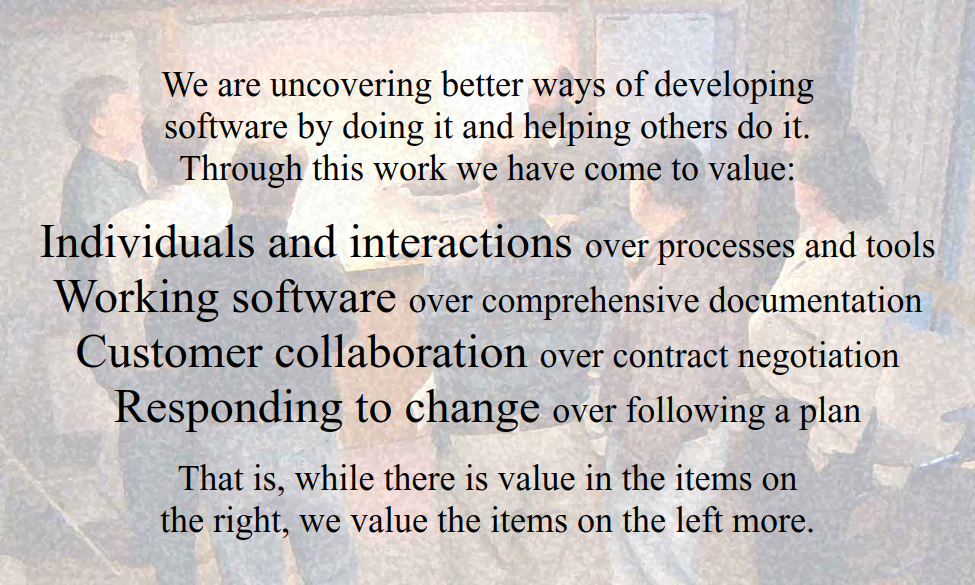
One of the four core values of Agile is to focus on individuals and interactions, rather than on processes and tools. As a result, all of the Agile-based approaches have a strong focus on ways to enhance communication and cooperation, often by introducing fixed meeting formats, daily rituals, and artifacts that help make communication and interaction more explicit and visible.
In meetings that involve estimation of required effort or expected value of units of work, a game called Planning Poker is often played. The term “game” may be a little misleading. Planning Poker is more of a meeting format or ritual—there are no winners, and the primary goal is not to have fun. Still, Planning Poker uses special playing cards, and it has its own set of rules, so it is not so terrible to refer to it as a game.
In the rest of this booklet, we will explain this game, its rules, and the caveats that you should be aware of. We assume you will be using the Ultimate Planning Poker Deck (available at ultimateplanningpoker.com), but most of what is discussed will apply to any other deck you choose to use as well.