Chapter IX.
General Character of Alchemy and the Alchemists - The “Pretiosa Margarita Novella” - An Alchemistical Allegory - Alchemical Symbols - Paracelsus - Libaviuss.
What manner of men were the alchemists? How did they preserve, cultivate, and transmit the wonderful delusions of their creed? We have endeavored in a former chapter to show that the idea of transmutation arose from the old Greek idea of the conversion of one element into another; and the belief in the possibility of transmutation once admitted, the pursuit of the alchemist would naturally follow in a mystical and credulous age. As to the men themselves, their character was twofold; for there was your alchemist proper, your true enthusiast, your ardent, persevering worker, who believed heart and soul that gold could be made, and that by long search or close study of the works of his predecessors, he could find the Philosopher’s Stone; and there was your knavish alchemist, a man who had wits enough to perceive that the search was futile, and impudence enough to dupe more credulous people than himself and wheedle their fortunes out of them on pretense of returning it tenfold in the shape of a recipe for converting lead into gold. These last we may dismiss at once. They abounded during the Middle Ages, and found easy dupes, whom they deceived by the most shallow tricks, as by placing a piece of gold in the crucible of transmutation together with volatile substances, and after many processes and much heating, they would show the little button of metal which had all along been present.
Of the true alchemist we have many pictures. The alchemist, the astrologer, the mystic, the wizard, were men of the same stamp. They often practiced the same arts side by side. The same habit and attitude of thought belonged to one and to all, and became all equally well. Take the dreamy, maudlin, semi-maniacal Althotas, who has been described so well by Dumas: “An old man, with gray eyes, a hooked nose, and trembling but busy hands. He was half-buried in a great chair, and turned with his right hand the leaves of a parchment manuscript.” Note also his intense abstraction, his forgetfulness of the hour, the day, the year, the age, the country; his absolute and intense selfishness and absorption, the concentration of the whole powers of his soul upon his one object. Or let us look at Victor Hugo’s Archidiacre de St. Josas, in his search for the unseen, the unknown, and the altogether uncanny; the bitterness of his soul, his passionate musings, his conjurations and invocations in an unknown tongue; his own self, that wonderful mixture of theologian, scholar mystic, perhaps not much unlike the divine S. Thomas Aquinas himself.
Listen to his musings: “Yes, so Manon said, and Zoroaster taught: the sun is born of fire, the moon of the sun; fire is the soul of the universe; its elementary particles are diffused and in constant flow throughout the world, by an infinite number of channels. At the points where these currents cross each other in the heavens they produce light, at their points of intersection they produce gold. Light! gold! the same thing; fire in its concrete state…. What! this light that bathes my hand is gold? The first the particles dilated according to a certain law, the second the same particles condensed according to another law! . . . For some time, said he, with a bitter smile, I have failed in all my experiments; one idea possesses me, and scorches my brain like a seal of fire. I have not so much as been able to discover the secret of Cassiodorus, whose lamp burned without wick or oil a thing simple enough in itself.” If we peep into Dom Claude’s cell, we are introduced to a typical alchemists laboratory—a gloomy, dimly-lighted place, full of strange vessels, and furnaces, and melting-pots, spheres, and portions of skeletons hanging from the ceiling; the floor littered with stone bottles, pans, charcoal, aludels, and alembics, great parchment books covered with hieroglyphics; the bellows with its motto Spit a, Spera; the hour-glass, the astrolabe, and over all cobwebs, and dust, and ashes. The walls covered with various aphorisms of the brotherhood; legends and memorials in many tongues; passages from the Smaragdine Table of Hermes Trismegistus; and looming out from all in great capitals, ΑΝΑρΚΗ. Yet once again, look at Faust, as depicted by Rembrandt; or Terriers unknown alchemist, if you wish for an alchemical interior.
But the hard-working and enthusiastic alchemist did not always follow the ideal of the novelist and artist; he often degenerated into a “dirty soaking fellow,” who lost what little learning he ever had by concentrating his mind on the one dominant topic, until it excluded every other idea and aspiration; then the pursuit became all-absorbing, and the disciple of the art a mere driveling monomaniac
We will now look at one of the books which were cherished by the alchemists. Here is a little vellum-covered Aldus: date 1546. Paracelsus had been dead five years, and Cornelius Agrippa twelve years; Dr. Dee and Oswald Crollius were flourishing; Van Helmont and a host of known alchemists were unborn. Our little volume, full of quaint musings of a bygone age, has outlived them all, and yet it never drank of the elixir vitæ although it pretended to teach others how to make it, and the Philosopher’s Stone into the bargain. “Pretiosa Margarita Novella de Thesauro, ac pretiosissima Philosophorum Lapide “ is the title; published with the sanction of Paul III., Pontifex Maximus, whose successor, be it remembered, established the “Index Expurgatorius,” and might possibly have prohibited this Precious Pearl of alchemy. The title-page tells us that it contains the methods of the “divine art,” as given by Arnoldus de Villa Nova, Raymond Lulli, Albertus Magnus, Michael Scotus, and others, now first collected together by Janus Lacinius. The vellum cover is well thumbed, and in one place worn through, perhaps by contact with a hot iron on an alchemist’s furnace-table, or by much use. There are no MS. notes, but on the title-page is the autograph of Sir E. Koby, or Hoby, and a favorite maxim, the first word of which—Fato—is alone legible. The date of the writing is perhaps 1580-90. Some initial letters of the text have been plainly illuminated in red, by a loving hand; they were copied from a Bible transcribed at Lyons in 1326.
Transmutation
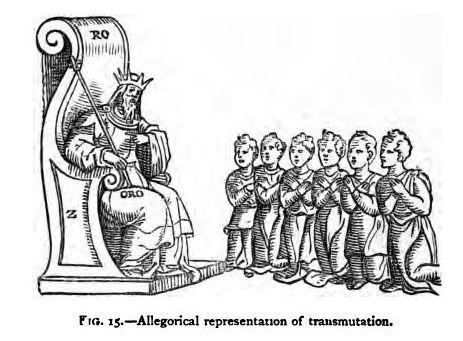
Fig.15-Allegorical Representation of Transmutation
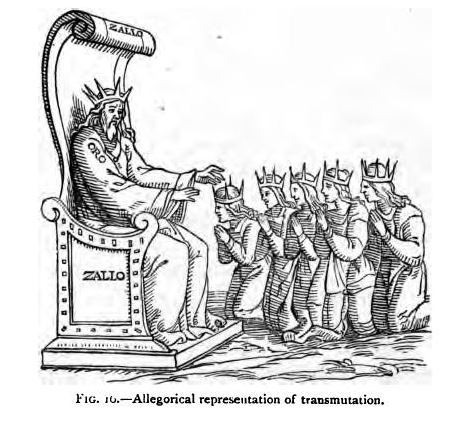
As to the contents, we have firstly an opening address by Janus Lacinius ; then certain definitions of form, matter, element, color, &c; next, symbolic representations of the generation of the metals, and after this a woodcut representing the transmutation of the elements according to the dogmas of Aristotle. (See Chapter I Fig 1.) After this we find the whole course of transmutation set forth pictorially and allegorically, as under. A king (see Fig. 15), crowned with a diadem, sits on high, holding a scepter in his hand. His son, together with his five servants, beseech him on bended knees to divide his kingdom between them. To this the king answers nothing. Whereupon the son, at the instigation of the servants, kills the king and collects his blood. He then digs a pit, into which he places the dead body, but at the same time falls in himself, and is prevented from getting out by some external agency. Then the bodies of both father and son putrefy in the pit Afterwards their bones are removed, and divided into nine parts, and an angel is sent to collect them. The servants now pray that the king may be restored to them, and an angel vivifies the bones. Then the king rises from his tomb, having become all spirit, altogether heavenly and powerful to make his servants kings. Finally he gives them each a golden crown, and makes them kings (Fig. 16).
Transmutation done
Fig.16-Allegorical Representation of Transmutation
It is difficult to follow this from beginning to end, but there can be no doubt that the king signifies gold, his son, mercury, and his five servants the five remaining metals then known, viz. iron, copper, lead, tin, and silver. They pray to have the kingdom divided among them, that is to be converted into gold; the son kills the father, viz. the mercury forms an amalgam with gold. The other operations allude to various solutions, ignitions, and other chemical processes. The pit is a furnace; putrefaction means reaction or mutual alteration of parts. At last the Philosopher’s Stone is found; the gold, after these varied changes becomes able to transmute the other metals into its own substance. At the end some rugged hexameters and pentameters warn the fraudulent, the avaricious, and the sacrilegious man that he is not to put his hands to the work, but to leave it for the wise and the righteous, and the man who is able rightly to know the causes of things.
After this allegory we have some remarks concerning the Treasure, and the Philosopher’s Stone, and the Secret of all Secrets, and the Gift of God. This is followed by a number of arguments against alchemy, and of course overwhelming arguments in favor of it. Among those who are quoted as alchemists are Plato, Pythagoras, Anaxagoras, Democritus, Aristotle, Morienus, Empedocles, and then, with a delightful disregard of age or country, we read, “Abohaby, Abinceni, Homerus, Ptolemaeus, Virgilius, Ovidius.” Then digressions on the difficulties of the art, the unity of the art, the art natural and divine; a slight history of the art, in which it is traced back to Adam, although Enoch and Hermes Trismegistus are mentioned as possible founders. A treatise to prove that this art is more certain than other sciences; on the errors of operation; on the principles of the metals; on sulphur; on the nature of gold and silver; and many general remarks on all alchemical subjects. These are the teachings which the “Pretiosa Margarita Novella “ pours at the feet of the wise among mankind, by the aid of Paulus Manutius, bearing his father’s name of Aldus, and by the grace of the Venetian Senate.
Many attempts were made by the alchemists to explain the origin of the metals. Some regarded them as natural compounds of sulphur and mercury; others affirmed that the power of the sun acting upon and within the earth produced them, and that gold was in truth condensed sunbeams. Many believed that metals grew like vegetables ; indeed it was customary to close mines from time to time to allow them to grow again. Basil Valentine, as we have seen, regarded them as condensations of a “ mere vapor into a certain water, “by which latter we suspect he meant mercury. Perhaps the most absurd account of the origin of certain things is given by Paracelsus in his treatise, “De Natura Rerum,” in the following words, which will show also how utterly nonsensical and unintelligible alchemical language could be, and for that matter very generally was. “The life of metals,” he writes, “is a secret fatness; … of salts, the spirit of aquafortis; . . . of pearls, their splendour; . . . of marcasites and antimony, a tinging metalline spirit; . . . of arsenics, a mineral and coagulated poison . . . The life of all men is nothing else but an astral balsam, a balsamic impression, and a celestial invisible fire, an included air and a tinging spirit of salt. I cannot name it more plainly, although it is set out by many names.”
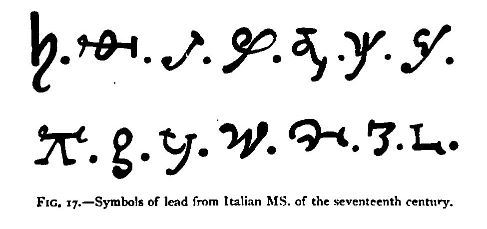
The peculiarly secret and mystical language which the alchemists adopted was intended to prevent the vulgar from acquiring the results of their long-continued labors. Their language purported to be intelligible to the true adept; but as a rule the alchemists of one age gave various interpretations to one and the same secret communicated by their predecessors. Long recipes for the preparation of the Philosopher’s Stone exist, which the authors have generously (as they tell us) given to the world, after much labor, for the benefit of their fellow-men. The obscurity of the science was increased by the multiplication of symbols; the presence of which in alchemy clearly points to its connection with astrology and the sister sciences. In time alchemical symbols multiplied almost as much as astrological symbols. In an Italian MS. of the early part of the seventeenth century which we have before us, mercury is represented by 22 distinct symbols, and 33 names, many of which are of distinctly Arabic origin: such as Chaibach, Azach, Jhumech, Caiban. Lead is represented by the symbols in Fig. 17, and in addition to its ordinary alchemical names, is called Okamar, Syrades, Malochim, and others. The designation of substances as “the green lion,” “the flying eagle,” “the serpent,” “the black crow,” and so on, also led to considerable confusion. Both names and symbols were used in a somewhat arbitrary fashion.
Lead
Fig. 17.—Symbols of lead from Italian MS. of the seventeenth century.
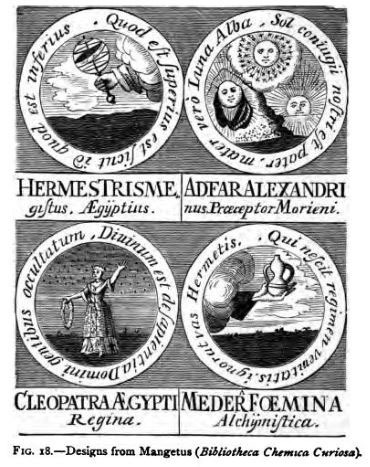
It is somewhat strange to think that alchemy should have once received the serious attention of the legislature in this country. In 1404 the making of gold and silver was forbidden by Act of Parliament. It was imagined that an alchemist might succeed in his pursuit, and would then become too powerful for the State. Fifty years later Henry VI. granted several patents to people who thought they had discovered the Philosopher’s Stone; and ultimately a commission of ten learned men was appointed by the King to determine if the transmutation of metals into gold were a possibility. We must now leave the subject of alchemy. Those who desire to study it more deeply will find a great mass of matter in the “Bibliotheca Chemica Curiosa “ of Mangetus; but if they will take our advice, they will not waste much time in studying the history and progress of a futile and false art.
Magentus
Fig.18-Designs from Mangetus (Bibliotheca Chemika Curiosa)
With Paracelsus (b. 1493 d. 1541) a somewhat new phase of the science of chemistry appeared. By pointing out the value of chemistry as an adjunct to medicine, he caused a number of persons to turn their attention to the subject, and to endeavor to ascertain the properties of various compounds. Thus he helped to withdraw men from the pursuit of alchemy, by asserting that the knowledge of the composition of bodies, which had necessarily been forwarded by alchemy, was of importance to the human race, for the better prevention and curing of their ills. In the way of discovery or research, Paracelsus did little. He mentions zinc and bismuth, and associates them with metallic bodies, and he makes considerable use of several compounds of mercury, and of sal ammoniac. Paracelsus compares the alchemist of his day with the physician, and speaks of the former in the following terms: - For they are not given to idleness, nor go in a proud habit, or plush and velvet garments, often showing their rings upon their ringers, or wearing swords with silver hilts by their sides, or fine and gay gloves upon their hands, but diligently follow their labors, sweating whole days and nights by their furnaces. They do not spend their time abroad for recreation, but take delight in their laboratory. They wear leather garments with a pouch, and an apron herewith they wipe their hands. They put their fingers among coals, into clay, and filth, not into gold rings. They are sooty and black like smiths and colliers, and do not pride themselves upon clean and beautiful faces.”
Among the Paracelsians we find Oswald Crollius, who mentions chloride of silver under the long-retained name of luna cornea, or horn-silver, from its peculiar horny appearance and texture after fusion. He was also acquainted with fulminating gold.
The name of Andrew Libavius (died 1616) deserves mention, because he sought to free chemistry from the mazes of alchemy and mysticism in which it was involved. In this he to some extent succeeded: and he appears also to have been a patient worker in the field of the science which he did so much to promote. He discovered the per chloride of tin, which is even now called fuming liquor of Libavius; he also proved that the acid (sulfuric acid) procured by distilling alum and sulfate of iron, is the same as that prepared by burning sulphur with saltpeter Libavius was great at the making of artificial gems, and was able to imitate almost any precious stone by coloring glass with various metallic oxides.