Part 3 - Getting published
What is it like to write for a big Publisher?
I wrote two books for Packt Publishing, one of 400 pages and one of 250 pages. I then worked for them as an Acquisitions Editor too, guiding other authors through the process of writing and publishing non-fiction works. While it may not be typical for all publishers, this will give you a flavor, as they all generally work along similar lines.
If you are a subject matter expert with an online footprint you may have been contacted by someone doing an author search already. Some people get annoyed at being singled out as a potential book author. Don’t. It’s an opportunity that may never come around again. At the very least, be flattered that your profile is good enough that they found you. At best, reply that you’re interested, and ask what kind of book they had in mind.
If you have a book idea you want to pitch, you usually find details of how to apply via the publisher’s website. This application gets emailed around to all Acquisitions Editors, and they get to take their pick if interested.
Once you or your book pitch are deemed of interest, you will eventually be put in touch with a Commissioning or Acquisitions Editor who will help refine your book idea, and send you a document to fill in which guides you on how to write a proposal and TOC (table of contents). They will get this reviewed internally and get back to you with some suggested changes.
Sometimes you will be up against other candidates. You won’t necessarily be told about this. Packt exists to sell books that fulfil a market need, so they won’t let you slow down their plans. If you don’t write the book, they’ll find someone else to do it - guaranteed. If all goes well, and you’re communicating in a timely and professional manner, you’ll get the email that will go something like this:
Dear [your name]
Your book proposal has been approved for publication. Congratulations!
I can offer you an advance on royalties of ___, paid in installments throughout the writing process. Royalties will be __% on all revenues.
As an author I think that’s an exciting email to get, and as an Acquisitions Editor who got to send maybe a hundred of them for various Publishers, each time I wrote it it was a thrill. I hand typed each and every one, even though the format is pretty much the same each time. I guess I did that because I felt personally connected to each author I contracted.
At this point you’ll get a contract to look at. This is a standard contract, without your specific details filled in yet, for you to look it over and check you’re happy. As an author I was very, very picky about this. I asked a lot of questions. Yet I have to say that no matter how much you ask for changes, there’s only so much your Acquisitions Editor can do. Publishing Contracts hold together as a whole document, with each clause carefully balancing out others. As an AE I have on several occasions had to tell a would-be author that the clause they were trying to get me to change was written for their benefit, and if we removed it they would be left with a worse deal.
Basically the contract signs over all rights to your work to the publisher, and it is at this stage that you really have to make peace (or not) with the idea that you will never be getting your work back once you have signed it over to the Publisher. This is the same with any Publisher. As a first time author the moment you sign the contract is bitter-sweet.
As well as the TOC and the contract, you have to agree to a set of deadlines, which for what I call a “normal” book of 12 chapters, 250 pages, should be 10-20 days. One of the best things about Packt is that they hold you to this. Think about it. How motivated a person are you? If you have 12 deadlines, you’re much more likely to pull it out of the bag for each one, than if you had one big deadline at the end. And to have a task-master constantly on your back to get you to hit the deadlines can’t be a bad thing either. There was only one person I mentioned by name in the acknowledgements section of my first book:
Special thanks to Poorvi for keeping me on schedule
The writing will now begin in earnest. You write the first chapter, probably going into great detail about the invention of the internet, and submit it. You’ll probably write in Word, and use the template provided. You’ll get feedback, either now or later. Essentially an editor will cut your waffle, keep you to the subject in hand, keep you to the word-count required, and if you’re lucky, give you some tips. The skill of your editor will vary greatly.
Once you’ve done a few chapters, you may start getting reviewer comments. These are what will really ensure the quality of your book. In computer science, an editor can only do so much. A reviewer is someone who knows the technology as well as you do, and will comment on the technical and readability of your writing. Pay attention to it, and think twice before discarding their advice. On the other hand, remember they know nothing about Publishing, so take some of what they say with a pinch of salt.
Once you submit your full manuscript, have rewritten it to reviewer comments, and it’s been accepted, you’ll feel elated… but not for long. The pain is about to begin. If you have family that you love, maybe you should send them to the in-laws for a week or so…
Packt has a large office in Mumbai. This is the engine of the company. It is staffed almost entirely by degree educated, English speaking young Indian people. For this structure to work, the setup is highly automated. There are targets for everything - and everyone tries to hit them, irrespective of what that does to your book. From now on, you’re thrown into a machine and you better go along with it or it will chew you up. It won’t stop for anything or anyone.
You will probably get an email that goes like this.
Dear [your name]
I am ___ and I am taking your book through production. The final proofs of chapters 1, 2, and 3 are attached. Please check them and let me know if you have any comments. We are publishing on [date three days from now] and we need any changes back by tomorrow.
You open up the “final proofs” and take a read through. What you do next will define whether your book makes you proud, or whether it gets so many 1* on Amazon that you become a pariah to your friends and colleagues. So please listen up.
There will be terrible errors.
You may think that the book now looks worse than when you submitted it.
You will feel like writing a desperate email, or ringing them, or hiring an editor, or crying.
But this is just how it is in publishing, where there are not enough hours in the day.
- What you do now is calmly ring work and take some time off
- Have the discussion with your family that the time you told them about has arrived. Either you or they should go for a few days.
- Go to the store and buy some supplies. Note the weather, feel the air, savour the event.
- Calmly open the first chapter and using a PDF program, note all the places where you want changes. Use strikeout, replace, insert, and so on. Where you need to explain that an image “shouldn’t be that way up”, use a Comment feature.
- Save that chapter in a REV1 folder, then send it in. Start on the next chapter.
- When a revised version of chapter 1 arrives, open it and go to step 4.
- There may be as many as three iterations on any given chapter, and each time the changes will get smaller. You are now the editor.
And that’s it. A few weeks may pass. You will go back to your life. You will vow never ever to do that again. If you didn’t follow my advice in no2 you may be having family problems, or at the least trying to make amends.
Then one day a box arrives. You take it into your office and close the door, or you drive out to a car park and sit with it on the passenger seat. You open the box and look at the books with your name on them. You pull one out and leaf through it. It’s not bad. Your memory is of thinking the whole thing was a disaster, but now what you have in front of you is actually quite good. It’s actually… well… book-like.
Because, well, when all’s said and done, publishers are run by people who know how to make books. While you probably thought the whole thing was shambolic towards the end, you now realise that someone created a pretty decent index without you knowing, and all the pages look kind of laid out correctly, with page numbers and chapter headers, and the right fonts, and chunky chapter titles, and it’s got a barcode, and the cover looks right. And there’s a lot of it between the covers. You realise there’s no way you could have created this by yourself.
So that’s a glimpse into what it’s like to work with a publisher. As you can see it’s hard work,and don’t let anyone tell you otherwise. If you want it, you will have to earn your badge of “published author”.
How much difference will an Editor make to my book sales?
Most answers you will get to this question, Online or elsewhere, will miss the point completely. They think of an editor as someone who does copy-editing, proofreading and error checking. But who really cares about those? A friend can copy-edit. Microsoft Word can proofread and grammar check. A few knowledgeable reviewers can error check for free. None of this stuff makes more than 1% or 5% difference on how much your book will sell. It doesn’t matter.
But what if there were a person out there who could tell you where the big book markets were? What if there was someone who could tell you how to write on target to what that market needs? What if there was someone who could work out how many copies your book idea could sell, and then guide you in outlining it so that you delivered that book perfectly? What if someone existed who could tell you how to hit your target audience so precisely that they would simply have to buy your book?
This person exists.
They are called an Acquisitions Editor.
You should get one of these.
Long before you start to write the book, an AE can guide you in planning the right book for the current market. They will already know the market so well that it will be second nature to them. They will spot straight away when your book proposal is a waste of time. They will save you a year of your life, wasted, and instead guide you toward producing a book plan that could make it the best year you ever spent.
So where do you find one?
Unfortunately, since these people are at the top rung of the Editor’s career ladder, they are invariably employed full-time by a Publisher and often too busy to freelance. The only hope you may have is to befriend one, or simply to offer them a freelance gig they can’t refuse. Basically what I’m saying is that if you really want editorial advice that will make a big (a huge) difference to your book, you will probably have to get it by going the traditional publishing route. Once you have been noticed by a Publisher, their Acquisitions Editor will work with you on your book synopsis and outline to make it shine, and once they’re happy with it they may offer you a contract.
Publishers: What tips you off that a book is well written or publishable?
Really this is two completely different questions.
“Well written” does not equal publishable. Not even close. I mean, in fact, “well written” has nothing whatsoever to do with publishable.
Confused?
That’s because publish-ability is all about market-ability.
As an Acquisitions Editor you look for clues as to whether a book could be marketable, but actually, what do we know about it? Not much. Just a little bit more than everyone else. So we go on instinct, on whatever sales data we can get, on what we read ourselves, or past experience, or whatever.
If something is well written it has a better chance of pleasing the Acquisitions Editor, and that’s a good start. But let’s not confuse this with marketability. Write well in order to get the attention of the AE or Agent, but don’t expect good writing to get you anywhere in the market place.
Why is that? Because people read books to get a kick. No-one ever recommended a book to me as a reader because “it was well written”. If they did I’d probably avoid it thinking it meant the book was written in poetic language without real substance. Good writing is nothing special. It’s the baseline we expect.
What sells books is the ability of the book to give the reader some kicks. In non-fiction that might be to satisfy some burning desire or need. If it’s fiction, it may be to thrill them or show them something that makes them smile or look inside or feel some new emotion. Really, successful books are fairground rides. You choose which one to go on because of which one gets the most screams of fear or delight. Remember that, it’s rule #1.
Secondly, a book isn’t publishable when you submit it to a Publisher. You may need to rewrite the whole thing, or you may need to do some re-drafts. Certainly it will get picked apart by reviewers who will suggest changes. Then it will get several rounds of edits, copy-edits, and proofs. Only then is it publishable, in the traditional sense.
So getting to what I believe is the crux of your question, you should step outside of the text of your book for a while and look at it in outline. Perhaps write a table of contents, scene by scene. What is it about this TOC that provides those fairground screams and whoops of delight? What is calling out of that TOC, waiting to pull the reader in and shake them around before letting them go at the end completely satisfied? If there’s precious few of those, then put them in now, right there in the TOC, and get to work writing / rewriting those scenes.
Only when you have a crowd-pleaser are you finally ready to write a killer book proposal to send to AEs and Agents.
Why are magazine editors no longer responding to my queries?
If a magazine editor no longer responds to your pitches, it either means they’re busy, or that they don’t think you’re the right fit for their magazine. It’s best just to move on and try elsewhere as in both cases there’s nothing much you can do.
How can I find a publication for my novel and what’s the procedure?
The basis steps if you already have written a novel, are these:
- Get the manuscript edited
- Revise it based on editors comments
- Research publishers and agents on Amazon.com that publish similar works
- Submit carefully written proposal to their submission guidelines
Are publishers interested in picking up self-published books?
Yes they are. Walk a mile in their shoes for a moment and think about it from their perspective. Every author they sign is a risk. Each book they develop takes investment. Anything that will reduce that risk a little is worth doing.
So let’s say I was acquiring for a fiction house, and I had a manuscript in hand from a first time author whose writing I thought was great. If I give them a contract, I have to pay them an advance, then persuade the boss to fork out many thousands of dollars to finance the editing and production of the book, the marketing and the promotion. Then that book could sell nothing and we lose it all.
Now, if I have in the other hand a self published book that’s not as good, that I don’t like as much, but it has a thousand people who already paid good money to read it, then I’ll always be tempted to go with that. Why? Because if before I got to it, it sold 1000, then after I’m through with improving it I’m sure it will sell 10,000, and that’s all I need for it to have covered costs. In other words, the risk is gone.
Business success is reached as much through minimising risk as maximising return on investment.
“What if you self-publish your book for FREE, though? Are the amount of reads/reviews still indicative of potential profit for publishers?”
All the information on the internet is free, yet we make decisions on popularity by how many views a page or a blog post has had. There is a rough correlation between how many times a page is viewed for free, and how many people might be willing to pay to read something similar.
Let’s say your thesis gained 10,000 reads. You then put this into book form, and advertise it on that self same web page. A percentage of people would buy it. Perhaps 1%, for argument’s sake. 1% of 10,000 is only 100, so that would give you an idea of how many sales you might get. As you can see, the popularity of a free book needs to be very significant before the numbers become meaningful for publishers.
Generally publishers prefer to see evidence of money changing hands.
What is it like being an editor for an author?
Being an editor is a fantastic line of work. You get to help authors produce well above their best.
It’s also hard to get into the business. I’d suggest writing a book, getting a degree, and getting some work experience under your belt first. Some people go via the English degree route. I can’t see why someone who studied English would make a good editor. It’s like saying someone who studied sand, cement and brick kilns would make a good builder.
Editors should be interested in people, in ideas, in things. If you’re interested (I mean like you can’t stop absorbing knowledge/ideas/conversations like a sponge) then you can be interested in what authors write for you.
Editors should be ego-less. An editor is a servant to the publisher and a servant to the author. Most of all, the editor serves the eventual reader, so you have to have been a reader.
Editors need to learn to be decisive but pragmatic. You should learn to know what’s best for the reader, but know when it’s pushing the author too far to get what you want.
Finally, to reiterate, become more interested in things, people, ideas, than in language. Language is a barren wilderness without them.
When can I say “I’m published”?
Can I say “I’m published” even if I only publish my works online?
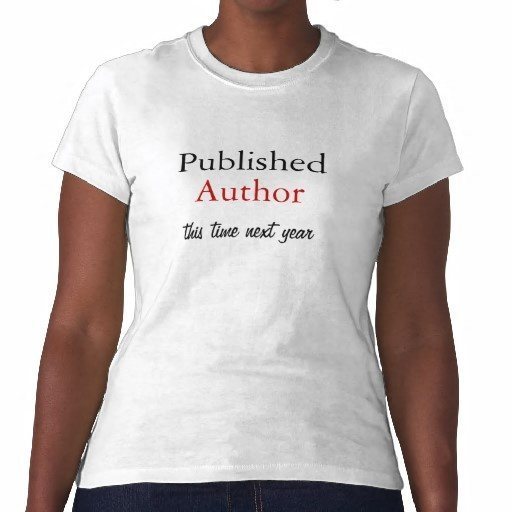
As you can see from the image it’s an exclusive club. What you’re really asking (if not you, then the next one reading this will be) is “can anyone stick a PDF of a Word Document online and be a member”?
The term “published author” really refers to your book being put out by a publisher who is in the business of publishing using their own money (not yours). These days “self publishing” sounds better than the previously used term “vanity publishing”, so at least self publishers now have a decent name to give themselves. Indie Author is catching on too. I would use those rather than “I’m published”. This applies to any length of work, by the way, so you could say “I’m published” if you had a reputable publication run your short story or magazine article. Implicit in the phrase is the understanding that a gatekeeper let you in the gate because the quality of your work was good enough to join the club. The same would go for saying you’re a Chartered Engineer or a Decorated Soldier, so I don’t think it’s unreasonable, but then I’m biased.
On the subject of Online only books, I don’t think this is an issue at all. If you are contracted by an eBook only publisher then you are still a published author, and no-one would (should) dispute that. Quite why a publisher would only release a title as an eBook is a mystery to me, though, since Print on Demand makes it so easy to produce a print work.