Preface
Who wrote this book?
This book was written by dozens of members from Simbiose Ventures. A Brazilian organization focused on providing a better future for low-income Brazilians by teaching them how to code and create data-related products, from which we get the necessary revenue to keep the initiative alive.
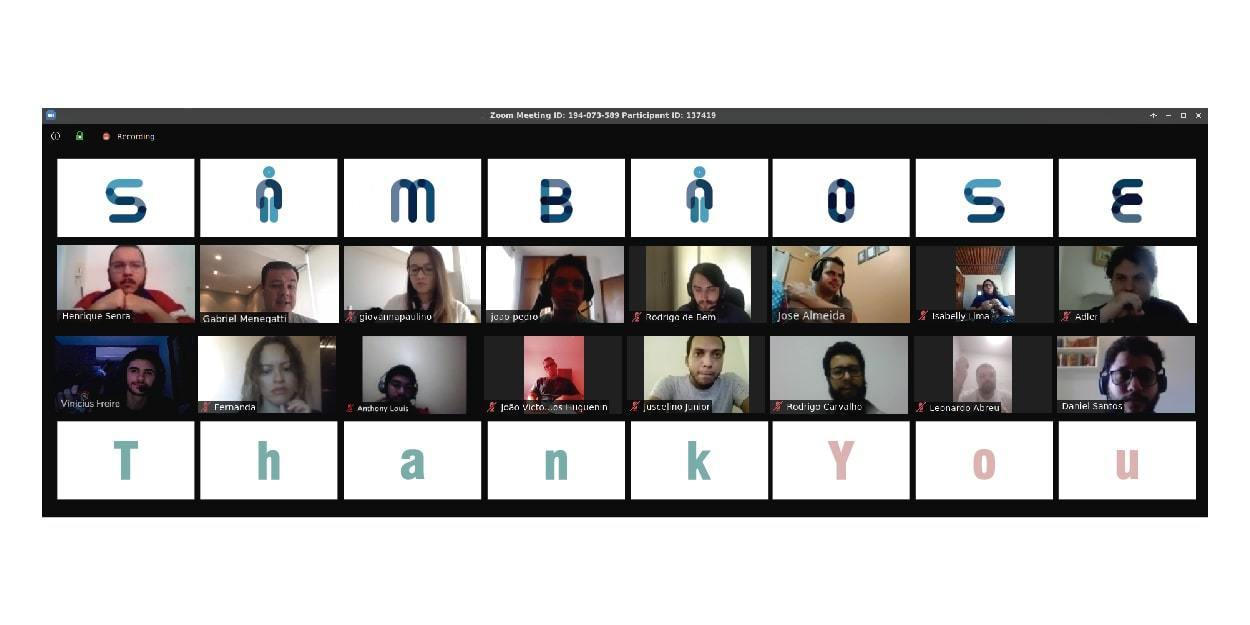
Although the entire team got involved in this project, we want to emphasize Nicole’s work. She was responsible for researching, grouping, and writing most of the content. Be aware that your decision to buy this book contributed to salaries for the members of this organization, including Nicole’s, as 100% of the revenue from this book goes straight to supporting their journey. Thank you so much for that.
If you received this book from an unknown source by any chance, please consider buying it (or donating any amount) on our website (https://www.GettingStartedWithData.com), as this will have a direct impact on the future of our members.
It’s also possible to license this book for distribution within teams and organizations at discounted rates. Because of the simplified language used in the book, many companies and schools are using it as the foundation of their data-driven awareness and training strategy.
Contact us through our website or email licensing@gettingstartedwithdata.com.
Why this book?
Before deciding to write this book, our training process at Simbiose looked like a patchwork quilt: hundreds of small pieces from books, articles, and courses that talked about data. When onboarding new members on our team, we had to drown them in information because we didn’t have a single, concrete source that would get them from “zero to hero” in the effort to understand data. This process usually brought two challenges:
- People were scared off because there was a lot to study, even before starting to work;
- It wasn’t efficient, as we had to assemble different study tracks for other people who were not going to perform similar roles.
This situation changed when Nicole joined our team. We gave her the mission of studying all the materials we had and creating a single book that could introduce all the concepts about data to any new team member. The book you are reading now is the result of all this fantastic teamwork.
We aim to present the data world for those interested in its importance but unsure where to start. We included parts of the history of data, the importance of data, and how it revolutionized the way we manage and calculate it, to how technology elevates the possibilities of our work and life.
As data is now part of our daily lives, we believe that any person should read this book, especially people responsible for organizations’ decisions.
What to expect?
After reading this book, you can expect to understand the main concepts and technical aspects of data.
You will be able to recognize and understand most of the jargon used by data-related products and professionals as we gently introduce more than 50 terms and concepts related to data and analytics.
You will certainly be able to talk to other people about data, some of its possible usages, and how to initiate your first data projects.
Most importantly, you will surely understand what data means and how you can use it to improve your life and career.
What is this book not?
The “Getting Started With Data” book has no intention of:
- Substituting other great data-related books that already exist. We humbly believe this book might be an excellent first step before getting into all the existing books, as many of them presume you already have some minimum knowledge about data.
- Making you a “data engineer”, a “data scientist”, “data analyst”, “business intelligence professional”, and so on. The sole purpose of this book is to help you get started with data in a structured way.
If you already have a firm grasp of the basics and expect to run an incredible analysis or create an entire data infrastructure by reading this book, don’t waste your time. There are much better books and resources for that, as we detail in Chapter 8, section 8.4 (A Learning Path).
How to read this book?
There are two approaches to read this book, the conceptual (overview) and technical (in-depth).
You will notice that most chapters contain two types of content: an overview of the concepts and one or more in-depth section for those interested in knowing more about the bits and bytes.
While writing this book, we made sure that just reading the concepts would be enough to grasp the essentials and get a clear understanding of the main ideas about data. Feel free to skip the “in-depth” sections if you don’t have a technical background. Anyhow, if you are up for a challenge, you’ll undoubtedly enjoy going deeper.
The book starts presenting concepts and a bit of history related to data in Chapter 1 (What is Data) and Chapter 2 (What is Information). In summary: how data came from raw registers to help with real-world issues, and how we developed the study field of “information” - a concept that leads the information age.
If you are a business heavy-user, a professional immersed in the technological field, or you have some experience with software development, Chapter 3 (How Data is Born) and Chapter 4 (How Data is Stored) will give you technical concepts about data within applications, as well as the differences among storage types and how they are being used depending on the needs of the data and the business.
On the other hand, you might not be a “data geek” nor wish to become one. Suppose you are only interested in learning how data can impact your business and what kind of tools and teams you have to put together to extract value from data. In that case, you can focus in Chapter 5 to Chapter 8. They discuss how analytics techniques can generate business value. From there, managing the underlying path taken by your data to be stored and analyzed affects what tools and techniques are used for actual decision-making on the top layer.
At the end of this book, in Chapter 9, you will find a conclusion that puts together and make tangible all the terms, concepts, processes, and technologies introduced during the entire book.
Finally, there’s also a complete Glossary explaining all the terms and their corresponding concepts. It’s divided into sections according to the concepts introduced in each chapter.
Enjoy your reading!
Found a mistake?
If you find any typos, incorrect information, or suggest an improvement, please contact us through our website (https://www.GettingStartedWithData.com) or email (feedback@gettingstartedwithdata.com).