Exercise Set 1
This first part could be considered a warm up or an exercise set in its own right. Note that there is no active stretching until the the hip hinging butt activation exercise. However, these first exercises are still helpful in that they can be used to increase body awareness, helping you become aware of the movement possibilities of your body.
Wide Leg Bound Angle
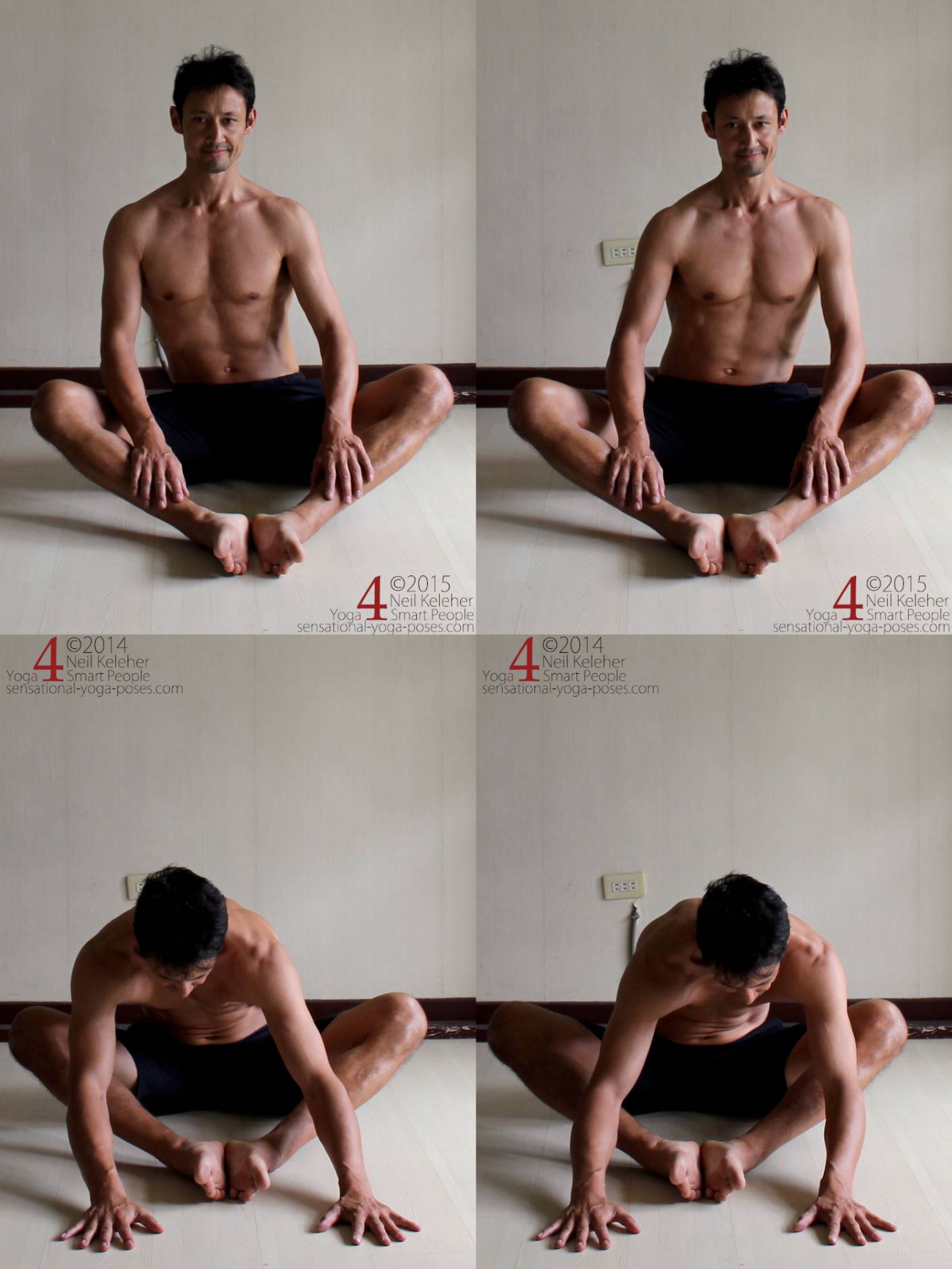
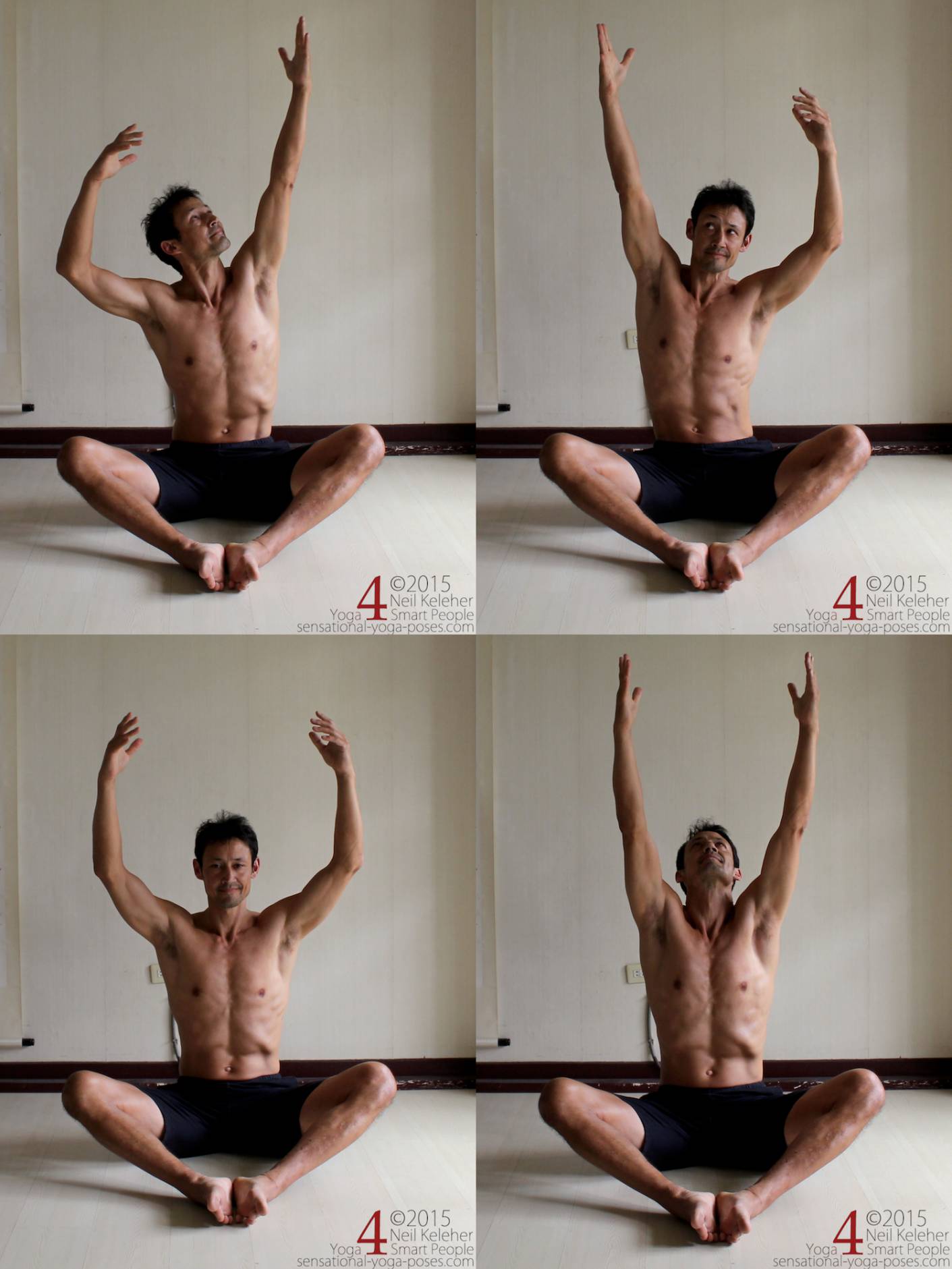
Basic Set Up
Seated with feet together but feet about a thighs length away from the pelvis. (If you were to bend forwards you face would end up between your feet.)
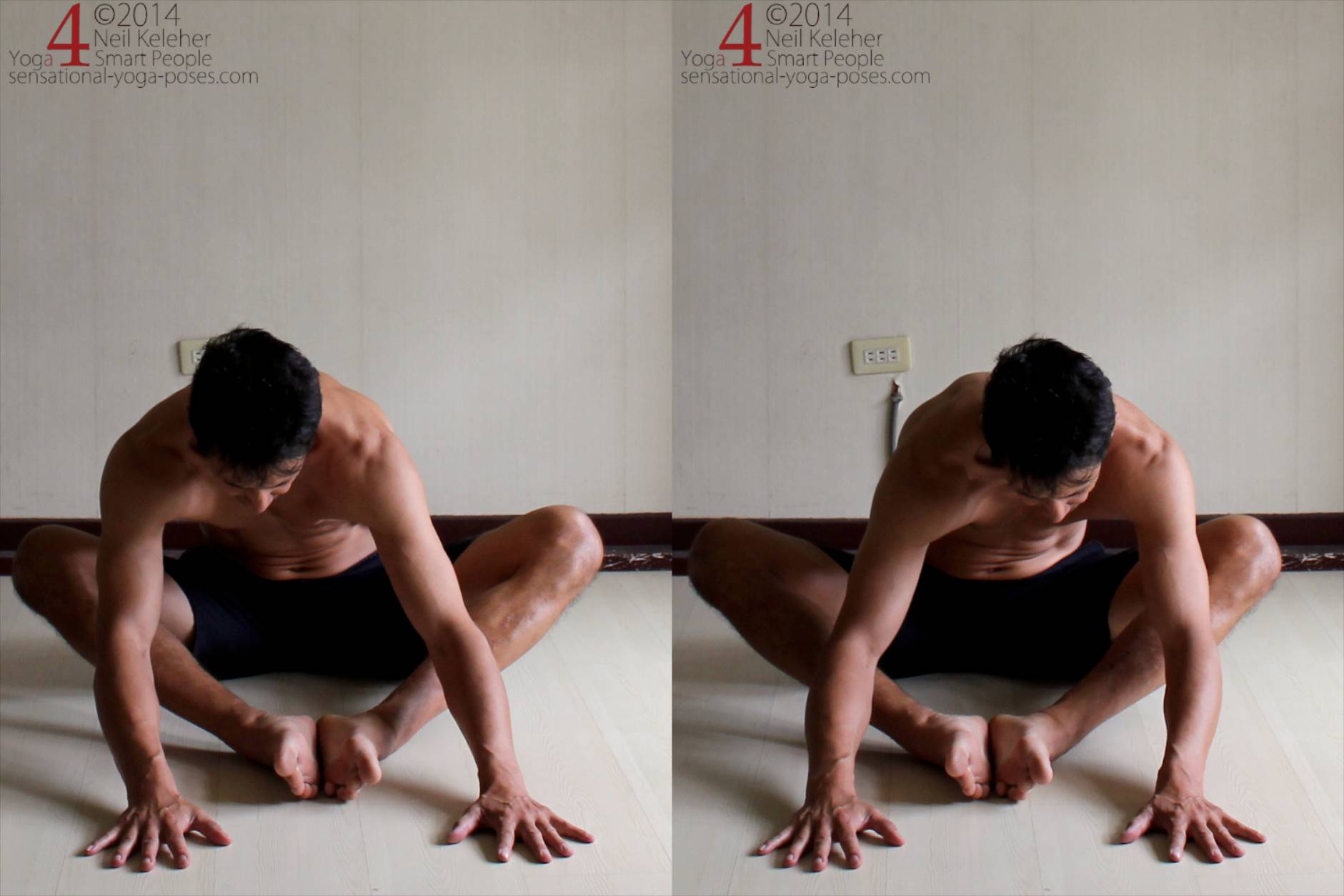
Part 2: Bend forwards with hands on the floor.
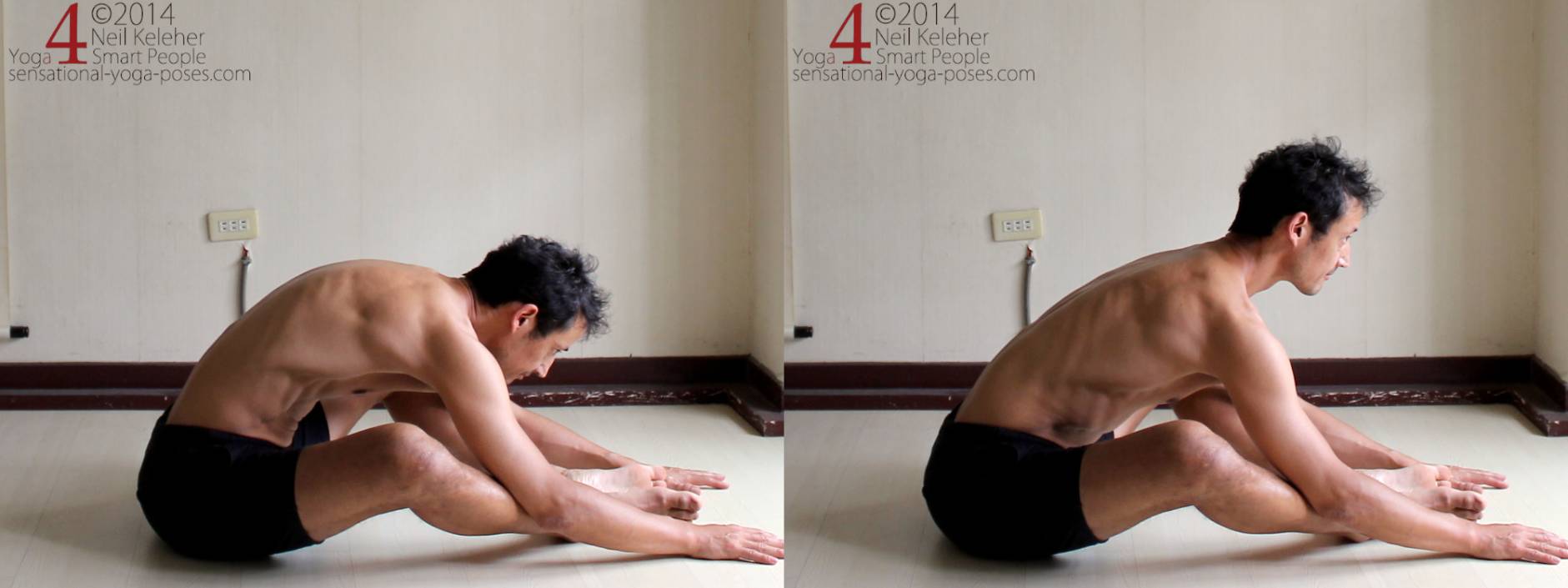
Part 3: Open chest, lift head and look forwards, lift your elbows.
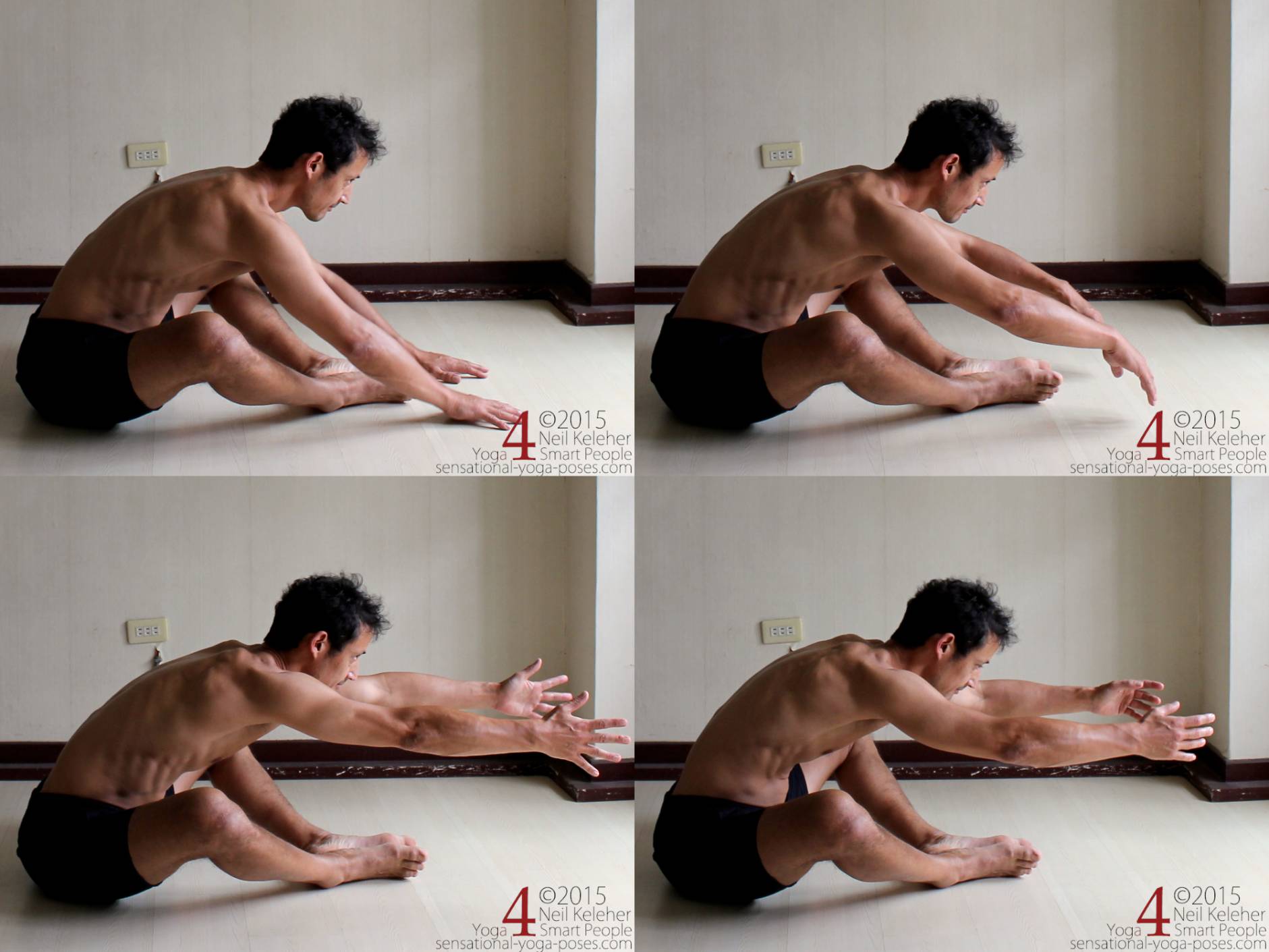
(If your elbows were on the floor to start with, notice the “additional weight” this adds to your ribcage) and then lift your hands. Then slowly and gradually reach your arms forwards. (This adds even more weight so do this slowly to make the transition more comfortable and so you can stop if it is too uncomfortable.)
Hold and breath deeply.
Optionally:
Slowly sit up keeping the arms reaching past the head.
Part 4: Keep the arms up with elbows slightly bent.
Table Top
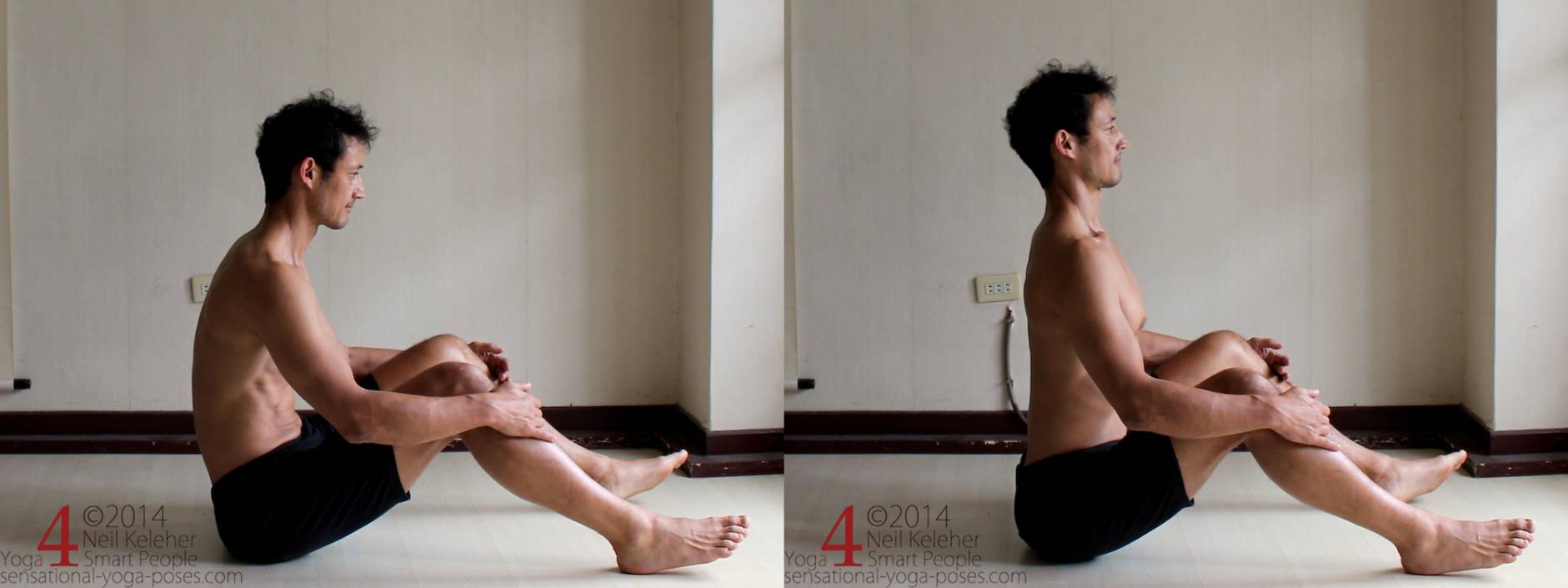
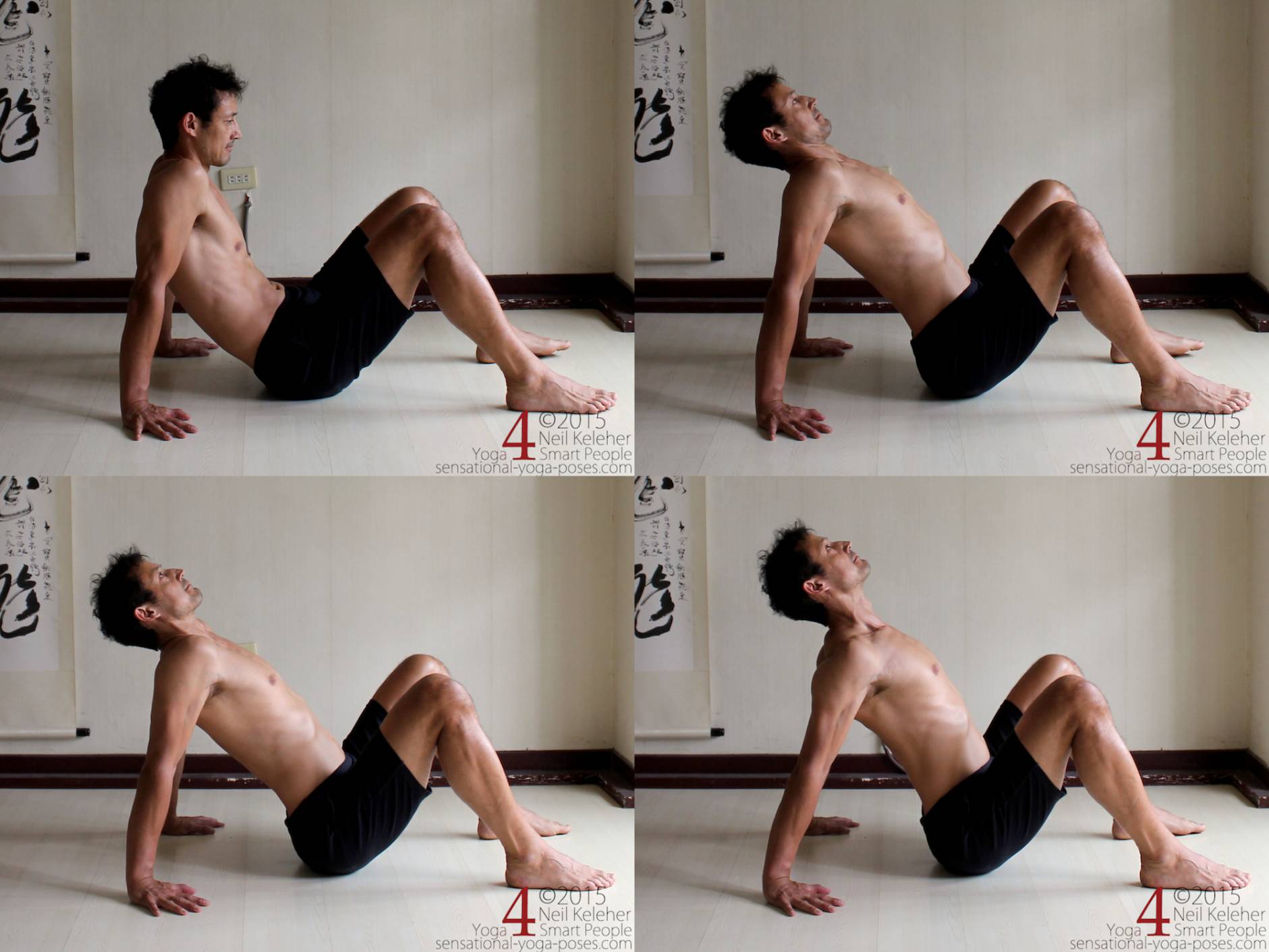
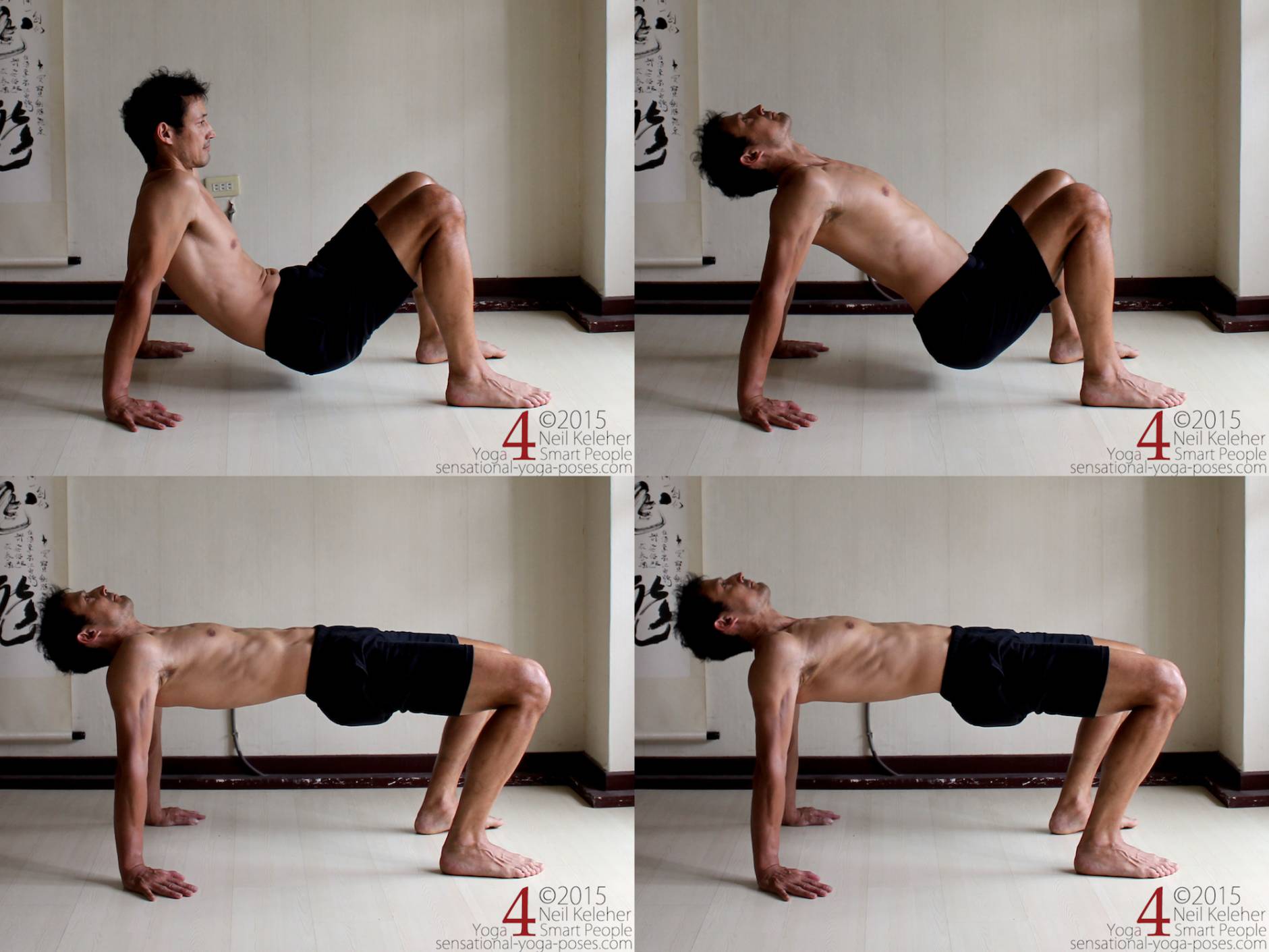
Basic Set up, Seated with knees bent and pointing upwards and feet flat on the floor. Lean back and place hands on floor behind you. Point hands straight ahead but spread your fingers.
Part 1:
Part 2: Add the shoulders
Part 3: Add the Hips
Initially you may find it easier to bend your spine backwards first, then use your hips to lift your pelvis higher, then use the shoulders to lift your ribcage higher.
Another possible activation sequence is:
- Use your shoulders to lift your ribcage first.
- Then bend your spine backwards.
- Then use your legs to lift your pelvis higher.
With practice you can do all three actions simultaneously.
Stand up for the next exercise or use the following transition exercise.
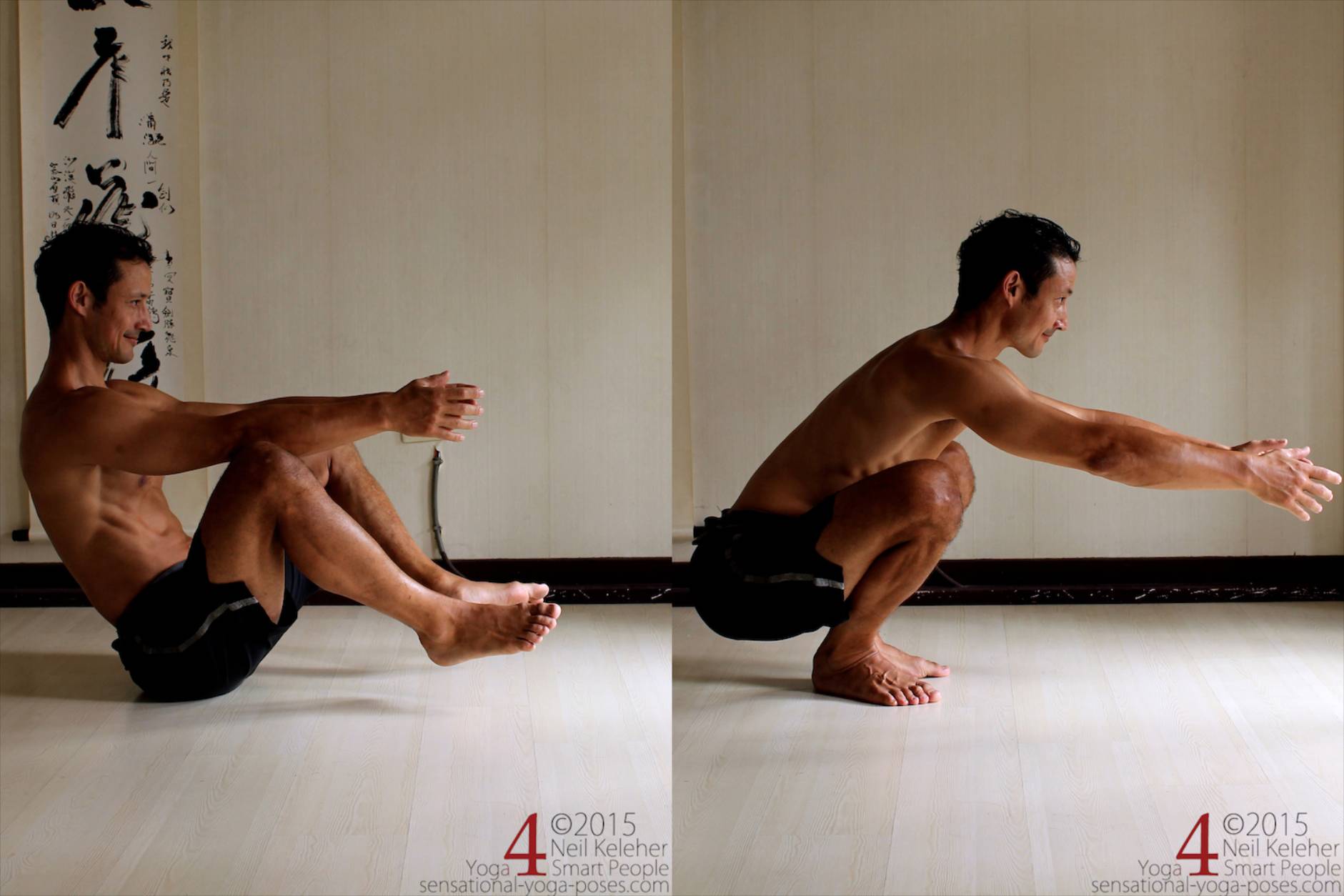
Roll to a Squat
Standing Single Leg Hip Lift
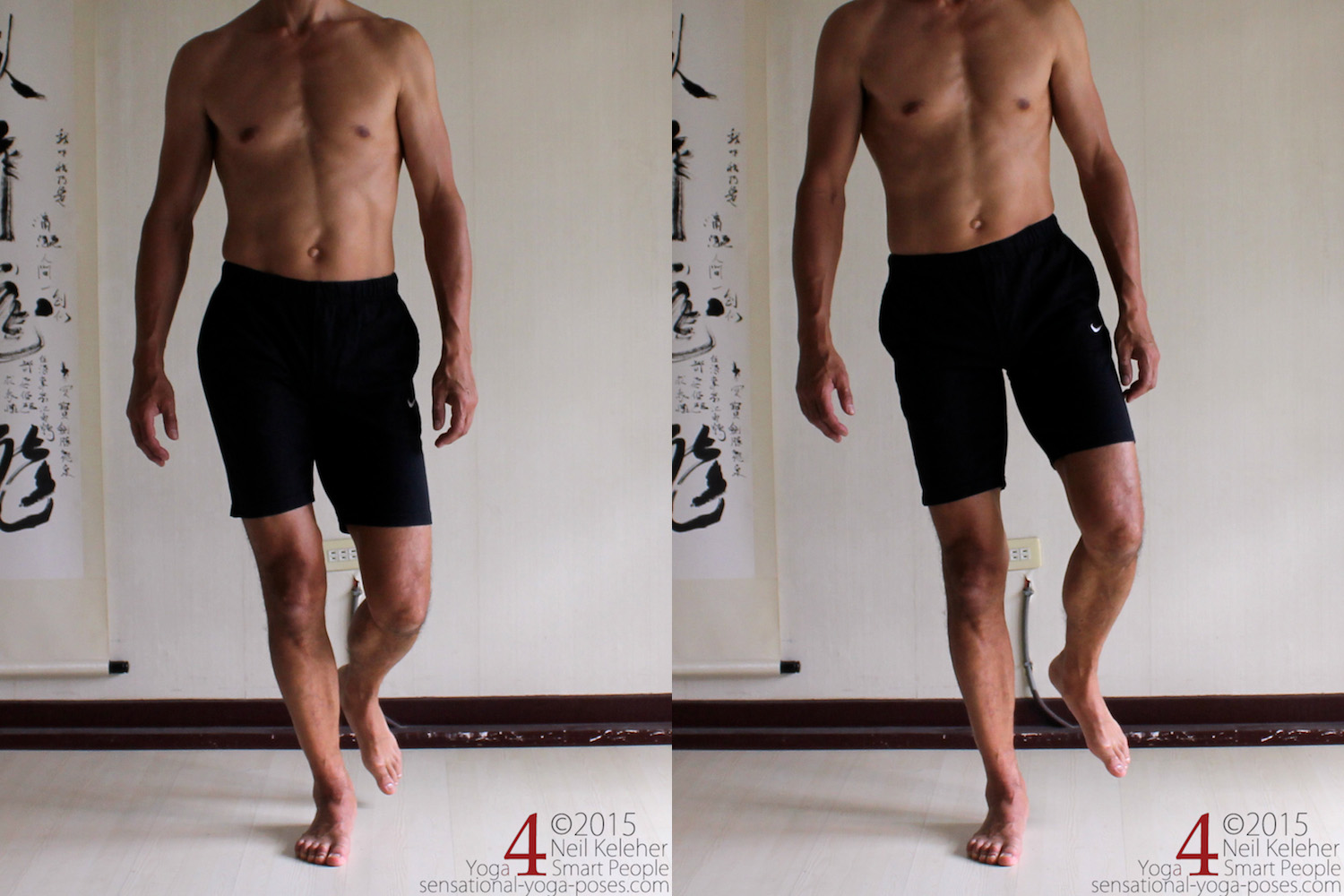
Basic Set Up: Stand with feet about shoulder width apart. Feet should be parallel. You can stand with knees slightly/comfortably bent or with knees straight.
Shift weight to one leg, lift the other foot while keeping torso upright.
In this exercise it can be easy to use the abs on the un-unsupported leg side to lift the hip. See if you can use the hip muscles of the supporting leg. To lift the opposite hip you should feel the outer hip muscles (between the crest of the pelvis and the head of the thigh bone) activating. To sink the hip gradually you could just let the hip sink down with gravity. But then work towards gradually letting the hip sink down.
Leg Rotations
Basic Set Up: Stand with feet shoulder width apart and parallel and with knees straight.
You can also do this exercise with knees slightly bent.
If you have trouble activating your buttocks as required in one of the later exercises, then focus on feeling your buttocks when you externally rotate your thighs (with knees straight.) What happens? Ideally you should feel your buttocks activating.
- Try to externally rotate, then relax slowly and smoothly and repeat so that you can feel your buttocks activating and relaxing.
- Memorize the feeling of your buttocks activating.
Standing Sitting Bone Lift
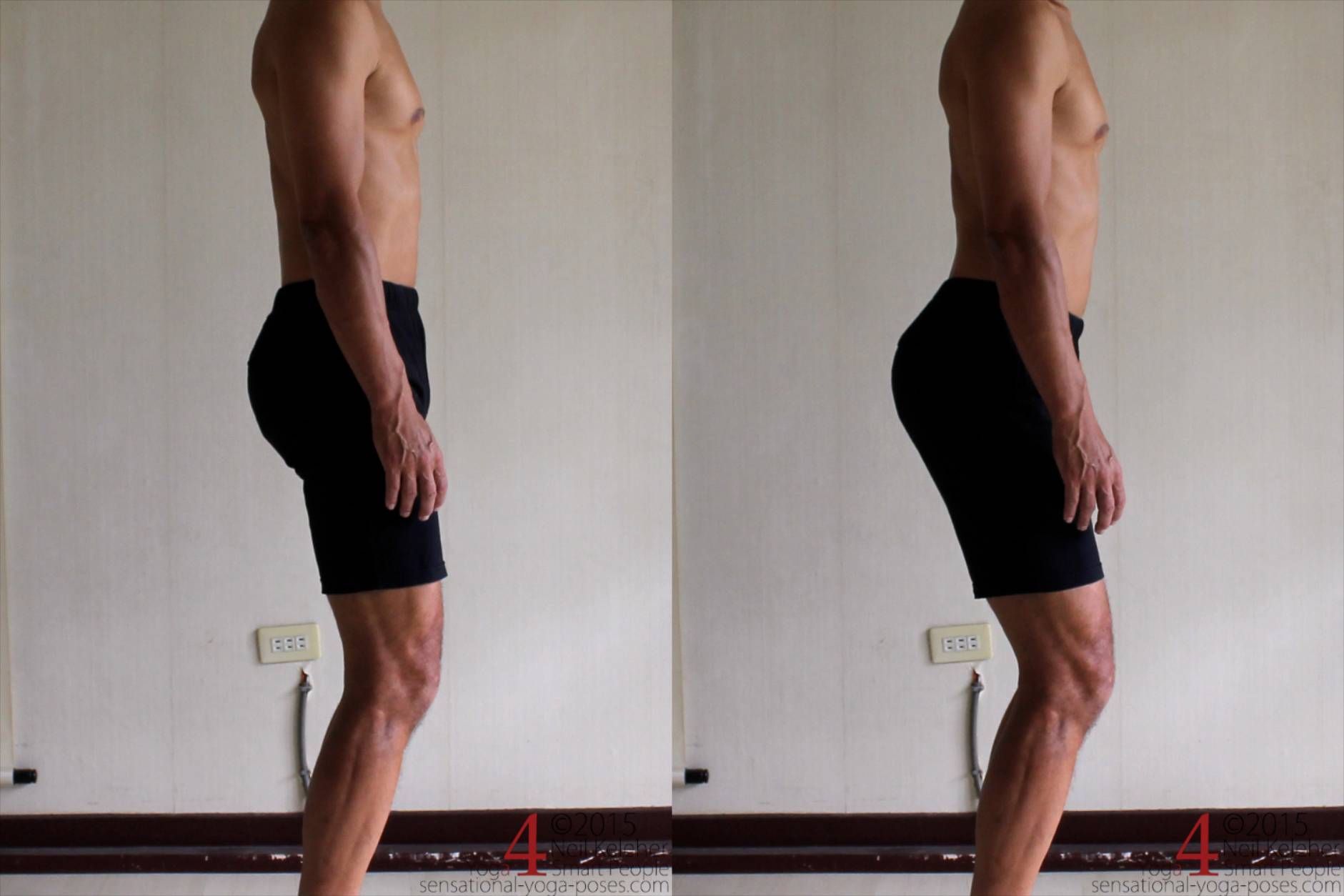
If you already have “sitting bone awareness” you can skip this exercise and move on to the next one.
Basic Set Up: Stand with feet shoulder width apart, feet parallel and knees slightly/comfortably bent.
Part 1:
Part 2:
Prior to part 2 you can adjust the bend of your lumbar spine.
- I’d suggest first tilting the pelvis a little bit forwards and then backwards and then varying between the two positions until you can feel the position where your lumbar spine feels most comfortable.
- Try to maintain this feeling in your lumbar spine as you tilt your pelvis forwards and backwards.
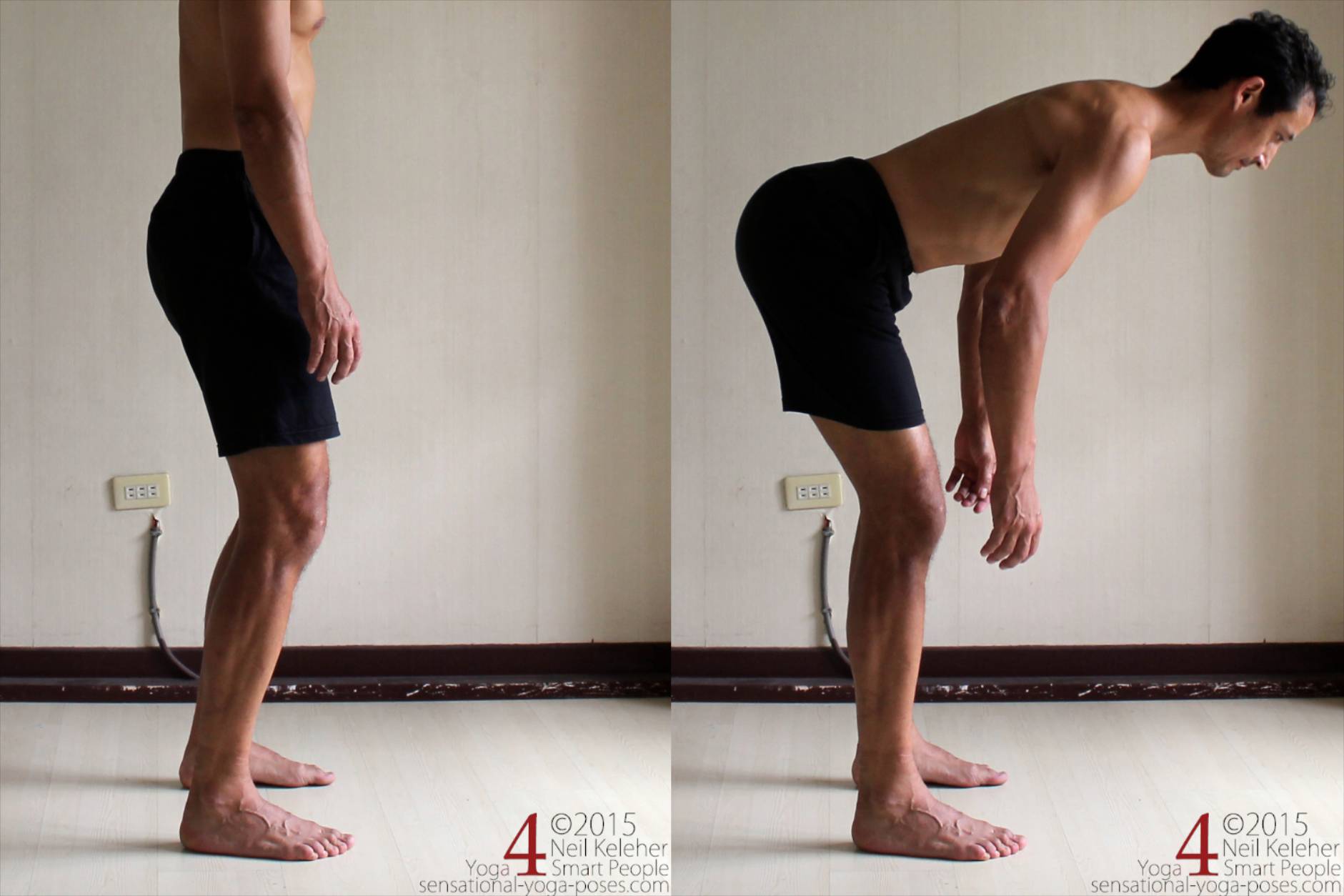
Standing Forward Bend
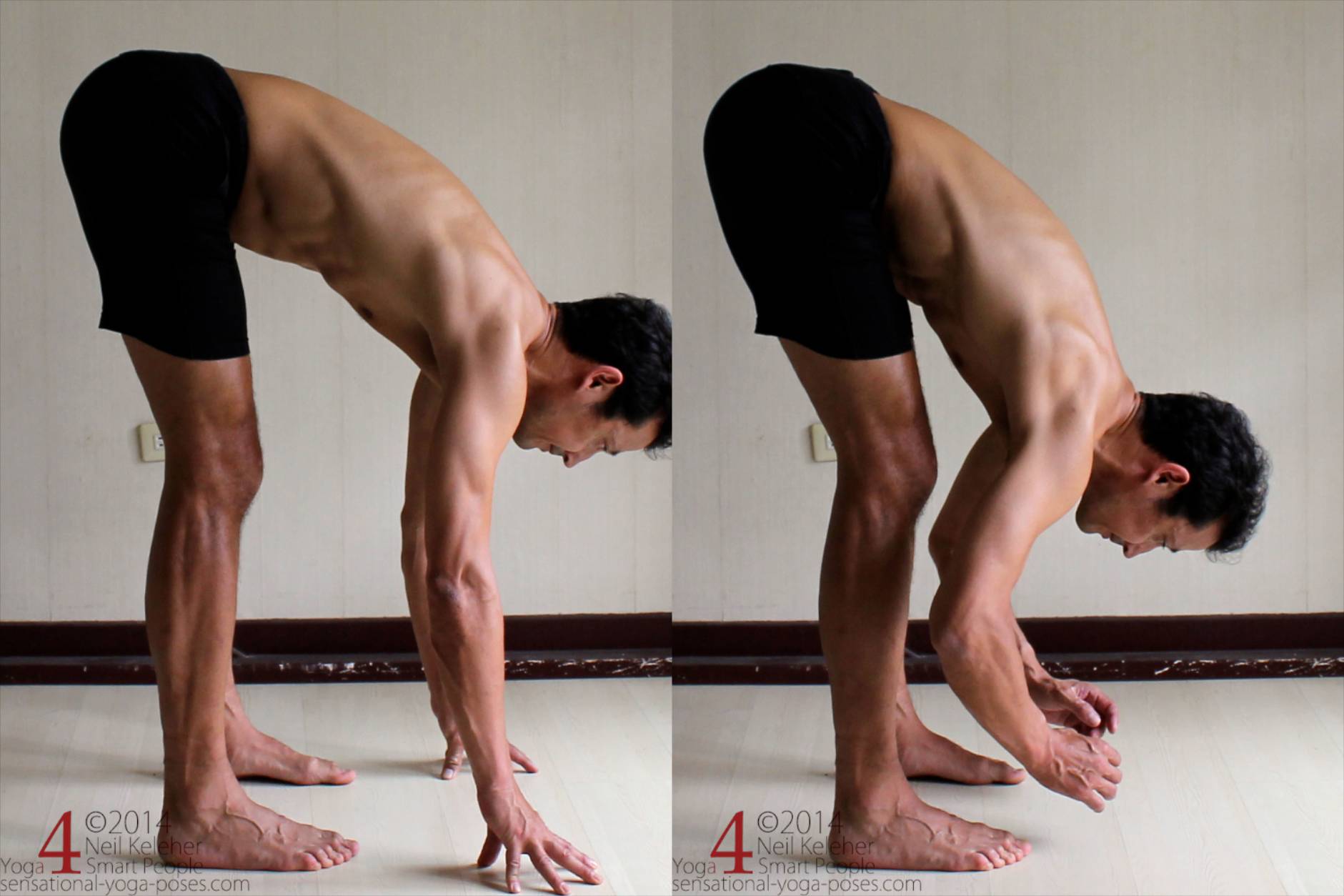
For this exercise, practice lifting your sitting bones while bending forwards.
Basic Set Up
Bend forwards with knees straight and feet shoulder width and parallel. Depending on your flexibility, rest your hands on a chair, or yoga blocks or on the floor.