Leanpub Book LAUNCH 🚀 Other Men With Machines: Dune, and the power structure around artificial intelligence by Ian Johnson
Frank Herbert wrote one sentence about machines that almost nobody finishes. It reads: men turned their thinking over to machines hoping to be free, and that let other men with machines enslave them. He wrote it in 1965, when a computer filled a room and belonged to a government or a ba...

Welcome to the Leanpub Launch video for Other Men With Machines: Dune, and the power structure around artificial intelligence by Ian Johnson!
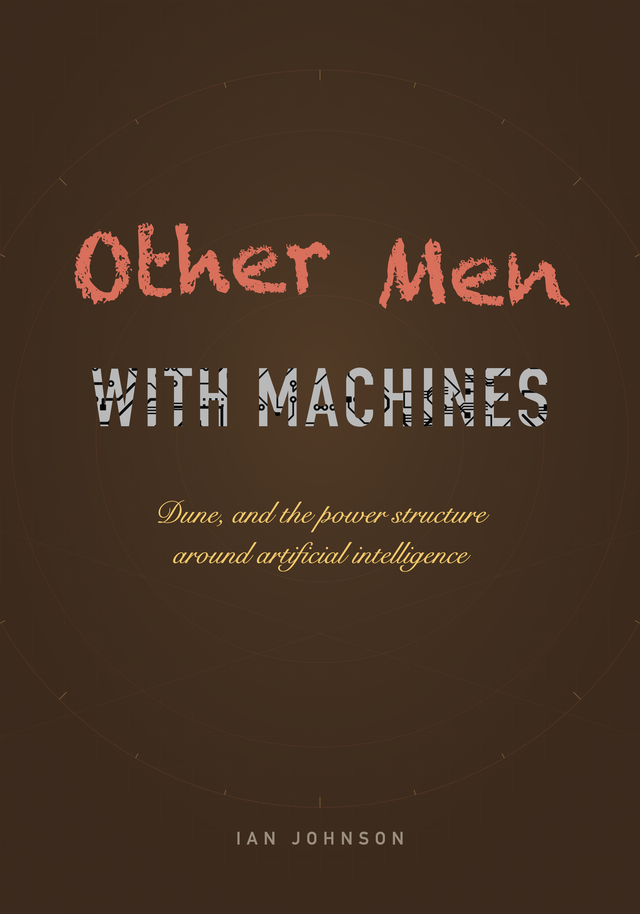
About the Book
Frank Herbert wrote one sentence about machines that almost nobody finishes. It reads: men turned their thinking over to machines hoping to be free, and that let other men with machines enslave them. He wrote it in 1965, when a computer filled a room and belonged to a government or a bank. That first half is a warning about your own head, and it is a good one. The second half says the machines never acted at all. They sit in the middle. You hand something over, somebody picks it up, and whoever owns that thing collects what comes with it. This book is about the second half.
The argument needs no machine to wake up, and none to get much better than it already is. It needs two things that are already happening. Institutions treat a system's output as authoritative, because checking costs money and deference costs nothing. And the ability to build and audit those systems stays with a few large organizations. Those two together make an old arrangement in new clothes: a few people decide, everybody else lives with it, and nobody on the receiving end can check the decision. Tyranny is the accurate word for that. It stays the accurate word when nobody seizes anything and every step looks reasonable to the person taking it. Nobody has to intend it.
Dune is the lens and the vocabulary here, not the evidence. Documented history, official inquiries, court records, and published economics carry every structural claim, and where the sources disagree the text says who disagrees. So the audit at the back names four places where an adversarial review was wrong and I kept my ground. I am neither a doomer nor a booster, and I use these tools daily. The capability is real. It stays a tool, and what we do with it is our obligation. So the subject is not who ends up with how much, but who gets to decide. And the last third is about what ordinary people can do while the arrangement is still soft enough to move. That window is open now, and it is closing.
About the Author

Ian Johnson is a staff engineer at Parento, where he runs the engineering team's adoption of AI coding agents and the harness work that keeps that adoption from breaking in production. He owns and operates Fulcorum, a video learning platform that teaches agentic engineering. He wrote five open-source projects that support reliable AI output: Keystone, Open Refinery, Sigma, Ghola, and Gauge. He has been writing about this work at blog.tacoda.dev since 2024 via Medium and the DEV Community. He lives outside Austin with his family.